Showing posts with label transportation. Show all posts
Showing posts with label transportation. Show all posts
Sunday, April 12, 2015
Lunchtalk: Invention of the automobile
This short episode introduces Karl Benz and Gottlieb Daimler, two independent creators of the automobile. It also talks about the industrial revolution sparked by Henry Ford.
tags: lunchtalk, transportation, invention, innovation

Friday, March 27, 2015
Lunch Talk: 1952 Flight to California
No Universal Studios, no Disneyland, no Silicon Valley, yet.
tags: lunchtalk, innovation, transportation, packaged payload
Saturday, February 18, 2012
Will robots kill Tesla Motors?
Robotization may make electric cars viable even if consumer demand doesn't pick up for some time.

This means Tesla Motors will have a hard time being an independent car maker. Their best shot at profitability would probably be through technology licensing and/or key component manufacturing. They just don't have the economies of scale to invest in full-blown robotic assembly lines.
tags: process, innovation, transportation, energy
Feb 16, MTR -- "The [car] industry is getting very good at making profits on lower volumes of vehicles for niche applications," says Jay Baron, CEO of the Center for Automotive Research. In part, this is because factories are using more robots, and robots that can perform more functions, so they can be quickly reprogrammed to make different vehicles. Some automakers have announced that they will offer three versions of a car—one gasoline-powered, one hybrid, and another electric.
This means Tesla Motors will have a hard time being an independent car maker. Their best shot at profitability would probably be through technology licensing and/or key component manufacturing. They just don't have the economies of scale to invest in full-blown robotic assembly lines.
tags: process, innovation, transportation, energy
Wednesday, January 25, 2012
The best car to steal ever.
With electric cars less is more.

tags: transportation, energy, problem
Jan 25, 2012. CNet -- Spain will begin producing an electric car next year that's about the same size as a Smart, but can collapse itself into an even smaller footprint when parked. The Hiriko, which means "urban car" in Basque, is the brainchild of researchers at the MIT Media Lab, and is designed to meet the needs of increasingly congested and parking challenged urban centers.
tags: transportation, energy, problem
Sunday, January 22, 2012
Saturday, January 21, 2012
On the road to driverless cars.
Leading automakers, including certain European luxury brands, are working to create a different driving experience. They seem to be taking an evolutionary, rather than revolutionary approach.
tags: transportation, control, distribution, detection, infrastructure
January 20, 2012. MTR -- Lasers, cameras, and other sensors are the most expensive part of autonomous driving systems. Some experimental self-driving cars are estimated to carry more than $200,000 worth of cameras and other gear. Those costs are also leading automakers toward a gradual approach that starts with sensor technologies and then extends capabilities to control driving tasks as well.
Several automakers already sell cars with so-called adaptive cruise control that automatically applies the brakes during highway driving if traffic slows. Next, BMW plans to extend that idea in its upcoming i3 series of electric cars, whose traffic-jam feature will let the car accelerate, decelerate, and steer by itself at speeds of up to 25 miles per hour—as long as the driver leaves a hand on the wheel.Making cars and elements of road infrastructure easily detectable by simple sensors will solve the problem of the high costs mentioned above. For the car to become truly driverless, the road itself has to change.
tags: transportation, control, distribution, detection, infrastructure
Tuesday, January 10, 2012
Mercedes+Facebook: socializing while driving.
Jan 9, 2011. Reuters -- Mercedes-Benz USA is bringing Facebook to its cars, with a special version of the service that is built-in to a new in-vehicle telematics system that will be unveiled at the Consumer Electronics Show in Las Vegas this week.
Drivers can also quickly access a list of friends that are nearby, or restaurants in the vicinity that their friends have "liked" on Facebook.Welcome to Borg. By the way, cars should have a social network of their own. It's only fair to give them a chance to exchange status pics and messages.
tags: social, network, s-curve, transportation, information
Thursday, December 29, 2011
Invention of a new type of electric battery will be the most important technology development of the next decade. For the electric car to become practical, we need a 10X drop in price per kilowatt-hour of energy storage.
At the same time, driverless cars will also become much better. As the result, by mid 2020s we can get to the beginning of a totally new transportation infrastructure. In part, it will be driven by the dominant role of internet commerce, which implies home delivery of goods. Companies, like UPS, FedEx, and others will have huge incentives to reduce fuel costs. By mid-2030, we should expect robotic electric cars dropping off holiday presents just in time for the celebration.
tags: transportation, control, 10x, distribution, energy
The U.S. Department of Energy, however, has far more ambitious goals for electric-vehicle batteries, aiming to bring the cost down to $125 per kilowatt-hour by 2020. For that, radical new technologies will probably be necessary. As part of its effort to encourage battery innovation, the DOE's ARPA-E program has funded 10 projects, most of them involving startup companies, to find "game-changing technologies" that will deliver an electric car with a range of 300 to 500 miles.Dec 29, 2011. MTR - ... even under optimistic assumptions, lithium-ion batteries are likely to cost around $360 per kilowatt-hour in 2030.
tags: transportation, control, 10x, distribution, energy
Sunday, December 18, 2011
Daily commute: timing is everything.
Another interesting infographic (a fragment) from Good Magazine. It looks like the best time to leave home for work is between 9 and 9:30am.


To see complete distribution go to their web page.
Thursday, December 15, 2011
Drivers go home!
CNet reports about the latest Google patent that covers driverless car.

If we really want to make a serious investment in infrastructure, equipping roads and cars to help automatic driving would be one of the best long-term options. For example, I can see toll roads with automatically managed traffic, where a variable number of lanes is allocated to a certain direction during the day, depending on traffic patterns. Let's say, if the road has 10 lanes, in the morning it can give 8 lanes to "work"-bound commuters, then switch to 5+5 configuration during the day, then provide 8 lanes to "home"-bound cars in the evening. Of course, a dedicated narrow-profile commute vehicle can be developed to increase the number of lanes on existing freeways. Etc. etc. etc.
tags: transportation, system, control, payload, patent
In its patent, Google engineers detail the method for how sensors would find a marker to switch to autonomous mode and receive instructions from an Internet address over a wireless network. It also describes the design of an onboard computing device capable of handling the information needed for autonomous operation.

If we really want to make a serious investment in infrastructure, equipping roads and cars to help automatic driving would be one of the best long-term options. For example, I can see toll roads with automatically managed traffic, where a variable number of lanes is allocated to a certain direction during the day, depending on traffic patterns. Let's say, if the road has 10 lanes, in the morning it can give 8 lanes to "work"-bound commuters, then switch to 5+5 configuration during the day, then provide 8 lanes to "home"-bound cars in the evening. Of course, a dedicated narrow-profile commute vehicle can be developed to increase the number of lanes on existing freeways. Etc. etc. etc.
tags: transportation, system, control, payload, patent
Saturday, October 22, 2011
Invention of the Day: Commercial Spaceflight.
Virgin Galactic is planning to have first commercial (sub-)space flights in 2013-14. Now, you can sign up for $200K a seat, but I believe in ten years space tourism will be a relatively affordable adventure, similar to an exotic African safari today.

The vehicle is made of composite materials. It is powered by two hybrid engines, and can carry six passengers and two pilots.

tags: transportation, entertainment, 10X, invention, innovation
The vehicle is made of composite materials. It is powered by two hybrid engines, and can carry six passengers and two pilots.
Burt Rutan is the key engineer/inventor behind the spaceship technology. He retired from the industry earlier this year, after building an all-electric toy flying car - BIPOD.
tags: transportation, entertainment, 10X, invention, innovation
Monday, May 30, 2011
Electric Vehicle: worse than cleaning up after your horse.
I thought remembering to recharge my iPhone every day was bad enough. But no. CNet reports that in the plug-unplug department new electric vehicles[EV] are going to be even worse:
tags: problem, solution, transportation, innovation, technology
According to Ford, EV owners are likely to plug in or disconnect their car up to four times a day, or nearly 1,500 times a year. This is compared with the once-a-week frequency of filling up a gas tank.
tags: problem, solution, transportation, innovation, technology
Tuesday, October 26, 2010
A breakthrough battery technology
A German startup creates an electric battery for a long-range car:
The battery charging time is excellent; it's comparable with today's gas station infrastructure, but does not require it at all. Provided, of course, the high-voltage electricity can be provided safely.
tags: storage, payload, transportation, energy, 10x
BERLIN, Oct. 26 (UPI) -- An electric car developed by a German company Tuesday set what organizers said is a world record when it drove 375 miles without recharging its battery.
The battery, based on what DBM Energy calls the KOLIBRI AlphaPolymer Technology, comes with 97 percent efficiency and can be charged at virtually every socket. Plugged into a high-voltage direct-current source, the battery can be fully loaded within 6 minutes, Hannemann said.
The battery, based on what DBM Energy calls the KOLIBRI AlphaPolymer Technology, comes with 97 percent efficiency and can be charged at virtually every socket. Plugged into a high-voltage direct-current source, the battery can be fully loaded within 6 minutes, Hannemann said.
The battery charging time is excellent; it's comparable with today's gas station infrastructure, but does not require it at all. Provided, of course, the high-voltage electricity can be provided safely.
tags: storage, payload, transportation, energy, 10x
Wednesday, June 30, 2010
Catch me if you can.
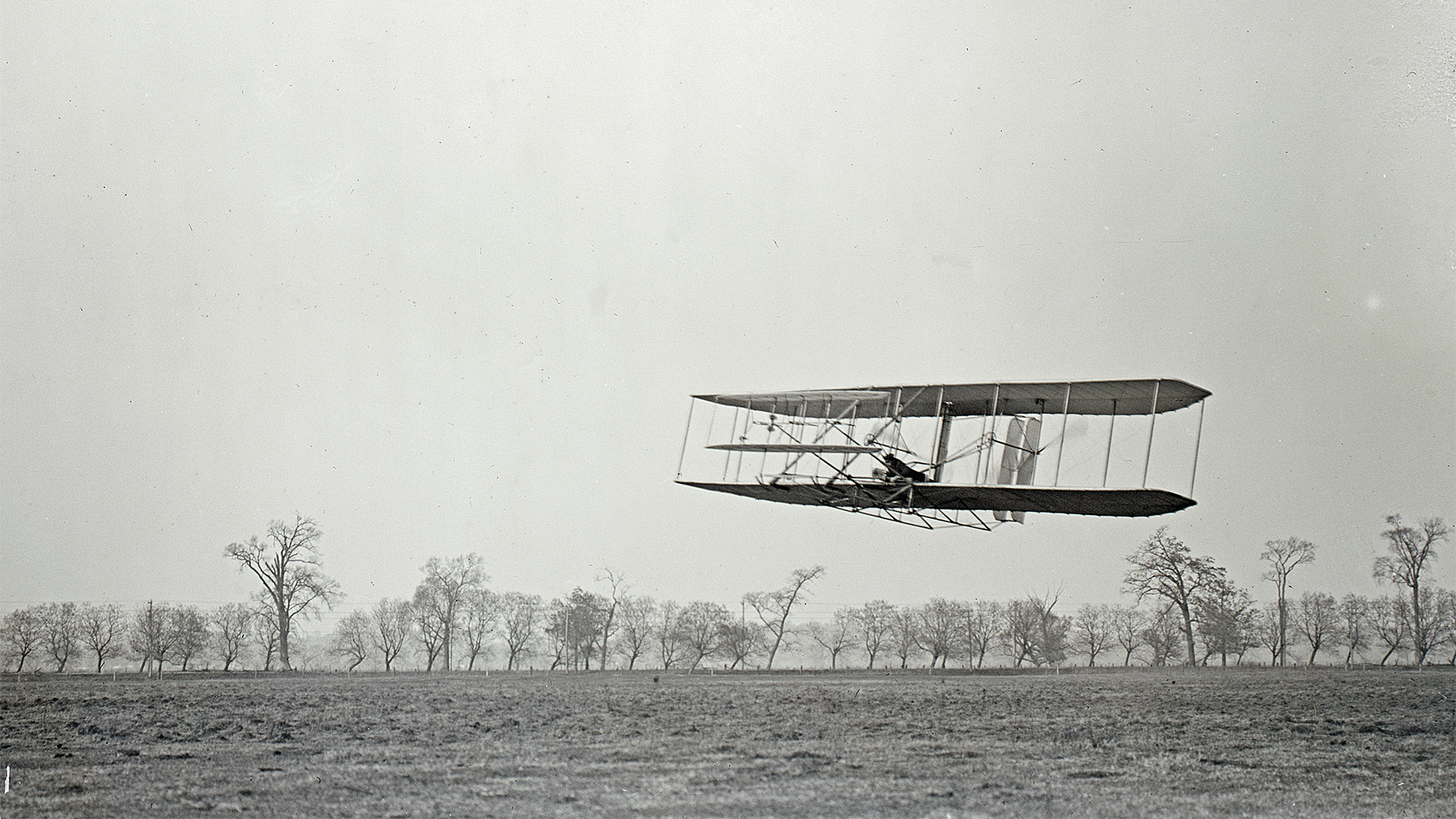
In a couple of generations human pilots will go extinct.
tags: tool, control, transportation, commerce.
The US Federal Aviation Administration this month kicked off what could be the first step in a journey towards the full automation of the airliners we all travel on.
The FAA commissioned the Boeing subsidiary Insitu, based in Bingen, Washington, and the New Jersey Air National Guard to begin investigating ways for civil aircraft to share their airspace with remotely piloted uncrewed aerial vehicles (UAVs).
Once UAVs can avoid passenger jets, remotely piloted cargo planes are likely to take to the skies, pushed by some compelling economics. "The cargo airlines want very much to lose their pilots. The money that would be saved in salary and benefits, including retirement and healthcare costs, is pretty staggering,"
The FAA commissioned the Boeing subsidiary Insitu, based in Bingen, Washington, and the New Jersey Air National Guard to begin investigating ways for civil aircraft to share their airspace with remotely piloted uncrewed aerial vehicles (UAVs).
Once UAVs can avoid passenger jets, remotely piloted cargo planes are likely to take to the skies, pushed by some compelling economics. "The cargo airlines want very much to lose their pilots. The money that would be saved in salary and benefits, including retirement and healthcare costs, is pretty staggering,"
tags: tool, control, transportation, commerce.
Monday, May 24, 2010
Bloomberg reports how Walmart is working to squeeze costs out of their supply chain:
Given Wal-mart's scale of operations, I wouldn't be surprised if, over time, in some markets they will compete for commercial delivery business with Fedex and UPS.
tags: distribution, efficiency, problem, solution, transportation, scale,
From a system perspective, this would be an example of a solution to an efficiency problem. Distribution is being tightly integrated with Sources (manufacturers) and Tools (stores and warehouses) to optimize the system's overall performance. It's an indication that today's brick-and-mortar retail infrastructure is entering the stage of extreme maturity. Once the infrastructure is in place, Wal-mart will be able to either add "out-of network" manufacturers and stores or put them out of business altogether.
The company is contacting all manufacturers that provide products to its more than 4,000 U.S. stores and Sam’s Club membership warehouse clubs, said Kelly Abney, Wal-Mart’s vice president of corporate transportation in charge of the project. The goal is to take over deliveries in instances where Wal-Mart can do the same job for less and use those savings to reduce prices in stores, he said.
Given Wal-mart's scale of operations, I wouldn't be surprised if, over time, in some markets they will compete for commercial delivery business with Fedex and UPS.
tags: distribution, efficiency, problem, solution, transportation, scale,
From a system perspective, this would be an example of a solution to an efficiency problem. Distribution is being tightly integrated with Sources (manufacturers) and Tools (stores and warehouses) to optimize the system's overall performance. It's an indication that today's brick-and-mortar retail infrastructure is entering the stage of extreme maturity. Once the infrastructure is in place, Wal-mart will be able to either add "out-of network" manufacturers and stores or put them out of business altogether.
Sunday, January 03, 2010
Green energy, 19th century-style
Over a hundred years ago, just like today, concerns over the price and accessibility of a major energy source of that day, coal, lead to development of novel technologies. Eventually, oil emerged as "the fuel" of the 20th century.
Source: Smith, C. 2006. Dreadnought Science: The Cultural Construction of Efficiency and Effectiveness. TRANSACTIONS- NEWCOMEN SOCIETY. 2007, VOL 77; NUMB 2, pages 191-216
tags: military, innovation, energy, transportation, source, payload,
Sir William’s [Lord Kelvin] 1881 paper attributed to the heat of the sun — directly or indirectly — almost all the sources of motive power or work on earth. Echoing the central argument of William Stanley Jevons’s book, The Coal Question (1865), he noted that as the subterranean coal stores of the world were becoming exhausted, ‘surely and not slowly’, the price of coal was upward-bound, making windmills or ‘wind-motors’ as well as water-wheels likely to come into their own. Indeed, one of the principal aims of the paper was to point out the feasibility of economical power transmission over long distances by means of electric current generated by water power through the use of efficient vortex turbines of the kind patented by his engineer brother James.

Source: Smith, C. 2006. Dreadnought Science: The Cultural Construction of Efficiency and Effectiveness. TRANSACTIONS- NEWCOMEN SOCIETY. 2007, VOL 77; NUMB 2, pages 191-216
tags: military, innovation, energy, transportation, source, payload,
Thursday, December 17, 2009
Remarkable how the US still pays millions of dollars for a military technology that can be defeated with a $500 laptop and $25.95 worth of software.
I would think that in the nearest future video feeds from police drones will be easily intercepted by hightech criminals.
From a 5-element analysis perspective, this is a very good illustration of how critical Payload packaging is for the overall system integrity and performance. The ability to handle the format of the video feed in question is deeply embedded into all relevant subsystems. Changing the format would require a technology overhaul that would cost the military billions of dollars.
tags: five element analysis, payload, control point, control, information, drones, transportation, 10X, constraint
WSJ. WASHINGTON -- Militants in Iraq have used $26 off-the-shelf software to intercept live video feeds from U.S. Predator drones, potentially providing them with information they need to evade or monitor U.S. military operations.
The Air Force has staked its future on unmanned aerial vehicles. Drones account for 36% of the planes in the service's proposed 2010 budget.
Today, the Air Force is buying hundreds of Reaper drones, a newer model, whose video feeds could be intercepted in much the same way as with the Predators, according to people familiar with the matter. A Reaper costs between $10 million and $12 million each and is faster and better armed than the Predator.
The Air Force has staked its future on unmanned aerial vehicles. Drones account for 36% of the planes in the service's proposed 2010 budget.
Today, the Air Force is buying hundreds of Reaper drones, a newer model, whose video feeds could be intercepted in much the same way as with the Predators, according to people familiar with the matter. A Reaper costs between $10 million and $12 million each and is faster and better armed than the Predator.
I would think that in the nearest future video feeds from police drones will be easily intercepted by hightech criminals.
From a 5-element analysis perspective, this is a very good illustration of how critical Payload packaging is for the overall system integrity and performance. The ability to handle the format of the video feed in question is deeply embedded into all relevant subsystems. Changing the format would require a technology overhaul that would cost the military billions of dollars.
tags: five element analysis, payload, control point, control, information, drones, transportation, 10X, constraint
Tuesday, November 03, 2009
Warren Buffet is betting on fuel-efficient transportation infrastructure:

It's also a bet that there will be no significant change in the transportation technology. Introduction of energy-efficient trucks will take a very long time.
see also Energy Use for Transportation from DOE.
tags: greatest, infrastructure, example, distribution, transportation, efficiency, niche construction,
Nov. 3 (Bloomberg) -- Warren Buffett’sBerkshire Hathaway Inc. agreed to buy railroad Burlington Northern Santa Fe Corp. in what he described as an “all-in wager on the economic future of the United States.”
The purchase, the largest ever for Berkshire, will cost the company $26 billion, or $100 a share in cash and stock, for the 77.4 percent of the railroad it doesn’t already own.
The purchase, the largest ever for Berkshire, will cost the company $26 billion, or $100 a share in cash and stock, for the 77.4 percent of the railroad it doesn’t already own.
Trains stand to become more competitive against trucks with fuel prices high, he[Buffet] has said.

It's also a bet that there will be no significant change in the transportation technology. Introduction of energy-efficient trucks will take a very long time.
see also Energy Use for Transportation from DOE.
tags: greatest, infrastructure, example, distribution, transportation, efficiency, niche construction,
Sunday, October 18, 2009
future platforms for sensor deployment?
Continuing developments in the world of small airplanes:
and radio-controlled insects:

tags: control, transportation, flight, brain, invention, , 10x, drones
A mere 30 centimeters long, the MAVion combines fixed wings with two counter rotating propellers, allowing it to operate with high aerodynamic efficiency--even in adverse conditions, according to the professor.
"The ultimate goal of the MAVion concept is to demonstrate a twofold capability using the same vehicle: fast forward flight and hover flight," Moschetta explained. "The two counter-rotating tandem propellers provide a simple means to enhance yaw control, which is particularly important in vertical flight."
"The ultimate goal of the MAVion concept is to demonstrate a twofold capability using the same vehicle: fast forward flight and hover flight," Moschetta explained. "The two counter-rotating tandem propellers provide a simple means to enhance yaw control, which is particularly important in vertical flight."
and radio-controlled insects:
remote control of insects in free flight via an implantable radio-equipped miniature neural stimulating system. The pronotum mounted system consisted of neural stimulators, muscular stimulators, a radio transceiver-equipped microcontroller and a microbattery. Flight initiation, cessation and elevation control were accomplished through neural stimulus of the brain which elicited, suppressed or modulated wing oscillation. Turns were triggered through the direct muscular stimulus of either of the basalar muscles.

tags: control, transportation, flight, brain, invention, , 10x, drones
Monday, July 13, 2009
More background material for the Greatest Innovations course:
Infrastructure for efficient distribution of goods and information seems to be the key for the reinvention cycles (e.g.):
via Greg Mankiw's blog.
Over the centuries, New York City has survived crisis after crisis—the British defeat of the Dutch, Leisler’s Rebellion, the 1863 draft riots, the 1929 crash, the attack on the Twin Towers. But none of these shocks struck as hard as the American Revolution. New York’s recovery from that shock stands as a testament to the importance of human capital in reinventing a city.
Infrastructure for efficient distribution of goods and information seems to be the key for the reinvention cycles (e.g.):
Manhattan’s largest industry today, printing and publishing, also grew out of its port. It wasn’t just that books, like any other good, had to be shipped to their customers. It was also that European ideas came to the United States by sea. For example, New York’s shipping prominence allowed the Harper brothers to get pirated British books before their Philadelphia competitors could. The Harpers’ ability to access bootlegged books easily was an early example of Gotham’s role as America’s most international city—a role that it still plays.
via Greg Mankiw's blog.
Subscribe to:
Posts (Atom)