Showing posts with label imagination. Show all posts

Thursday, November 07, 2013

Innovation through system thinking: hockey

(nhl.com) "Freddie[Shero] was the first coach to use team systems," Clarke said. "Everybody played the same way on the ice. Every player was taught the same way, even though different players had different roles. And that was way ahead of hockey's time. Nobody else ever did that. … He was by far the most progressive coach ever."
Source:nhl.com
 One of the hallmarks of system thinking is to approach a problem at two levels: individual element (player) and the system as a whole (team). Shero treated the entire team as a unit, making sure it executes a certain set of game strategies, while other coaches before him focused on the player.

Another example of system thinking would be historical insights into a "new big thing." For example, historian Fernand Braudel, who covers the emergence of capitalism in the 15-18th centures, writes:
To use one of Kula's metaphors, one must keep looking down into the well, into the deepest water, down into material life, which is related to market prices but is not always affected or changed by them. So, any economic history that is not written on two levels-that of the well's rim and that of the depths-runs the risk of being appallingly incomplete. (Afterthoughts on Material Civilization and Capitalism. p. 42).
In our invention system (Scalable Innovation, chapter 9), we use the Three Magicians method to help people develop system thinking by "leveling up", i.e. looking at what they are creating from a different, higher perspective. As Alan Kay famously said, a change in perspective is worth 80 IQ points. 

tags: system, invention, innovation, creativity, psychology, magicians, imagination

Friday, October 11, 2013

Creativity Quote of the Day: A Change in Perspective...

Yesterday, John Markoff, a Senior Science Writer for the New York Times, gave a guest lecture at our Stanford University CSP course "The Greatest Innovations of Silicon Valley" (BUS/SCI 117). He talked about cultural, scientific, and technological developments in the valley that lead to the creation of the modern Personal Computer (PC). Here's one of the fascinating insights from his talk:

A change in perspective is worth 80 IQ points.
- Alan Kay.

Thursday, September 06, 2012

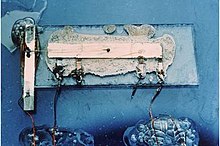
Quote of the Day: Geoffrey Moore about the invention of the Integrated Circuit.

The Integrated Circuit (IC) invented in the late 1950s is one of the greatest inventions of all time. We'll be discussing the impact of ICs on the world in Lecture 2 of the Greatest Innovations of Silicon Valley course John Kelley and I will be teaching this quarter at Stanford University CSP.


Today, all computing devices — from tiny brain implants to giant data centers — use the technology for running a myriad of applications. Nevertheless, according to Gordon Moore, the author of the famous Moore's Law, at the time of the invention it was extremely difficult to envision the future importance of IC. Here's an excerpt from an interview Gordon Moore gave to Michael Wolff in 1976,

Wolff:
You didn't realize at the time how significant this would be?
Moore:
Absolutely not. Even after a family of integrated circuits was introduced, we didn't have the remotest idea that this was truly a major difference in the way electronics was going to be done in the future.

In my view, the moral of the story is, when you've made an invention use your imagination to see how the invention can scale up to revolutionize the world. Several tools would be particular applicable in this situation: the STM operator, 10X diagram, 4Q diagram, a system diagram in combination with the S-curve (to check for Synthesis).

tags: quote, invention, innovation, example, technology, 10X, imagination, creativity

Tuesday, February 08, 2011

Creative lying

The New Scientist reports on a recent study connecting lying and increased brain activity:

Our brains are naturally better at telling the truth than lying, but repeated lying can overcome our tendency for veracity, making subsequent lying easier – and possibly undetectable.

Neuroimaging studies have shown that people's brains show considerably more activity when they are lying than when they are not, particularly in the prefrontal cortex, suggesting that lying requires extra cognitive control and inhibition of truth-telling. Lying also takes measurably longer than telling the truth.

Is it possible that good sci-fi and fantasy writers who necessarily have to lie to tell a good story overcome their natural truth-telling "deficiency"? This may also be true of inventors who usually get better at creating new ideas as they move from specific implementations to wider concepts.

On the other hand, consistent use of models, or abstract representations, helps reconcile imagination with the reality because a new idea my represent a "lie" in today's world, but be "truthful" in a future world defined by the model. For example, the Earth's rotation around the Sun is a "lie" in everyday experience, but "truth" in Copernicus' heliocentric planetary system. Reconciliation between these two systems of beliefs has taken over three hundred years, probably because we, the learners, are hardwired to tell "truth."

tags: dilemma, creativity, problem, trade-off, imagination, method, control


Bruno Verschuere, Adriaan Spruyt, Ewout H. Meijer, Henry Otgaar, The ease of lying, Consciousness and Cognition, In Press, Corrected Proof, Available online 18 November 2010, ISSN 1053-8100, DOI: 10.1016/j.concog.2010.10.023.
(http://www.sciencedirect.com/science/article/B6WD0-51H00F7-3/2/e1673fbd75cbe1453cb02777362fc265)

Tuesday, February 01, 2011

Turning bad ideas into great solutions

Scott Adams, the virtual father–and-mother of Dilbert, writes about an interesting creativity technique:

I spent some time working in the television industry, and I learned a technique that writers use. It's called "the bad version." When you feel that a plot solution exists, but you can't yet imagine it, you describe instead a bad version that has no purpose other than stimulating the other writers to imagine a better version.

For example, if your character is stuck on an island, the bad version of his escape might involve monkeys crafting a helicopter out of palm fronds and coconuts. That story idea is obviously bad, but it might stimulate you to think in terms of other engineering solutions, or other monkey-related solutions. The first step in thinking of an idea that will work is to stop fixating on ideas that won't. The bad version of an idea moves your mind to a new vantage point.

Essentially, the goal is to shift your thinking from a real-world implementation to the outcome you want to achieve by whatever means possible: flying monkeys, gnomes, magic wands, and etc. Maxwell's demons would also be great candidates for implementing a "bad version" that eventually leads to great solutions.

TRIZ has at least two tools to accomplish a similar goal: The Ideal Solution technique and The Gnomes method (often called the Smart Little People method - argh! what an ugly translation from the original Russian Метод Маленьких Человечков).


tags: ideality, creativity, imagination, psychology, triz, method,

Thursday, June 10, 2010

Lying: an out-of-the box experience

Here's a study that may hint at a reason why so many people are bad at thinking "outside of the box":

A team of researchers has conducted a study which argues that liars betray their actions through drawing.

"Another distinguishing factor was the perspective of the drawing. Fifty-three per cent of truth-tellers penned a drawing from their own first-person perspective at the scene; 47 per cent opted for a birds-eye view. By contrast, 81 per cent of liars went for the birds-eye view and just 19 per cent for the first-person perspective."

When we invent and/or work to develop creative ideas we have to lie. That is, we have to use our imagination to come up with a description of events that haven't happen yet. These events are still in a possible future, therefore we can't tell the truth about them. But, since most of the people are trained to tell the truth, they have trouble creating the big picture, e.g. draw the birds-eye view of a problem situation and its potential solutions. Over the last six years that I've been teaching my Principles of Invention class at Stanford, seeing and drawing the big picture has been by far the most difficult exercise for the students. Here's a snippet from a recent e-mail from one of them:

Even in the class discussions one could see people getting trapped in linear thinking and unable to climb above the problem and see the big picture. Practicing “climbing on the roof” to see the big picture is what I will focus on to improve as an inventor.

Drawing by itself is not going to make people more creative. To produce good results, it needs to be combined with systematic tools that teach people how to step out of the first-person perspective.

tags: creativity, magicians, imagination, class, example, dilemma

reference: Vrij, A., Leal, S., Mann, S., Warmelink, L., Granhag, P., & Fisher, R. (2010). Drawings as an innovative and successful lie detection tool. Applied Cognitive Psychology DOI: 10.1002/acp.1627

Monday, April 19, 2010

Mind-boggling engineering

Precision printing technology finds new applications in totally unexpected areas:

A new technology early in clinical trials could make it possible for doctors to use specialized 3D printers to fabricate new human tissue based on a patient's own cells.


When people see this type of devices they often think about artificial organs that can be produced to replace failed ones. But what about totally new organs or new ways to extend human abilities? For example, a third eye that can see in the dark, smell implants, novel taste buds, blood vessels that feed certain brain areas, so we don't get tired while doing demanding mental tasks. Once the technology is sufficiently developed and tested, the impact on the society could as big as gene engineering.

tags: health, tool, system, imagination, technology, system

Sunday, March 28, 2010

Asking for directions


tags: youtube, media, imagination

Tuesday, January 12, 2010

Imagination by combination

In the Middle Ages cotton was cultivated in Asia and shipped to Europe either as raw fiber or cloth. Through their contacts with Asian traders, Europeans learned that cotton originated as a plant, but the only source of fiber they knew was sheep. That is, sheep produced wool, which was a major European, mostly English, trade good at the time. Putting two and two together, a) cotton is a plant; b) fiber grows on sheep, people came up with Vegetable Lamb of Tartary, a plant with sheep fruits.
By today's standards, this creature would represent a marvel of genetic engineering.

Wool loomed large in medieval thinking in England. Here's how King Charles II stimulated consumption of this strategic product:

Subsequent to the BURIAL IN WOOL ACTS 1667 and 1678 all bodies were to be buried in wool only, unless they have died from the Plague and an affidavit sworn accordingly. The penalty for not doing so was £5. These were repealed in 1814.
It was decreed that: 

"No corps should be buried in anything other than what is made of sheep's wool only; or put into any coffin lined or faced with any material but sheep's wool, on pain of forfeiture of £5."

So, here we have a new imagined animal created by a simple combination of two common very important natural objects: plant and animal. Their regular sizes and functions do not change: plant produces fruit (sheep), the sheep produces cotton.
Nowadays, we got a lot more sophisticated imagination. For example, in Avatar they have the Na'vi people, who look like a combination of a cat and a human. But to make the new creature appear more fantastic, designers doubled her size, made her skin blue, and added the ability to connect her nervous system to local plants and animals. Why? Probably, because network looms large in our lives today, just the way wool loomed large in medieval England.


tags: imagination, brainstorm, movie, economics, biology, information

Thursday, December 24, 2009

Chief Belief Officer

Devdutt Pattanaik talks at TED about the role of imagination in human's practice of world transformation. One particular technique, contrasting one-life vs infinite-lives styles of thinking, is similar to TRIZ Size-Time-Cost (STC) operator. The operator helps the imagineer to stretch various dimensions of the problem or object to discover qualitative transitions that otherwise are often missed in "normal" thinking.


Youtube video link here. Fast forward to the 10 minute point.

tags: control, operators, course, imagination, triz, psychology, exercise,10x

Friday, August 28, 2009

2 + 2 = 4

2 wolves + 2 rabbits = 2 wolves

1 dog + 1 dog + 1 dog = 1 Cerberus


for more creature arithmetic see http://www.flickr.com/photos/preshaa/3847027500/

Thursday, May 14, 2009

Alison Gopnik, a professor of psychology at UC-Berkeley, on [inventive] creativity:

For human beings the really important evolutionary advantage is our ability to create new worlds. Look around the room you're sitting in. Every object in that room - the right angle table, the book, the paper, the computer screen, the ceramic cup was once imaginary. Not a thing in the room existed in the pleistocene. Every one of them started out as an imaginary fantasy in someone's mind.