- April 17 (Bloomberg) -- House Energy and Commerce Committee Chairman Henry Waxman said he won’t compromise on his proposed 20 percent reduction in greenhouse gases over the next decade...
===
- The $3.375 billion Energy Department grant program will give out grants ranging from $500,000 to $20 million for smart-grid technology deployments. It will also give out grants of $100,000 to $5 million for the deployment of grid monitoring devices.
The $615 million for demonstration projects will specifically fund exhibitions that verify technology viability and examine new business models, give energy storage demonstrations, or exhibitions that demonstrate grid monitoring devices that allow system operators to manipulate electric flows in real time.
- CoaLogix a unique company that specializes in filtering out harmful agents from coal-fired plant emissions, has secured $11.5 million to deploy its technology for more electric utilities. Offering a combination of chemical processes and equipment, the Acorn Energy subsidiary says it can substantially reduce environmental footprints for plants that might otherwise continue to pump harmful fumes into the atmosphere.
Sunday, April 19, 2009

Friday, April 17, 2009
Another reason why new technologies rarely, if ever, succeed in established, rather than emerging, markets.
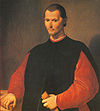 "And it ought to be remembered that there is nothing more difficult to take in hand, more perilous to conduct, or more uncertain in its success, then to take the lead in the introduction of a new order of things. Because the innovator has for enemies all those who have done well under the old conditions, and lukewarm defenders in those who may do well under the new. This coolness arises partly from fear of the opponents, who have the laws on their side, and partly from the incredulity of men, who do not readily believe in new things until they have had a long experience of them." The Prince, by Niccolo Machiavelli. Chapter VI.
h/t Carly Fiorina @Stanford.
References:
1. Niccollo Machiavelli. The Prince. 1532.
2. Greg A Stevens; James Burley. Piloting the rocket of radical innovation. Research Technology Management; Mar/Apr 2003.
3. Clayton Christenen. The Innovator's Dilemma. 1997. (Chapter 6?).
4. Reid Hoffman. Choosing the Entrepreneurial Path. 2007. (a Stanford talk).
5. Eugene Shteyn. How to Invent. 2009(?). (chapter 2).
"And it ought to be remembered that there is nothing more difficult to take in hand, more perilous to conduct, or more uncertain in its success, then to take the lead in the introduction of a new order of things. Because the innovator has for enemies all those who have done well under the old conditions, and lukewarm defenders in those who may do well under the new. This coolness arises partly from fear of the opponents, who have the laws on their side, and partly from the incredulity of men, who do not readily believe in new things until they have had a long experience of them." The Prince, by Niccolo Machiavelli. Chapter VI.h/t Carly Fiorina @Stanford.
References:
1. Niccollo Machiavelli. The Prince. 1532.
2. Greg A Stevens; James Burley. Piloting the rocket of radical innovation. Research Technology Management; Mar/Apr 2003.
3. Clayton Christenen. The Innovator's Dilemma. 1997. (Chapter 6?).
4. Reid Hoffman. Choosing the Entrepreneurial Path. 2007. (a Stanford talk).
5. Eugene Shteyn. How to Invent. 2009(?). (chapter 2).
Public investment into VC firms: good or bad?
According to VentureBeat, it's been really good for some VCs:
This looks very similar to patterns described by G.A.Akerlof, et al in:
Cleverly, Oak, along with some other venture firms such as VantagePoint and New Enterprise Associates, realized becoming a massive venture capital firm would help them raise money. Their size allowed them to absorb large checks the large pension funds wanted to give them. Yet, they retained the “VC” status, and thus were appealing to LPs (Limited Partners), who at the same time were avoiding private equity and hedge funds because of the crowded nature of those industries. (Indeed, NEA and Oak alone accounted for 20 percent of all VC raised in 2006.) Finally, with legal mandates to invest in the VC sector, the LPS were forced to invest in some weak VC firms. There simply wasn’t enough room in the great VC firms — Sequoia, Kleiner, Benchmark and their ilk — to absorb all the LP money. The vast majority of VC firms actually lose money, and yet many of them have been supported year after year because of the crazy excess of money flowing to the sector.
This looks very similar to patterns described by G.A.Akerlof, et al in:
- Looting: The Economic Underworld of Bankruptcy for Profit
- Brookings Papers on Economic Activity, Vol. 1993, No. 2 (1993), pp. 1-73
Thursday, April 16, 2009
Don Reisinger, a CNet tech columnist, compares future "awesome" Zune HD with today's iPod Touch.
It's remarkable how over the last 5 years user value moved from the device you pay for to the service that comes "for free". In Don's words:
This would make an excellent example for a Technology Battle exercise. We are no longer comparing devices (Tool-level), rather, whole end-to-end experience systems compete for user attention. Here, the service, i.e. Control-level component, makes all the difference.
It's remarkable how over the last 5 years user value moved from the device you pay for to the service that comes "for free". In Don's words:
But the major issue with the Zune since its release has little to do with the device itself. The Zune Marketplace is, in many respects, a joke. I've used it on numerous occasions and each time I end up missing the iTunes store.
This would make an excellent example for a Technology Battle exercise. We are no longer comparing devices (Tool-level), rather, whole end-to-end experience systems compete for user attention. Here, the service, i.e. Control-level component, makes all the difference.
Wednesday, April 15, 2009
Dilemma of the Day.
From an inventor-innovator perspective, emergence of storage in the system is a sign of great opportunities to come. Especially so, if it relates to information about a vast number of people.
Science Magazine reports that over the last 40 years hospitals accumulated millions of blood samples taken from newborns. Before, the samples were used in mandatory screening for certain rare diseases. Now, with the advent of DNA testing, these samples can be used, for example, for retrospective analysis of links between genes and certain health problems for populations of entire countries. [The situation is very similar to breast cancer testing I blogged about earlier.]
The new DNA testing capabilities create ethical and legal problems because in the past parents of the babies did not give their consent to tests that became possible in the future.
Thus, a dilemma: if the new studies are done anonymously, people will never find out about potential threats to their health; on the other hand, if the identities of the affected people are made known, they will lose their privacy and, due to limitations of early research, will be treated for possible, rather than probable, diseases.
References:
NEWBORN BLOOD COLLECTIONS: Science Gold Mine, Ethical Minefield
Jennifer Couzin-Frankel (10 April 2009)
Science 324 (5924), 166. [DOI: 10.1126/science.324.5924.166]
Tuesday, April 14, 2009
Opportunity recognition
Scott Kriens, Chairman of the Board of Juniper Networks, talks briefly about the importance of finding the right problem to work on:
"If you have a totally different problem to solve, ... and you are the first one who tries solving it, you have an opportunity to be equally smart, but start working on it [the problem] first."
Monday, April 13, 2009
Silicon Valley is a process, not a place
Today, 4/13/09, the most popular article in WSJ is about taxes. The topic should be of no surprise, given that taxes for many Americans are due in 48 hours. What is surprising for me, though, is the distribution of the tax load:
Well, if we believe what VCs are telling us, the trend is toward globalization of venture capital. G.S. Burill mentioned it, Janice Roberts of Mayfield Fund talked about it, David Rothkopf described it in detail. So, if we put two and two together, i.e. the increasing tax burden in the US and the shift of VC funds overseas, we can predict that high-risk money will increasingly flow from the US to India and China. Add demographic trends on top of it, and you get two largest emerging markets for technology capital and technology goods/services ever.
Even Warren Buffet, who was always reluctant to invest into high-tech in the US, has decided to acquire a large chunk of a Chinese technology company.
Am I right? And if yes, what does this mean for innovation in the US?
A very small number of taxpayers -- the 10% of the country that makes more than $92,400 a year -- pay 72.4% of the nation's income taxes.
...those who made less than $44,300 in 2001 -- 60% of the country -- paid a paltry 3.3% of all income taxes. By 2005, almost all of them were excused from paying any income tax. They paid less than 1% of the income tax burden. Their share shrank even when taking into account the payroll tax. In 2001, the bottom 60% paid 16.3% of all taxes; by 2005 their share was down to 14.3%. All the while, this large group of voters made 25.8% of the nation's income.
There's a general expectation out there that the Obama administration will shift the tax burden further in the direction of the top brackets. Since change always creates new problems, we should expect higher demand for solutions that enable high-worth individuals escape this emerging tax problem. How can they do it, besides finding loopholes in the legal code?...those who made less than $44,300 in 2001 -- 60% of the country -- paid a paltry 3.3% of all income taxes. By 2005, almost all of them were excused from paying any income tax. They paid less than 1% of the income tax burden. Their share shrank even when taking into account the payroll tax. In 2001, the bottom 60% paid 16.3% of all taxes; by 2005 their share was down to 14.3%. All the while, this large group of voters made 25.8% of the nation's income.
Well, if we believe what VCs are telling us, the trend is toward globalization of venture capital. G.S. Burill mentioned it, Janice Roberts of Mayfield Fund talked about it, David Rothkopf described it in detail. So, if we put two and two together, i.e. the increasing tax burden in the US and the shift of VC funds overseas, we can predict that high-risk money will increasingly flow from the US to India and China. Add demographic trends on top of it, and you get two largest emerging markets for technology capital and technology goods/services ever.
Even Warren Buffet, who was always reluctant to invest into high-tech in the US, has decided to acquire a large chunk of a Chinese technology company.
Am I right? And if yes, what does this mean for innovation in the US?
Sunday, April 12, 2009
Gerald M. Edelman:
Source: G.M.Edelman. Second nature: brain science and human knowledge. Yale University Press. 2006.
If our scientific description of the world is concerned with nature, our creativity reflects the ability of our brain to give rise to a second nature.(p.100)
...no information is provided on that which is to be recognized. So if instruction is precluded and yet recognition of a wide variety of states is required, the price paid is a certain loss of specificity. That loss, for example, as ambiguity or indeterminacy in language, is the price that must be paid if the range of signals to be responded to is large. We know, in fact, that the econiche in which animals must survive has an enormous number of signals to which an individual must adapt. For individuals and species to survive, a trade-off must be made between specificity and range (p. 101-2).
Source: G.M.Edelman. Second nature: brain science and human knowledge. Yale University Press. 2006.
Half way through the Stanford University Entrepreneurial Thought series, here's my three must-see or must-listen-to lectures:
1. G.Steven Burill. An excellent example of a Silicon Valley entrepreneurship services "machine" that keeps producing successful startups.
- the valley's behind-the-scenes VC and services infrastructure.
2. Reid Hoffman, founder of PayPal, LinkedIn, and other startups. A personal narrative of a successful entrepreneur.
- choosing a problem to solve and risks to take.
3. Tien Tzuo, Chief Strategy Officer at Salesforce.com. A series of insights on how a startup took advantage of a tectonic shift in the Enterprise Software industry.
- Jefrey Moore's "Crossing the Chasm" paradigm has become obsolete.
Each of these talks deserves a separate blog post, so I will get back to them after I complete listening to the whole series.
Saturday, April 11, 2009
Everything's amazing, nobody's happy
Comedian Louis CK talks about amazing technologies that we take for granted.
He is really funny and absolutely right. We don't get excited about electric lights or horseless carriages any more. Which is great news for inventors and innovators because new ideas cannot live among people who are still hyped up about past technologies.
On a somewhat related note, I am thinking about teaching a new 5-session class at Stanford CSP: The Greatest Inventions of All Times. Its purpose would be a) show how certain old, even ancient, technologies shaped our civilization; b) explore possible future directions for their evolution.
Here's my Top 5 topics so far:
1. Money and Markets.
2. Math and Computing.
3. Art and Information.
4. Home and Architecture.
5. Fire and Energy.
update: is Time an invention?
Friday, April 10, 2009
CNET: Twittering on a two thousand year old event:
Now, I can think of a personalized twitter-based teleprompter for any event: a religious ritual, a medical surgery, a timed SAT practice test, ...
In observance of Good Friday, a New York church has been Twittering the story of the Passion--the biblical tale of the hours leading up to Jesus' crucifixion. This means that subscribers will receive 140-character updates coming from a set of Twitter accounts run by people playing characters in the story.
Now, I can think of a personalized twitter-based teleprompter for any event: a religious ritual, a medical surgery, a timed SAT practice test, ...
Thursday, April 09, 2009
Taboo trade-offs
I am reading a paper by A. Peter McGraw and Philip E. Tetlock about "taboo trade-offs", i.e. trade-offs that, according to the authors' definition, violate deeply held intuitions about relationships and sacred values. Examples would be buying and selling votes in political elections, buying and selling sex with one's girlfriend, etc.
The key insight from the article is that market-pricing(MP) approach that underlies modern monetary transactions is bound to trigger emotional resistance when used in a variety of social contexts.
The lesson for inventor and/or innovator is to appreciate social implications of the changes he/she proposes, and ensure that his/her business model either does not carry inherent contradictions, or, even better, helps promote a healthy combination of social and economic values.
For example, LinkedIn social network works well with a for-profit job ads market. The company makes money by facilitating access to employment, which benefits both, potential employees and employers. On the other hand, Facebook's attempts to monetize personal product/service prefrences of one's friends by selling targeted ads is often perceived negatively by the community, and is treated more like a nuisance, rather than a benefit.
As A.P.McGraw and P.E.Tetlock note, "It is socially awkward to do business in a profit-maximizing fashion across [social] relational boundaries."
Remarkably, the modern US health care system probably encourages growth of medical costs because it breaks a direct financial link between doctors and patients. Today, most of the payments are handled by hospitals and insurance companies that had been created specifically for profit-maximizing purposes. Huge government bureaucracies like Medicare and Medicaid are not perceived as a next-door neighbor either.
Also, a good quote to underline the difference between mundane (homo economicus) and inventive approach to trade-offs, "The capacity to make trade-offs efficiently is a defining attribute of homo economicus."
References:
McGraw, A. P., P. E. Tetlock. 2005. Taboo trade-offs, relational framing and the acceptability of exchanges. J. Consumer Psych. 15 2–15.
Kristina Shampanier, et all. 2007. Zero as a Special Price: The True Value of Free Products. Marketing Science. Vol. 26, No. 6, November–December 2007, pp. 742–757.
Wednesday, April 08, 2009
William J. Bernstein in The Birth of Plenty:
This is quite similar to the original brainstorming technique developed by Alex F.Osborn. He envisioned that during a brainstorming session people wouldn't go into analysis or problem solving right away. Rather, they would try to come up with as many ideas as possible in a judgment-free environment. Only later, when a good number of potential solutions is collected [or the time runs out], the same or a completely different group of people would do an evaluation session. As the result of the whole exercise, brainstormers would create a market for ideas and solutions.
Over time, the original brainstorming evolved into problem-solving meetings, and the free-wheeling idea market approach got lost along the way. Too many ideas, too little time.
Markets work best when all of the buyers and sellers of a particular item are confined to the same place at the same time. In such a situation, the pricing of that item becomes very "efficient", that is to say, everyone buys and sells at nearly the same price. (p. 43)
This is quite similar to the original brainstorming technique developed by Alex F.Osborn. He envisioned that during a brainstorming session people wouldn't go into analysis or problem solving right away. Rather, they would try to come up with as many ideas as possible in a judgment-free environment. Only later, when a good number of potential solutions is collected [or the time runs out], the same or a completely different group of people would do an evaluation session. As the result of the whole exercise, brainstormers would create a market for ideas and solutions.
Over time, the original brainstorming evolved into problem-solving meetings, and the free-wheeling idea market approach got lost along the way. Too many ideas, too little time.
Tuesday, April 07, 2009
Dilemma of the Day
The complexity of systems models is both a blessing and a curse. It is a blessing because it enables such models to recognize the multiple complex levels of intelligence. It is a curse because the models become more difficult to test.
Source: Robert J. Sternberg. Wisdom, Intelligence, and Creativity Synthesized. 2003. Cambridge University Press. Cambridge. UK. (page 39).
Selling with a smile
A curious outcome of a behavioral economics experiment:
I wonder whether online smileys have the same effect. If the answer is yes, then it might mean that we somehow perceive the general mood of the situation, rather than a specific facial expression. :))))
a fleeting exposure to a smiling face makes people more likely to make risky investment decisions.
Volunteers who were shown a happy face were much more likely to choose the risky stocks. It made no difference whether the face was displayed long enough for the volunteers to register it consciously, or flashed up fleetingly so it was only perceived subliminally.
I wonder whether online smileys have the same effect. If the answer is yes, then it might mean that we somehow perceive the general mood of the situation, rather than a specific facial expression. :))))
Monday, April 06, 2009
A new drug-free therapy wipes away fearful memories in rats and humans. The simple treatment might eventually help patients with post-traumatic stress disorder, say researchers.
Unfortunately, this is not a therapy yet, and researchers don't claim to have the ability to wipe out one's memories. Rather, they think they've found a way to prevent certain memories from reconsolidating.
Despite proof of principle experiments in rats and humans, Monfils says researchers should proceed with caution in applying the new findings to treating PTSD or other anxiety disorders. Some people's reconsolidation windows may be longer than others, and people respond differently to stressful situations.
"I'm a simple rat researcher. I'm in no way going to suggest that I'm going to step in and tell clinicians how they should treat their patients," she says.
Journal reference: Science (DOI: 10.1126/science.1167975)
It would be a good after-air-travel pill: you take it, and forget about security lines at the airport, airline food, sitting for hours in an uncomfortable coach-class chair, waiting for lost baggage...
Sunday, April 05, 2009
K.Eisenhardt summarizes the difference between theory-building and hypothesis-testing research:
Unfortunately, the education system traditionaly emphasizes the last stage of the process, as being more "scientific". Though, it doesn't have to be that way. For example, brainstorming as a method was proactively taught with good results in many schools in the 1960s and 1970s.
References:
Title: Building Theories from Case Study Research
Author(s): Kathleen M. Eisenhardt
Source: The Academy of Management Review, Vol. 14, No. 4 (Oct., 1989), pp. 532-550
Publisher(s): Academy of Management
Stable URL: http://www.jstor.org/stable/258557
As Pettigrew (1988) noted, given the limited number of cases which can usually be studied, it makes sense to choose cases such as extreme situations and polar types in which the process of interest is "transparently observable." Thus, the goal of theoretical sampling is to choose cases which are likely to replicate or extend the emergent theory. In contrast, traditional, within-experiment hypothesis-testing studies rely on statistical sampling, in which researchers randomly select the sample from the population. In this type of study, the goal of the sampling process is to obtain accurate statistical evidence on the distributions of variables within the population.We can draw a similar contrast between the processes of invention and implementation. First, to make a problem "transparently observable" inventor has to "go wide", i.e. stretch out the parameters of the situation(s) in which the problem occurs. Second, s/he has to create a theory of operation or a model (this is especially important for complex problems). E.g., s/he can identify a key dilemma, draw up a 5-element or a 10X diagram, etc. Then, when the problem is clearly identified, explored, and relatively abstract solutions are found, the inventor needs to develop "hypothesis-testing" implementation strategy and eliminate the noise.
Unfortunately, the education system traditionaly emphasizes the last stage of the process, as being more "scientific". Though, it doesn't have to be that way. For example, brainstorming as a method was proactively taught with good results in many schools in the 1960s and 1970s.
References:
Kathy Eisenhardt, co-director of Stanford Technology Ventures Program and professor in Management Science and Engineering, talks about research in understanding entrepreneurship. She describes several key strategy aspects that can help a startup to be very successful, including team composition, market selection, fundraising approaches, working with the media, execution, balance between structure and ambiguity, and etc.
She specifically mentions that to get the media interested in your company you have to have a good story. The story doesn't have to be true, though. Whatever creates positive attention is good for the business.
Creativity, personal brilliance, deep dives, brainstorms, epihpanies make exellent stories. Great entrepreneurs and inventors, like Edison, Walt Disney, Steve Jobs and others, had been really good at exploiting this media bias. Probably, that is why the general public's view of innovation work is so distorted ( e.g. see Fundamental Attribution Error). Inventing a good technology helps. Putting a good story around it rules. We should be able to use the Three Magicians technique to help inventors with story development tasks.
Friday, April 03, 2009
David Brooks in NYT about the communications aspect of the current economic crisis:
To me, the most interesting factor is the way instant communications lead to unconscious conformity. You’d think that with thousandsof ideas flowing at light speed around the world, you’d get a diversity of viewpoints and expectations that would balance one another out. Instead, global communications seem to have led people in the financial subculture to adopt homogenous viewpoints. They made the same one-way bets at the same time.From a system perspective, communications work to synchronize various elements of the system. Under general information overload, people tend to synchronize on what attracts immediate attention, which nowadays is infotainment rather than information. Therefore, the latest financial bubble can be considered as one of the consequences of rapid media/internet growth. I would argue that in a similar pattern another major economic downturn, the Great Depression, followed a major communications breakthrough, radio, and the emergence of mass media.
New Scientist reports on a good problem:
Although touch screens are growing in popularity with designers, tapping at images of buttons on a small, slippery surface does not provide a good user experience. Figuring out better ways to input text on touch screens is important for more than just phones too, as they become common in other places like desktop computers, gaming devices and coffee tables.The solutions offered are very disappointing, because they don't address the core of the problem.
Thursday, April 02, 2009
This sounds like a very good solution to a very important problem. The world's coal reserves are huge, the demand for energy is growing, and it will be a while before renewables make a sizable impact.
If your mission is to make coal less polluting, China is a good place to start.
GreatPoint Energy, a start-up with technology to convert coal to cleaner-burning natural gas, expects to open a demonstration plant in China in three years.
The plant would cost between $100 million and $200 million and be located at a coal-fired power plant operated by Datang Huanyin Electric Power. Most of the financing for the plant will come from Datang, one of the biggest single polluters on the planet, according to GreatPoint Energy CEO Andrew Perlman.
Wednesday, April 01, 2009
I found a good quote on the importance of problems for personal growth in Ichak Adizes' book "Managing Corporate Lifecycles":
Each of us is as "big" as the problems we handle and struggle with. "Small" people deal with small problems: the kind of car they own and the quality of their neighbor's kitchen wallpaper. "Big" people struggle with such problems as the quality of their children's education, the environment they will leave behind, and the quality of life in their communities... Addressing and being able to solve bigger and bigger problems means that our strengths and capacities are improving. We need to emancipate ourselves from small problems to free the energy to deal with bigger problems. (p.6).It's tempting to compare the size of each other's problems :) Size does matter, especially, from somebody else's, i.e. external, point of view. Nevertheless, for pesonal growth marginal size of the problem matters the most. In other words, a positive difference between a new challenge you are willing to take on now and the most difficult problem you solved to-date is be a sign of growth. Living with this difference tends to create Flow, a mental state of full involvement and maximum personal effort.
Acemoglu, D. et all. (MIT). Experimentation, Patents, and Innovation. 2008.
...a simple patent system, where a copying fi…rm has to make a prespeci…fied payment to the innovator, can implement the optimal allocation. When the optimal allocation involves simultaneous experimentation, the patent system makes free-riding prohibitively costly and implements the optimal allocation as the unique equilibrium. When the optimal allocation involves staggered experimentation, the patent system plays a more subtle role. It permits ex post transmission of knowledge but still increases experimentation incentives to avoid delays.Is Open Source approach consistent with the proposed model? For example, when free-riding is not a problem, do we need to impose a "transfer" fee?
The patent system can achieve this because it generates "conditional" transfers. An innovator receives a patent payment only when copied by other …firms. Consequently, patents encourage one fi…rm to experiment earlier than others, thus achieving rapid experimentation without sacri…ficing useful transfer of knowledge. Moreover, we show that patents can achieve this outcome in all equilibria. The fact that patents are particularly well designed to play this role is also highlighted by our result that while an appropriately-designed patent implements the optimal allocation in all equilibria, subsidies to experimentation, research, or innovation cannot achieve the same objective.
Tuesday, March 31, 2009
Dilemma of the Day
Robert J. Sternberg. Wisdom, Intelligence, and Creativity Synthesized. 2003. Cambridge University Press. Cambridge. UK.
Concerning knowledge, on the one hand, one needs to know enough about a filed to move it forward. One cannot move beyond a field if one doesn't know where it is. On the other hand, knowledge about a field can result in a closed and entrenched pespective, confining a person to the way in which he or she has seen problems in the past. Thus, one needs to decide to use one's past knowledge, but also decide not to let the knowledge become a hindrance rather than help. ( page 108).
Monday, March 30, 2009
more Jeff Hawkins (p.78)
Sounds like a really important problem. I need to find out more about it.
...the problem of undestanding how you cortex forms invariant representations remains one of the biggest mysteries in all of science. How difficult, you ask? So much so that no one, not even using the most powerful computers in the world, has been able to solve it.
Sounds like a really important problem. I need to find out more about it.
Encarta is dead...
h/t Arstechnica:
"On October 31, 2009, MSN Encarta Web sites worldwide will be discontinued, with the exception of Encarta Japan, which will be discontinued on December 31, 2009. Additionally, Microsoft will cease to sell Microsoft Student and Encarta Premium software products worldwide by June 2009."This is one of the few examples of a genuine business disruption, as defined by Clayton Christensen in The Innovator's Dilemma. Wikipedia, with 3 regular employees (including the secretary), killed the whole encyclopedia industry. Simply amazing.
Nature published a list of evolution gems to further disseminate evidence of natural selection. Reading the article, I found this beautiful quote:
Species evolve together, and in competition. Predators evolve ever deadlier weapons and skills to catch prey, which, as a result of Darwin’s canonical ‘struggle for existence’, become better at escaping them, and so the arms race continues. In 1973, evolutionary biologist Leigh Van Valen likened this to the Red Queen’s comment to Alice in Lewis Carroll’s Through the Looking Glass, “it takes all the running you can do, to keep in the same place. If you want to get somewhere else, you must run at least twice as fast as that!” The ‘Red Queen’ hypothesis of co-evolution was born.This observation led me to the thought that innovation is even more wonderful than life in the Wonderland. To make a difference, i.e. to get somewhere with your invention, you must run at least 10 times as fast as the rest of the field. :)
On Intelligence, by Jeff Hawkins (p.75):
To generate novel ideas, we have to create out sequence, i.e. random thoughts. If Hawkins is right, and they cannot occur randomly, we might decide to force the seemingly "impossible" randomness by inserting various trigger points, e.g. by emerging ourselves in randomness-rich environments. This approach could be the basis for spontaneous creativity, which many people experience when they come up with a new idea. De Bono's random word stimulation is a good example of a conscious effort directed at creating pseudo-random triggers.
Another approach, let's call it systematic creativity, would be to guide one's mind through a certain sequence of various perspectives that disrupt routine thought-memories. The goal would be to force the brain into thinking at different event scales (e.g. tiny, small, normal, big, large, huge, humongous), time intervals (e.g. instantaneous, quick, normal, long, ..., eternal), and etc. By breaking through the "normal" path of auto-associations into the direction of strange, but possible, associations, we can imagine and explore virtual environments rich in novel possibilities.
We know that inventions, especially the good ones, create new worlds. Therefore, a conscious, systematic effort to envision and play with dimensions of a possible world, should be very beneficial to creativity.
Reference: Jeff Hawkings with Sandra Blakeslee. On Intelligence. - 1st ed. Times Books. 2004. ISBN 0-8050-7456-2.
Thoughts and memories are associatively linked, and again, random thoughts never really occur. Inputs to the brain auto-associatively link to themselves, filling in the present, and auto-associatively link to what normally follows next. We call this chain of memories thought, and although its path is not detrministic, we are not fully in control of it either.Let's take this passage as a starting point and see how it might help us better understand human creativity.
To generate novel ideas, we have to create out sequence, i.e. random thoughts. If Hawkins is right, and they cannot occur randomly, we might decide to force the seemingly "impossible" randomness by inserting various trigger points, e.g. by emerging ourselves in randomness-rich environments. This approach could be the basis for spontaneous creativity, which many people experience when they come up with a new idea. De Bono's random word stimulation is a good example of a conscious effort directed at creating pseudo-random triggers.
Another approach, let's call it systematic creativity, would be to guide one's mind through a certain sequence of various perspectives that disrupt routine thought-memories. The goal would be to force the brain into thinking at different event scales (e.g. tiny, small, normal, big, large, huge, humongous), time intervals (e.g. instantaneous, quick, normal, long, ..., eternal), and etc. By breaking through the "normal" path of auto-associations into the direction of strange, but possible, associations, we can imagine and explore virtual environments rich in novel possibilities.
We know that inventions, especially the good ones, create new worlds. Therefore, a conscious, systematic effort to envision and play with dimensions of a possible world, should be very beneficial to creativity.
Reference: Jeff Hawkings with Sandra Blakeslee. On Intelligence. - 1st ed. Times Books. 2004. ISBN 0-8050-7456-2.
Sunday, March 29, 2009
While preparing for the upcoming Principles of Invention class at Stanford CSP, by the way we still have one or two slots available, I found a positive psychology paper that places creativity within a wider framework of human virtues and character strengths. The whole set consists of 6 virtues and 24 character traits that are commonly endorsed across many cultures. In this post I decided to focus on a virtue that is most relevant to invention. Here's a snippet of the "Wisdom and Knowledge" category that includes creativity.
Table 1. Classification of 6 Virtues and 24 Character Strengths (Peterson & Seligman, 2004).
Source: MEP Seligman, TA Steen, N Park, C Peterson. Positive psychology progress. American Psychologist, July-August, 2005.
Later this year I will create a map of the tools and methods I teach throughout the course and specific character strength they help develop.
Table 1. Classification of 6 Virtues and 24 Character Strengths (Peterson & Seligman, 2004).
| Virtue and Strength | Definition |
| Wisdom and knowledge | Cognitive strengths that entail the acquisition and use of knowledge |
| Creativity -- | Thinking of novel and productive ways to do things |
| Curiosity -- | Taking an interest in all of ongoing experience |
| Open-mindedness -- | Thinking things through and examining them from all sides |
| Love of learning -- | Mastering new skills, topics, and bodies of knowledge |
| Perspective -- | Being able to provide wise counsel to others |
Source: MEP Seligman, TA Steen, N Park, C Peterson. Positive psychology progress. American Psychologist, July-August, 2005.
Later this year I will create a map of the tools and methods I teach throughout the course and specific character strength they help develop.
Saturday, March 28, 2009
Subodh Nayar, the COO of Powerline Telco, makes an excellent point about the impact of the so-called smart power meters (networked devices capable of monitoring and reporting power usage in real time):
Remarkably, depending on the system scale, the usefulness of the same data is drastically different. While the electricity supplier can use it directly to make power generation and distribution decisions, the consumer is stuck with more information overload.
No wonder, Google wants a piece of the smart meter action. The greater information overload, the greater the need for data processing services.
==
Notes for the class:
1. A good exercise for the Magicians. The case shows how a change in the point of view (Climb-on-the-Roof Magician) allows us to identify problems in the super-system (power generation & distribution) vs the sub-system ( house & house appliances).
2. Five-element analysis (recursive up and down): House as a Tool in the super-system; Appliance as a Tool in the sub-system (House). The role of Control, both on super- and sub- system levels. The difference between data and information.
3. Assuming that smart meters are deployed on a mass scale (short-term), formulate detection and control problems on the sub-system (House) level. Propose solutions ( tech & business).
Empowering consumers with actionable intelligence about their power will not be the outcome of the deployment of smart meters. Rather, it will be exactly what the utilities intend for it to be: a cost-effective way to implement real-time pricing, demand side management and distribution system monitoring.In essence, his argument is that the data from smart meters is not granular enough for consumers to make informed decisions about electricity usage . We, consumers, can control our usage, and ultimately the electricity bill, by turning on and off specific electric appliances, e.g. TVs, washers, dryers, etc. A smart meter is only going to give us data about electricity consumption for the whole house, not a particular device. The data would still have to be processed further (how?) to help us figure out when and which device ought to be turned on or off to save money.
Remarkably, depending on the system scale, the usefulness of the same data is drastically different. While the electricity supplier can use it directly to make power generation and distribution decisions, the consumer is stuck with more information overload.
No wonder, Google wants a piece of the smart meter action. The greater information overload, the greater the need for data processing services.
==
Notes for the class:
1. A good exercise for the Magicians. The case shows how a change in the point of view (Climb-on-the-Roof Magician) allows us to identify problems in the super-system (power generation & distribution) vs the sub-system ( house & house appliances).
2. Five-element analysis (recursive up and down): House as a Tool in the super-system; Appliance as a Tool in the sub-system (House). The role of Control, both on super- and sub- system levels. The difference between data and information.
3. Assuming that smart meters are deployed on a mass scale (short-term), formulate detection and control problems on the sub-system (House) level. Propose solutions ( tech & business).
Friday, March 27, 2009
In 2006, Kim Popovits, President and COO of Genomic Health, Inc., gave a talk at Stanford, in which she, among other things, mentioned that out of a hundred women that were subjected to chemotherapy for breast cancer only four would get any benefit from the treatment (15 min). The problem was that nobody knew which four, so women would take their chances and ask doctors for chemo.
After several years of work, Popovits' company, using a standard(!) diagnostics tool, developed a genetic test to identify those whom the chemotherapy had the greatest chance to help.
Key insights from the talk:
- a good example of a solution to a detection problem (genetic test) that leads to a much improved control sub-system, and therefore to a high level of system efficiency; (see also my previous post).
- application of an existing solution to a new high value problem that emerged due to the rapid growth of the treatment system; leverage a large "idle" database of tissue samples and medical histories; (another example of storage as a sign of an impending major change in system evolution);
- importance of the team, i.e. complementarity of different skill sets;
- the need to focus on the market need;
- decision criterion: "choose what's good for the patient". on one hand, creates the greatest benefits for the person; on the other hand, proliferates expensive treatments that bankrupt the society as a whole (e.g. Medicare is projected to become insolvable within the next decade);
- emergence of highly personalized drug treatments.
Thursday, March 26, 2009
Gerald M. Edelman, a 1972 Nobel laureate in Physiology/Medicine, in an interview with Istvan Hargittai:
It looks like there's no recipe for scientific discovery. On the other hand, if we start thinking about science as a system, in which discovery of a scientific discovery must be possible, we can take to the heart Edelman's words several pages below:
Success of Silicon Valley would be a great illustration to the interaction of the selectional principles. We have (1) a culture that encourage generation of diverse ideas; (2) various multi-stage talent detection mechanisms, e.g. startup funding and/or academic grant review processes; (3) a relatively large pool of VC money available for entrepreneurs.
References:
Candid Science: Conversations With Famous Biomedical Scientists
By Istvan Hargittai, Magdolna Hargittai
Published by Imperial College Press, 2006
ISBN 1860942881, 9781860942884
616 pages
Q: Have you tried to formulate a recipe for scientific discovery?
A: I'll tell you my theory of discovery by means of an anecdote. Beethoven's landlady says to him, "Beethoven, get out of my house. Your cat drinks my milk, you throw your laundry in the stairwell, and you pound on the piano all night, I can't sleep." And she laughs in response, "Ha-ha-ha-haaa" [the first strokes of the Fifth Symphony.] That's discovery, namely, contingency, accident, pattern, preconception, elaboration, and constantly playing back and forth against tradition of some kind; in Beethoven's case, it was Viennese classical music. In tracing a discovery there is an extraordinary complexity and diversity in the history, circumstance, cultural development, and technical skill. So to try to lay down any simple rule is not possible. (p 209).
It looks like there's no recipe for scientific discovery. On the other hand, if we start thinking about science as a system, in which discovery of a scientific discovery must be possible, we can take to the heart Edelman's words several pages below:
In terms of principle, selectional systems all have three constraints: (1) You must have a generator of diversity (G.O.D.). (2) You must have some mechanism for polling so that two domains which have no causal connection can sample each other with sufficient completeness. (3) You have to have some form of differentiated amplification, providing a selective advantage, for example, by producing enough antibodies of the right kind. (p 213).What he is describing here is a system capable of solving detection problems, and then feeding the results of its work to a control mechanism that acts on the differences detected. Of course, in early stages of system development, diversity is not significant. But, as the system matures and diversity increases, the detection/control sub-system grows in importance because it provides for the greater efficiency of the top level system.
Success of Silicon Valley would be a great illustration to the interaction of the selectional principles. We have (1) a culture that encourage generation of diverse ideas; (2) various multi-stage talent detection mechanisms, e.g. startup funding and/or academic grant review processes; (3) a relatively large pool of VC money available for entrepreneurs.
References:
Candid Science: Conversations With Famous Biomedical Scientists
By Istvan Hargittai, Magdolna Hargittai
Published by Imperial College Press, 2006
ISBN 1860942881, 9781860942884
616 pages
Wednesday, March 25, 2009
SciAm notes the emerging need for maintaining mental agility:
Cognitive training is growing in popularity as baby boomers age. From 2005 to 2007 the U.S. brain fitness business increased from $100 million to $225 million, according to a report by SharpBrains, a market research company specializing in cognitive health. The growth was driven to a large extent by the success of Nintendo’s Brain Age [see my review of it and two other brain-training games in “Circuit Training”; Scientific American Mind, June/July 2006]. Research does confirm that regular brain exercise is beneficial to elderly people. ACTIVE, a nationwide clinical trial of 2,802 seniors that began in 1998, found that training in specific areas such as “processing speed” resulted in improvements that persisted at leastMy [futile?] hope is that people will not confuse basic brain health exercise tools, like puzzles and brainteasers, with problem-solving and creativity development methods...
five years.
Tuesday, March 24, 2009
The internet cloud is getting deeper in its functionality:
According to VMware, the VCenter Mobile Access tool will also allow system managers to migrate virtual machines from one virtual host to another, using their phones. The software was introduced on Friday on VMware's VMTN blog by Srinivas Krishnamurti, the director of product management for the company. In addition to its search-and-migration capabilities, VCMA could also be used to remotely execute recovery plans, access scheduled tasks, and respond to alarms and events.
Monday, March 23, 2009
Stanford Entrepreneurial Center podcasts
The next big thing: http://ecorner.stanford.edu/authorMaterialInfo.html?mid=2112
Description
The next big thing: http://ecorner.stanford.edu/authorMaterialInfo.html?mid=2112
Description
Three Silicon Valley dealmakers - Tony Perkins, CEO of AlwaysOn; Tim Draper, Founder and Managing Director of Draper, Fisher Jurvetson; and Michael Moe, Founding Partner of ThinkEquity - discuss the evolutions in online media, the power of partnerships, and other next-generation opportunities for the global marketplace.
Dilemma/Tradeoff of the Day
In her talk at Stanford, Ryan Phelan of DNA Direct describes a growing gap between the today's science ability to analyze people's DNA and the health care system's lack of capacity to interpret/address the results for the people.
Based on her presentation, we can formulate an important modern medical tradeoff: on one hand, the doctor has to spend a lot of time with each patient to explain potential implications of a DNA test, and work out an appropriate treatment or a lifestyle change; on the other hand, the doctor cannot spend a lot of time with each patient, because it would further drive up the health care costs.
A lot of innovation must happen in this area to break through the trade-off and deliver high quality service at a very low (scalable) cost.
* Also, it is worth noting how a strong effort by the same person leads to drastically different results, when applied in different markets and time periods. For example, an equestrian gear catalog business failed due to a limited opportunity and a recession, while a medical information business grew dramatically with the market and expansion of the internet bubble.
Sunday, March 22, 2009
Another technology battle, now between popular web browsers.
Nevertheless, this topic will make a good case study for a "Battle of Technologies" exercise.
JavaScript, which lets developers create everything from basic Web site menus to online spreadsheet applications, was born in the mid-1990s when Microsoft's Internet Explorer challenged the incumbent browser, Netscape's Navigator. IE won that war, but now it faces its own challenge from the heir to the Navigator throne, Mozilla's Firefox, along with upstarts including Google's Chrome, Apple's Safari, and Opera.I wonder, though, whether this whole issue is at all relevant in the world of mobile devices and twitter feeds. Internet browser is just a tool that allows people interact with content, which has multiple components, including javascript. Today, mobile devices are much more limited in bandwidth, battery power, and media processing capabilities than in javascript performance. Most likely, mobile websites, aka the-cloud, will target a completely different set of users, than today's browsers are fighiting for.
Nevertheless, this topic will make a good case study for a "Battle of Technologies" exercise.
I don't know why, but a genetic connection between a wild fox's or dog's tameness and floppiness of their ears, tickles my curiosity.
Many researchers have noted that beyond tameness, dogs appear to retain certain traits associated with juvenile wolves, especially behavioral traits such as whining, barking, and submissiveness. Russian geneticist Dmitry Belyaev focused on tamability as a guiding characteristic. His idea was not only that early humans would have selected the tamest animals to live with them, but also that selecting for a single trait could give rise to an entire set of changes in form, physiology, and behavior. Belyaev thus launched an experiment that would last longer than his life, seeking to test whether selecting for tameness would indeed produce a set of domesticated traits similar to those seen in dogs (Trut, 1999).
Belyaev chose the silver fox for his experiment; this species is related to the dog, but it is not domesticated. The initial foxes in Belyaev's experiment were not trained in any way, but simply tested for tameness at an early age. Starting at age one month, a human researcher would try to feed and pet the foxes, either alone or in the company of other foxes. The animals' responses varied from aggressive behaviors (such as biting), to indifference, to seeking interaction with the person more than with the other foxes. The tamest foxes were then selected for breeding the next generation, although fresh genes were supplied through continual outbreeding.
Belyaev and his colleagues did indeed create a population of foxes that differed in temperament and behavior from their wild cousins. The foxes changed physically as well, with alterations in coat color appearing as early as the eighth generation—typically a loss of pigment resulting in white patches. The foxes also developed floppy ears and curved tails, mirroring traits seen in dogs as well as other domesticated species (Figure 1).
Friday, March 20, 2009
An interesting tidbit on the new 3D movie technology:
== using separation in time after separation in space.
Unlike the 3-D movies of past decades, where two separate projectors displayed images (one for each eye) and had to remain synchronized for the duration of the film, the latest 3-D systems use a single digital projector. They quickly alternate between images seen by the right and left eyes, which the brain marries into a three-dimensional picture. The process still requires glasses to pick up separate left and right eye images, but not the clunky red and green kinds popularized in the 1970s and 1980s with 3-D films. Today's 3-D eyewear looks more like sunglasses.
== using separation in time after separation in space.
Thursday, March 19, 2009
Trade-off of the Day
From a New Scientist article on the psychology of money:
Numerous psychological studies have found a general trade-off between the pursuit of so-called extrinsic aspirations - such as wealth, but also fame and image - and intrinsic aspirations, such as building and maintaining strong personal relationships. People who report a focus on the former score low on indicators of mental health, and those strongly motivated by money are also more likely to find their marriage ending in divorce.
The money effect
According to Kathleen Vohs and colleagues, University of Minnesota, Minneapolis:
The researchers found that the volunteers who had been primed with the money-related words worked on the task for longer before asking for help. In a related experiment, people in the money-word group were also significantly less likely to help a fellow student who asked for assistance than were people in the group primed with non-money words (Science, vol 314, p 1154).These findings have interesting implications for the structure of invention workshops. To encourage cooperation, the first phase - problem space exploration - has to be done without mentioning any monetary consequences of the work. Then, the second phase - problem solving - has to be preceded by an evaluation session, which not only separates high quality problems from background noise, but also primes participants to apply their best effort.
Wednesday, March 18, 2009
Recently, I wrote about voice communications and books becoming virtual, i.e. an application on a mobile computer. Here's how remote control follows the same path (NYT):
And so now we have a bounty of applications and accessories that let us use the technology we already have to control the technology we already have. This is not only frugal, but upgradeable and flexible. Whether you want to control your music, your television or your PowerPoint presentation, there’s probably a solution using your phone.
A good case study for Technology Battle analysis: Kindle2 vs Flepia.
Fujitsu gets set to release its Flepia color e-book reader in Japan with a $1,000 price tag.
In the works for several years, the Flepia has a bigger display than does Amazon's Kindle 2--it has an 8-inch 1,024x768-pixel XGA touch screen that can display 260,000 colors (Fujitsu refers to its e-ink technology as "color e-paper").
The unit also has built-in wireless Bluetooth and Wi-Fi options, an SD card slot capable of holding up to 4GB of storage, and a battery that, according to Fujitsu, is rated at 40 hours of continuous use (we assume that using Wi-Fi would drain it quicker, however). The Flepia runs on Windows CE 5.0.
Tuesday, March 17, 2009
After eight years in prosecution, US patent 7,298,851 is now in play:
Discovery Communications, parent company of the Discovery Channel and Animal Planet, has filed a complaint against Amazon.com alleging that some security and copy protection features in the Kindle and Kindle 2 violate the company's patents.
According to a copy of the suit, Discovery charges that Amazon violated its patent for Electronic Book Security and Copyright Protection System. The patent, U.S. 7,298,851, was issued to Discovery Communications by the U.S. Patent and Trademark Office on Nov. 20, 2007, per the lawsuit filing (PDF). It was initially filed in 1999.
Monday, March 16, 2009
The robots are coming!
Japanese "female" robot
The robot, named HRP-4C, has 30 motors in its body that allow it to walk and move its arms as well as eight motors on its face to create expressions like anger and surprise.California vineyard robot
Key to the Intellgent Robotic Vineyard Pruner are stereoscopic scanning cameras that take 15 frames per second, scanning the entire vine and working a full vine length ahead of the pruning shears. As Morikawa explained, "This 'vision' is the key sense the machine needs; otherwise it can't understand the vine and prune intelligently."Canadian rescue robot
ST. JOHN'S, Newfoundland, March 16 (UPI) -- A remote-controlled robot retrieved nine bodies Monday from a crashed Canadian helicopter in the Atlantic Ocean east of Newfoundland, police said.Mayo Clinic robotic surgeon
The medical team placed the plastic-covered, computerized robot. Head Surgeon Rakesh Suri snaps on the slender arm extensions that will slip through Gilmet's ribs.
With another cardiac surgeon closely watching over the patient, Dr. Suri is ready to operate without a gown, in stocking feet from a console ten feet away.
"It's like a video game in many ways," Dr. Suri says.
In January, 2009, New Scientist published an article about the current debate in evolutionary biology on Darwin's "tree of life". The emerging view is that biological organisms do not form a neat genealogical tree, but rather a network that is ruled by Horizontal Gene Transfer (HGT).
Though the mainstream innovation literature tends to focus on the personality of the inventor, real invention/innovation research work should be directed toward discovery of solution patterns and their proliferation throughout the technology noosphere.
Darwin assumed that descent was exclusively "vertical", with organisms passing traits down to their offspring. But what if species also routinely swapped genetic material with other species, or hybridised with them? Then that neat branching pattern would quickly degenerate into an impenetrable thicket of interrelatedness, with species being closely related in some respects but not others. ...
As more and more genes were sequenced, it became clear that the patterns of relatedness could only be explained if bacteria and archaea were routinely swapping genetic material with other species - often across huge taxonomic distances - in a process called horizontal gene transfer (HGT).Technology, being closer in complexity to microbes rather than humans, seems to develop by transfer of ideas between different domains. The broker innovation model described in detail in "How Breakthroughs Happen" shows multiple example of solutions transfer from high-tech to low-tech industries. Furthermore, the Theory of Inventive Problem Solving (Russian acronym TRIZ) is built around the concept of repeating invention patterns that can be extracted from patented solutions. Also in this mold is template-based creativity approach proposed in Creativity In Product Innovation.
Though the mainstream innovation literature tends to focus on the personality of the inventor, real invention/innovation research work should be directed toward discovery of solution patterns and their proliferation throughout the technology noosphere.
Sunday, March 15, 2009
The smartphone world is getting more interesting every day. In February, Intel announced a deal with LG. A few days ago, they agreed with Taiwan Seminconductors to manufacture a system-on-a chip design for Mobile Internet Devices. With huge overcapacity builidng up in the industry, companies will increasingly go for high-volume high-growth high-margin must-have devices. Since PC upgrades are stalling due to the crisis, increasingly, people are finding ways to get the job done using cheaper, but quite functional, smartphones. Applications are still lagging, though. Nevertheles we can see that the new breed of enterprise cloud services is entering the market. Even SAP is getting into the mobile app space.
It's hard to be optimistic these days, but I think hi-tech will lead us out of the recession. PCs did it in the 80s of the last century; smartphones will do it in the 10s of this one.
== a system evolution note: mass proliferation of a new Tool leads to emergence of new Sources, and later to Distribution and Control upgrade.
Saturday, March 14, 2009
An estimate of patent costs
From an WSJ interview with a patent attorney:
It is also a good indicator of the existence of an underserved market.
...depending on the technology that's being patented, it can take anywhere from two to five years for a patent to issue. As far as costs, expect to spend anywhere from $10,000 to as high as $30,000 for highly complex technologies. Patentability searches account for up to a thousand of that, application fees can add up to another couple thousand, and the rest is attorney fees for patentability opinions, initial patent drafting, and [Patent and Trademark Office] action responses and appeals.Given that about 1/3 of patent applications is granted and only 5% of patents are worth something, the "retail" price of a decent portfolio (20+ patents) runs from $600K to $1.8M. This means that for most startups, unless a comprehensive invention and patent strategy is in place, filing patent applications is a crapshoot at best.
It is also a good indicator of the existence of an underserved market.
Friday, March 13, 2009
20 years of the web
Back in 1989, Berners-Lee was a software consultant working at the European Organization for Nuclear Research outside of Geneva, Switzerland. On March 13 of that year, he submitted a plan to management on how to better monitor the flow of research at the labs. People were coming and going at such a clip that an increasingly frustrated Berners-Lee complained that CERN was losing track of valuable project information because of the rapid turnover of personnel. It did not help matters that the place was chockablock with incompatible computers people brought with them to the office.
Today, the scheme proposed by Berners-Lee would be called an intranet. In the present, the world-wide-web is a much different system than was originally envisioned at CERN. Information storage, which Berners-Lee wanted to create, has become almost a byproduct of concerted efforts to satisfy people's demand for information and entertainment.
The problem he identified then remains largely unsloved . Social networking moves us closer to a solution because it focuses on social roles, rather than information.
Thursday, March 12, 2009
Sorry, Mr. Graham Bell.
Finally, VOIP has found its place in the world by way of GoogleVoice:
Google Voice, the new version of the GrandCentral technology Google acquired in July 2007, has the potential to make the search giant a middleman in an important part of people's lives, telephone communications. With the service, people can pick a new phone number from Google Voice; when others call it, Google can ring all the actual phones a person uses and handle voice mail.If this promise materilizes - and I believe it will - home phones as we know them are dead. Today, they are already half-dead because the younger generation clearly prefers mobiles. But now, the good old land line will have no excuse for existence whatsoever. Over time, conferences, virtual audio/video conferences, and other means of media-based communications will be come a part of everyday business and leisure activities. GoogleVoice in combination with Android is going to be a very strong contender for #1 position in telecom applications space.
Wednesday, March 11, 2009
First version is always a hack.
New Scientist has a 50-year retrospective about evolution of the spacesuit.
The suits were adapted from US Navy pressure suits for high-altitude flights and not designed to be worn on spacewalks.We can see how a design, borrowed from a different application domain, over time is adapted to new tasks specific to space exploration. Now, compare this development to the evolution of the smart phone. The device is still being sold as a phone, i.e. voice communication appliance, while in the future it will evolve into a vehicle for application and data space exploration in the world of networks of networks.
Monday, March 09, 2009
A major step in the evolution of the book:
Now you can go to the iTunes Store to buy the Kindle app from Amazon that lets you read ebooks made for the Kindle device on the iPhone. Yes, it's that confusing! Maybe they shouldn't have called the app the same name as the device...I thought "Kindle" was the device?
No wonder people are confused. The book technology, as invented by Guttenberg, is going to be transformed from a physical thing into a digital media format with a variety of readers.The physical paper book will go the way clocks, maps, and calculators went: virtual ("ideal") application on a device of convenience.
via marginal revolution
Distributed electricity network is coming to a neighborhood near you.
This is great news. The development of distributed storage will enable efficient local energy production: solar, wind, termal, etc. Rather than sending electricity into a vast inefficient regional grid, household will be able to store, and later consume, energy locally. In the future, we might even see a partial transition from AC to DC, because the new distribution scheme significantly reduces energy distribution distances, therefore, DC becomes more practical than AC.
CAMBRIDGE, Mass.--Utility company American Electric Power (AEP) plans this year to place equipment in residential areas capable of storing a few hours of electricity, one of the first tests of distributed storage on the power grid.
The storage units would be the size of a relatively small "backyard transformer," each wired to provide enough electricity for four to six houses, he said. Together, those storage units could provide back-up power to neighborhoods during outages and potentially for other applications, Nourai said.
"Aggregated, hundreds of these units controlled (by AEP)...effectively do the same as one big storage unit," he said. "It's closer to the load, and it has the potential to (create) competition on price."
This is great news. The development of distributed storage will enable efficient local energy production: solar, wind, termal, etc. Rather than sending electricity into a vast inefficient regional grid, household will be able to store, and later consume, energy locally. In the future, we might even see a partial transition from AC to DC, because the new distribution scheme significantly reduces energy distribution distances, therefore, DC becomes more practical than AC.
Wednesday, March 04, 2009
"How to Protect New Products and Discoveries"A good overview (podcast) of patent and IP licensing basics (MP3, 29.3 MB).
An experimental bio-computational device:
It can create an interesting opportunity for Artificial Intelligence if used in combination with this research by Stephenie A. Harrison & Frank Tong from Vanderbilt University recently published in Nature ( Decoding reveals the contents of visual working memory in early visual areas. Published online 18 February 2009. doi:10.1038/nature07832).A man who lost his sight 30 years ago says he can now see flashes of light after being fitted with a bionic eye.Ron, 73, had the experimental surgery seven months ago at London's Moorfield's eye hospital.
He says he can now follow white lines on the road, and even sort socks, using the bionic eye, known as Argus II.
It uses a camera and video processor mounted on sunglasses to send captured images wirelessly to a tiny receiver on the outside of the eye. In turn, the receiver passes on the data via a tiny cable to an array of electrodes which sit on the retina - the layer of specialised cells that normally respond to light found at the back of the eye. When these electrodes are stimulated they send messages along the optic nerve to the brain, which is able to perceive patterns of light and dark spots corresponding to which electrodes have been stimulated.
Tuesday, March 03, 2009
A new study released on Tuesday indicates that about 23 percent of all handset sales in the U.S. during the fourth quarter of 2008 were smartphones. This was up from 12 percent of all handset sales in the fourth quarter of 2007.This is great news for web services and cloud computing. Smartphones create the environment for the next wave of innovation in data network content and access technologies. In the long run, smarphones will play the role of a disruptor for laptop devices.
... prices for these advanced phones dropped. In fact, the average price of a smartphone during the quarter dropped by 23 percent from $216 in the fourth quarter of 2007 to $167 during the fourth quarter of 2008, NPD said. Apple's new iPhone 3G, priced at $199 with a two-year service contract with AT&T, helped lead the growth in smartphone volumes, but also led the industry in terms of declining prices.
Monday, March 02, 2009
Family planing, 21st century.
The LA Fertility Institutes run by Dr Jeff Steinberg, a pioneer of IVF in the 1970s, expects a trait-selected baby to be born next year.
The science is based on a lab technique called preimplantation genetic diagnosis, or PGD. This involves testing a cell taken from a very early embryo before it is put into the mother's womb.
Doctors then select an embryo free from rogue genes - or in this case an embryo with the desired physical traits such as blonde hair and blue eyes - to continue the pregnancy, and discard any others.
Dr Steinberg said couples might seek to use the clinic's services for both medical and cosmetic reasons.
For example, a couple might want to have a baby with a darker complexion to help guard against a skin cancer if they already had a child who had developed a melanoma. But others might just want a boy with blonde hair.
As I wrote before, ants can do it too :) On a more serious note, enabling storage in a typical "flow" system often indicates a qualitative change in the evolution of the system. The 21st century holds many more surprises for the "human reproduction" industry and politics around it.
Sunday, March 01, 2009
I continue listening to Yale' netcasts on Entrepreneurship. Today, my "guest speaker" is Jordon Goldberg(J.G), CEO of Stickk.com , a web service that enables people to make commitments to a variety of causes, the major one being weight loss.
Key learnings:
1. A clear distinction between invention and innovation.
The talk is almost entirely about the business of innovation, i.e. making a startup work, product development practices, marketing, networking, and etc. The original invention by two Yale professors serves as a background and media attention grabber. The public is fascinated with the idea, which is a good indicator that the problem that stickk.com addresses is very important for the society.
2. The difference between short- and long-term planning, which is measured in constraints and trade-offs, rather than time.
J.G. is acutely aware of his personal and corporate constraints, such as money, communication distances ( world is not flat!), staff interactions, and etc. For an early stage innovation company the time is almost always "now", therefore it is very dependent on earlier strategic decisions.
3. He mentions the impending move into the corporate services market, which would be a good topic for a 10X diagram exercise. The exercise would explore ideas related to the increasing scale of each target market (person, family, community, company, town, a major corporation, government, global company, etc. )
4. The VCs' aversion to encumberences.
VCs don't want to have any, even potential, committments to research, non-profit, and other goals that do not relate directly to money-making. This is a good indicator that they anticipate management (control) problems, which may arise out of non-functional resource expenditures.
On a more abstract system level, problems might stem from future resource commitments, i.e. "bad constraints". On the other hand, forming money-making opportunities, e.g. via networking, is a "good constraint".
Saturday, February 28, 2009
Starting a Startup - Chris Penner, president and CEO of RemoTV ( Yale University Business and Management netcast):
The second point brings up the importance of flexibility, i.e. an ability to turn the base concept into a specific product that addresses a particular, here-and-now, market need. Having a [road]map of ideas is extremely helpful in figuring out the scope for your future flexibility. It's like having a bag of tricks at a kids party: if they don't like the trick you are showing them at the moment, you can always pull out a new one.
3. Don't borrow funds for your startup from your close relatives!
1. There's no such thing as a finished product.The first point indicates the need for a roadmap, both for invention and innovation. Any invention is a work in progress. The technology keeps going forward. Whatever epiphany you are having at the moment will be surpassed later, either by your own idea or by somebody else's. Therefore, it is very important to develop the skills and have the discipline necessary for pushing the initial concept as far as possible. Thus, the roadmap of invention, i.e. a sequence of ideas, a story of the evolution of your thought.
2. [when we were ready with the product] the market just wasn't there.
The second point brings up the importance of flexibility, i.e. an ability to turn the base concept into a specific product that addresses a particular, here-and-now, market need. Having a [road]map of ideas is extremely helpful in figuring out the scope for your future flexibility. It's like having a bag of tricks at a kids party: if they don't like the trick you are showing them at the moment, you can always pull out a new one.
3. Don't borrow funds for your startup from your close relatives!
Friday, February 27, 2009
Another good observation from Robert J. Shiller's lecture:
...insurance, like any other risk management device, is an invention. Every risk management device relies on a design and the design is usually complex and has--it all has to work together. In order for a design to work well we have to have every component there. If one component is missing we may have a failure. All these components have to be compatible with each other and it has to work according to a plan, which ultimately is informed by this theory.What's important here is the completeness principle. In order to perform its function, a system has to be complete. This may sound very trivial, but even experienced inventors forget about the principle. Some are not even aware of its existence. Furthermore, large successful corporations make this mistake. For example, when first MP3 players came out they relied on poorly designed third party software to manage and transfer content from a PC to the player. Apple's iPod, besides being a well designed device, was made even better in combination with iTunes. The complete user experience propelled iPhone to the top of the pack, and created a base not only for other iPods, but also for iPhone. The completeness principle played a huge role in the success of the latter, because it came with iTunes, the software service with almost infinite choice of programs to try and buy. When a system is complete, it is very difficult for the competition to catch up. That's why Microsoft had incredibly hard time with Zune, and now struggles to maintain its initial advantage in software for smart phones.
Thursday, February 26, 2009
The President of the Authors Guild doesn't like the new text2speech technology: when it cuts into authors' income:
We've gotten to a point where every type of communication is just an application on the computer: audio, video, text. With a little bit more time and technology we'll have books with embedded movie or voice scripts. Maybe this way writers will be able to charge more for content presented with "real" emotions, rather than the ones generated by computerized voices.
[Amazon's] Kindle 2 can read books aloud....
I.B.M. has patented a computerized voice that is said to be almost indistinguishable from human ones. This voice is programmed to include “ums,” “ers” and sighs, to cough for attention, even to “shhh” when interrupted. According to Andy Aaron, of I.B.M.’s Thomas J. Watson research group speech team: “These sounds can be incredibly subtle, even unnoticeable, but have a profound psychological effect. It can be extremely reassuring to have a more attentive-sounding voice.”
We've gotten to a point where every type of communication is just an application on the computer: audio, video, text. With a little bit more time and technology we'll have books with embedded movie or voice scripts. Maybe this way writers will be able to charge more for content presented with "real" emotions, rather than the ones generated by computerized voices.
Microsoft said on Wednesday that it is filing two separate patent infringement actions against the GPS navigation company [TomTom]. In complaints before the U.S. District Court in Washington and the International Trade Commission, Microsoft is alleging infringement of eight patents.
Microsoft already has deals with several other GPS system makers including Pioneer, Alpine, and Kenwood as part of its efforts to license its technology, a push that began back in 2003.
"All of these patents have been licensed before by many other companies," Gutierrez said. "We are asking TomTom to do what other companies have done and take a license."
Large operating companies are increasing their effforts to improve return on IP.
Tuesday, February 24, 2009
Wired: Recipe for Disaster: The Formula That Killed Wall Street:
A good case study on how problems are created rather than solved. The title should probably be how a recipe for success became a recipe for disaster.
For five years, Li's formula, known as a Gaussian copula function, looked like an unambiguously positive breakthrough, a piece of financial technology that allowed hugely complex risks to be modeled with more ease and accuracy than ever before. With his brilliant spark of mathematical legerdemain, Li made it possible for traders to sell vast quantities of new securities, expanding financial markets to unimaginable levels.
Then the model fell apart. Cracks started appearing early on, when financial markets began behaving in ways that users of Li's formula hadn't expected. The cracks became full-fledged canyons in 2008—when ruptures in the financial system's foundation swallowed up trillions of dollars and put the survival of the global banking system in serious peril.via marginalrevolution.com
A good case study on how problems are created rather than solved. The title should probably be how a recipe for success became a recipe for disaster.
A brief history of mobile phones:
Phone has become a function on a portable device.
It has been more than 35 years since Martin Cooper placed the first call on a mobile phone to his rival at Bell Labs while working at Motorola. Heck, it's been nearly 20 years since Saved by the Bell’s Zack Morris placed a phone call to Kelly Kapowski from his locker. In that time, phones have come a long way.
We now live in a golden age of mobile phones. Or, perhaps more accurately, the end of the age of mobile phones. The iPhone, the G2, the N95, the Bold: These are exceptionally small mobile computers with built-in telephony features.
The Observer, Sunday 4 January 2004 :
Greater choice does not necessarily lead to better choices. It's the selection criteria and one's ability to follow through with it that makes all the difference.
Also see Nudge, by R.H.Thaler and The Time Paradox, by P.G. Zimbardo.
A study comparing the weight and growth of pupils fed on a 1940s diet with those on a contemporary menu rich in junk food underlines the growing concern over obesity levels in Britain's youngsters. The current generation of eight-year-olds consumes on average 1,200 calories a day more than their counterparts 60 years ago.
In addition, those fed on wartime rations grew significantly taller while shedding substantially more weight compared to those on a modern diet of school meals and packed lunches.
Professor Philip James, head of global think-tank the International Obesity Task Force, said children were far healthier during the war than now, when the choice of food has never been greater.
Greater choice does not necessarily lead to better choices. It's the selection criteria and one's ability to follow through with it that makes all the difference.
Also see Nudge, by R.H.Thaler and The Time Paradox, by P.G. Zimbardo.
Monday, February 23, 2009
New Scientist reports on new anti-ageing research in mole rats:
A very good illustration of how a successfull solution to a detection problem leads to a greatly improved overall control system. In this case, efficient detection and labelling of "bad agents" serves as a perfect setup for the work of an in-cell recycling mechanism. Of course, the research team still has to prove its intuition, but if they do, we might be on a road to eternal life. :)
Ageing is often blamed on the oxidising compounds we produce in our bodies, which gradually wear down DNA and proteins. These damaged molecules then go on to wreak havoc in cells. [Researchers] found twice as many undamaged proteins in naked mole rats as in mice. What's more, the rats' protein recycling machinery was exceptionally active (Proceedings of the National Academy of Sciences, DOI: 10.1073/pnas.0809620106). The team suspects that naked mole rats manufacture extra quantities of molecules that are responsible for labelling damaged proteins that need to be recycled quickly to minimise their effect on cells.
A very good illustration of how a successfull solution to a detection problem leads to a greatly improved overall control system. In this case, efficient detection and labelling of "bad agents" serves as a perfect setup for the work of an in-cell recycling mechanism. Of course, the research team still has to prove its intuition, but if they do, we might be on a road to eternal life. :)
Sunday, February 22, 2009


Will iPhone go the way Apple's Lisa went?
Saturday, February 21, 2009
In nature, ant queens mate during just one period of time but mate with many males during that time (this causes the queen to build up a sizeable sperm bank.) Queens can store sperm and lay eggs during their entire lifetime [15-20 years].
Here's a youtube talk about ant colonies by Bert Holldoble, the author of "The Super-Organism: The Beauty, Elegance and Strangeness of Insect Societies".
Will humans still need males when the society masters the sperm bank technology? Or vice verse, will we need females, if an egg bank can be maintanied indefinitely?
In any case, storage is a very important element that often emerges during system evolution. Very often it indicates a new stage in system development. Specifically, it makes it easier to control the lifecycle of the system and extend it into new domains. E.g. money banks, food banks (Egypt, Mesopotamia), Tivo, oil and gas storage reserves, etc. One of the problems with the use of electricity is that we have not figured out a good way to store it.
Solving the Innovator's Dilemma
Listening to your customers is a double-edged sword. One one hand, customers guide the evolution of your existing products. On the other hand, as Henry Ford famously noted their desire for a faster horse, rather than an automobile, customers can lead you to a road with constant low-margin modifications of obsolete products.
Herbert M. Allison (YC '65), Chairman, President and CEO of TIAA-CREF, in his talk in the Yale Business & Management lecture series ( 3/23/06) mentions a solution to this problem. He says that listening to your customers should actually mean listening to two different groups of people: the ones that you already have as your customers and the ones the you would like to have as your future customers. He gives example of General Motors that got extremely good at building large rear-drive vehicles, and for a long time looked at its European and Japanese competitors as a distraction, rather than a sign of emerging customer preference.
Allison's point undelines the challenge of product innovation, especially for large successful companies. The are so good at "owning" their current customer base that they forget to identify emerging opportunities. Monopolies like Microsoft can easily fall into this trap. Just consider the Vista fiasco. The operating system that took thousands of programming man-years to develop could not compete Windows XP, its own previous version.
The solution to the Innovator's Dilemma ["you have to listen to your customers, and you don't have to listen to your customers"] lies in aplying the separation principles. First, separate in space, e.g. find a different set of customers; second, in time, e.g. over time develop different needs within the same customer base.
Friday, February 20, 2009
CNet reports on a PinchMedia study of iPhone application market:

Just 30 percent of people who buy an iPhone application actually use it the day after it was purchased, according to Pinch Media, which analyzed over 30 million downloads from Apple's App Store. And the numbers plunge from there: after 20 days, less than 5 percent of those who downloaded an application are actively using it. The drop-off is worse for free applications.

We should expect emergence of a small stable core of iPhone applications. Most likely the emergence will coincide with proliferation of business-related "cloud" services. Quite possible that Microsoft will be successful in extending its Office franchise into the mobile space.
Tuesday, February 17, 2009
New Scientist has a gallery of Designs 2009, a range of innovative products for personal and public use. My favorite one is a street lamp with a propeller(!) from, you guessed it, The Netherlands :)

Sunday, February 15, 2009
Tradeoff-busting solution of the day
Prof Shiller:
Also, in the nineteenth century, the typewriter was invented. Of course, that may be the core idea of a computer. Your computer looks like a typewriter, but a typewriter just speeds recording of information. Tests show in the nineteenth century that people could type four or five times as fast as they could handwrite and there's no ambiguity because it's very clear what key was struck; whereas, handwritten--fast handwriting becomes impossible to read--or difficult.Typewriter broke the tradeoff between the speed of writing and the speed/acuracy of subsequent reading. The next stage: tradeoff between speech and typing ( voice recognition). And the next: voice expression and drawing vs speed of thinking.
Professor Robert Shiller on finance as an innovation domain:
... the history of finance is the history of invention just as much as it is in other fields, notably engineering. The idea that I want to develop is that the history of finance is a history of discrete inventions. Non-obvious ideas were conceived of to solve these problems of long-term risks and to get around the psychological barriers imposed by framing biases and psychological biases, in order to allow people to actually manage the risk and to get around moral hazard. It's a difficult thing to do these things and that's why we need invention.From an invention/innovation perspective, the whole lecture is interesting throughout because it shows how it takes years, if not centuries, to solve problems that have "obvious" solutions.
CNet via TechCrunch notes:
Market researcher ComScore reported that LinkedIn's unique visitors rose to 7.7 million, a 22 percent increase over December. And not only are more people visiting LinkedIn, but they're hanging around longer as well. Total minutes spent on the site last month more than doubled from December to 96.8 million, according to TechCrunch.Relationship network capitalizes on change in the environment. In a very similar pattern, facebook built up its initial membership among students who moved from high school into university environment. Nowadays, many professionals find themselves involuntary moved from industry jobs to unemployment rolls.
Friday, February 13, 2009
Keith E. Stanovich and Richard F. West in their research paper on the relationship between IQ and common thinking biases emphasize that:
Journal of Personality and Social Psychology, 2008, Vol. 94, No. 4, 672–695
( reference to the paper from marginalrevolution.com)
...for a given task, the mindware is available to carry out override (whether the procedures and declarative knowledge are available to substitute an analytic response for a heuristic one). If the relevant mindware is not available, then the person must, of necessity, respond heuristically. It is immaterial whether the person detects the necessity for override or has the capacity to sustain override if the normatively appropriate response is simply not available. If the relevant mindware (probabilistic thinking skills, falsifiability tendencies, disposition to search for alternative explanations, sensitivity to contradiction, etc.) is not present, then participants will end up at what has been termed in the figure Path 1 to a heuristic response.In other words, if the problem-solver doesn't know rational methods to solve a problem (mindware), neither his/her general intelligence, nor the awareness of the bias, are going to help come up with a good solution.
Journal of Personality and Social Psychology, 2008, Vol. 94, No. 4, 672–695
( reference to the paper from marginalrevolution.com)
Thursday, February 12, 2009
Futulitycloset.com warns inventors with this story:
A man about 43 years of age giving the name Joshua Coppersmith has been arrested for attempting to extort funds from ignorant and superstitious people by exhibiting a device which he says will convey the human voice any distance over metallic wires. He calls the instrument a 'telephone,' which is obviously intended to imitate the word 'telegraph' and win the confidence of those who know the success of the latter instrument. Well informed people know that it is impossible to transmit the human voice over wires, as may be done by dots and dashes and signals of the Morse Code. The authorities who apprehended this criminal are to be congratulated and it is hoped that punishment will be prompt and fitting, and that it may serve as an example to other conscienceless schemers who enrich themselves at the expense of their fellow creatures.– Boston newspaper, 1865, quoted by Edison's assistant Francis Jehl in Menlo Park Reminiscences, 1937
Subscribe to:
Posts (Atom)