Showing posts with label 3x3. Show all posts

Monday, June 29, 2015

Google's anti-trust problem: users

Many news agencies reported on a new study about Google search results, painting it in anti-trust tones, e.g.,
(BloombergBusiness, June 29, 2015) The new study, which was presented at the Antitrust Enforcement Symposium in Oxford, U.K., over the weekend, says the content Google displays at the top of many search results pages is inferior to material on competing websites. For this reason, the paper asserts, the practice has the effect of harming consumers.
-----------
In reality, Google's biggest anti-trust problem is its users who believe that Google search engine can provide them with best results. The belief still holds true for the web because Google has the ability to access, index, and rank web pages. As information and (more importantly!) user interactions shift toward the social world and proprietary mobile applications, Google gradually loses its ability to access the data and make best judgements. In Scalable Innovation (Chapter 22: Google vs Facebook) we identify at least three major consequences of this shift: no full access to social feedback, e.g. "likes"; the reactive nature of the web search itself; Google's lack of access to app-specific data. As a result, people who use search to ask questions like “What’s the best pediatrician in San Francisco?” are not going to get the best answer because Google simply doesn't have it.

On the surface, it looks as if a big monopoly is trying to hurt consumers. That's not the case. The study presented in Oxford assumes that Google is omnipotent and omnipresent. That is, the authors seem not to realize that the information world has changed and our information habits have to change accordingly. Today, consumers hurt themselves by thinking that googling will give them the right answers. Although this powerful illusion works on the web, it begins to fall apart as we enmesh ourself in social networks and mobile apps.

tags: innovation, search, google, facebook, science, technology, 3x3, world

Monday, July 16, 2012

GE's Novel Battery to Bolster the Grid

Slowly but surely, the green tech revolution is beginning to bear fruit in places where electric grid cannot support 24/7 access to power.
(7/12/12) MIT Technology Review:

Yesterday GE officially opened a sprawling, $100 million battery factory in Schenectady, New York. The factory, which will eventually employ 450 people, makes a new kind of battery—based on sodium and nickel. GE says the technology, which is more durable and charges more quickly than lead-acid batteries, will make off-grid power generation more efficient and help utilities integrate power from a wide range of sources, including intermittent ones such as wind and solar power.

The first applications will be somewhat less ambitious. GE's first customer is a South African company—Megatron Federal—that will use the batteries to power cell-phone towers in Nigeria. Those are usually powered by diesel generators. Pairing the generators with the new batteries can help them run far more efficiently. "You save 53 percent on fuel, 45 percent on maintenance, and about 60 percent on diesel generator replacements," says Brandon Harcus, division manager for telecommunications for Megatron Federal. "For our Nigerian application, the savings are substantial, about $1.3 million over 20 years per cell tower. You use a lot less fuel and produce a lot less carbon."  
tags: control, storage, energy, distribution, synthesis, 3x3

Friday, July 06, 2012

Invention of the Day: Robotic Legs. pls RT

BBC reports an invention that mimics the work of human legs by collecting and processing control information from the whole body, rather than the legs themselves:
US experts have developed what they say are the most biologically-accurate robotic legs yet. Writing in the Journal of Neural Engineering, they said the work could help understanding of how babies learn to walk - and spinal-injury treatment. They created a version of the message system that generates the rhythmic muscle signals that control walking.

The team, from the University of Arizona, were able to replicate the central pattern generator (CPG) - a nerve cell (neuronal) network in the lumbar region of the spinal cord that generates rhythmic muscle signals.


The CPG produces, and then controls, these signals by gathering information from different parts of the body involved in walking, responding to the environment.
This is what allows people to walk without thinking about it.
...
"Previous robotic models have mimicked human movement: this one goes further and mimics the underlying human control mechanisms driving that movement.

"It may offer a new approach to investigate and understand the link between nervous system control problems and walking pathologies."


Source: Theresa J Klein and M Anthony Lewis. A physical model of sensorimotor interactions during locomotion. 2012 J. Neural Eng. 9 046011. doi:10.1088/1741-2560/9/4/046011

tags: biology, medicine, control, tool,3x3

Sunday, July 24, 2011

Foxes vs Hedgehogs

From an essay by Dan Garner and Philip Tetlock about the depth of our ignorance in forecasts:

Some even persist in using forecasts that are manifestly unreliable, an attitude encountered by the future Nobel laureate Kenneth Arrow when he was a young statistician during the Second World War. When Arrow discovered that month-long weather forecasts used by the army were worthless, he warned his superiors against using them. He was rebuffed. “The Commanding General is well aware the forecasts are no good,” he was told. “However, he needs them for planning purposes.”

One of the goals of the Reverse Brainstorming technique is to expose things we don't know. "We don't know X, Y, Z" should be on every problem list the group is considering.

Another point to take from Tetlock's other work on decision pattern analysis would be the distinction b/w "foxes" and "hedgehogs."

“the fox knows many things but the hedgehog knows one big thing.”

The experts with modest but real predictive insight were the foxes. The experts whose self-concepts of what they could deliver were out of alignment with reality were the hedgehogs.

The Three Magicians, esp., the second one (Climb on the Roof) should be good for finding alternative scenarios, i.e. simulate the "fox" analysis pattern.

tags: magicians, 3x3, innovation, reverse brainstorm, problem, solutions, quote, information, learning, method, detection

Saturday, July 09, 2011

DARPA: Education Dominance research.

via Wired:

Darpa, the Defense Department blue sky research shop, has been hard at work on the muscularly-titled Education Dominance Program aimed at creating digital tutors for troops. It’s worked pretty well thus far, too. When researchers looked at students using Darpa’s digital tutors for Navy IT training last year, they found that those using Darpa’s digital study buddies learned “substantially more” (.pdf) and did so in a much shorter time period than other students.

Fifty years from now DARPA–inspired study buddy will come with a "textbook" as an automated tutor-friend on you favorite social network. We won't have Matrix-like direct skill download, but most of the basic training in core school subjects - Math, Language, Creativity - will be incorporated into virtual learning environment.

tags: education, information, innovation, technology, social, network, cognition, 3x3, interface, interaction, psychology

Sunday, May 08, 2011

Patents and business models

Steve Blank, a successful Silicon Valley entrepreneur, offers an interesting definition of a startup business: a startup is an organization formed to search for a repeatable and scalable business model. He further explains:

Think of a business model as a drawing that shows all the flows between the different parts of your company. A business model diagram also shows how the product gets distributed to your customers and how money flows back into your company. And it shows your company’s cost structures, how each department interacts with the others and where your company fits with other companies or partners to implement your business.

I find business model-based approach highly useful in developing invention and patent strategies, especially, for startups. The purpose of an IP portfolio is not to protect your technology, but create prohibitive risks for competition attempting to enter your newly discovered business space. Technology is just one element of the model. Protecting technology with patents will only create a false sense of security, because at the time of patent writing (remember, you are still in search mode), you don't know which patent claims are going to be allowed by the Patent Office.

Patenting, in contrast with invention, is about business risk creation. Therefore, it should be guided by the business model search, e.g. with conscious efforts to discover business model weak spots and directing inventions and claims to attack the vulnerabilities.

P.S. The 9-screen view and 5-element analysis provide much better tools for business model analysis than the standard Osterwalder drawing. The tools have multilayer flow-based concepts built-in, which allows for easy identification of control points.

tags: patent, strategy, business, model, system, 3x3, five element analysis, startup, scalability

Thursday, September 23, 2010

An article in NYT about how market for electronic chips evolved toward ARM, a company that today rules the world of low-power processors for mobile and other devices:

“Apple and the Newton made the company exist,” said Mike Muller, one of the founders of ARM and its chief technology officer. “The Newton never went anywhere, but it got ARM started and gave us some credibility.”

Dealing with hand-held devices and cellphones forced ARM to operate under severe power restrictions. It chased milliwatts, while Intel chased horsepower.

Mr. East and other ARM executives point to the difference in the companies’ business models. Intel designs and manufactures its own PC and computer server products, commanding about $50 to $1,000 for each chip. ARM chips, by contrast, are made by a handful of contract chip manufacturers and cost 65 cents to $20 each. ARM earns pennies or fractions of a penny off each chip through its licensing deals.

tags: 10x, 3x3, evolution, environment, mobile, niche construction

Wednesday, July 21, 2010

The Survival of the Luckiest.

It looks like Intel's grip on the semiconductor industry is being disrupted by ARM. Not because ARM did something extraordinary clever, but because the world shifted to applications that care a lot more about electric power consumption than computing power. In biology this is called preadaptation.

Driven by the success of the iPad and iPhone, Apple is expected to pass Samsung as the world's No. 2 chip buyer in 2011, second only to Hewlett-Packard, according to market researcher iSuppli.

The firm is projecting that Apple's semiconductor spending in 2011 will hit $16.2 billion, surpassing Samsung Electronics, which is forecast to be at about $13.9 billion. HP will stay in the No. 1 position with $17.1 billion in spending, iSuppli said.

"This is a an indication of where the technology is moving," said Min-Sun Moon in a phone interview. "Apple is contributing to the trend of moving away from Microsoft-Intel to ARM-based systems," she said.

One of the more interesting aspects of this transition would be the abandonment of legacy applications. Especially, those that were written for the WYSIWYG environment tied to sharing/exchanging information via printed documents.

Saturday, May 29, 2010

Mental time travel

Since past is fact and future is fiction, common sense might suggest that different cognitive mechanisms underlie recollection of past events and construction of future ones. There is a fundamental causal asymmetry, and one simply cannot know the future as one knows the past. However, various lines of evidence suggest that mental time travel into the past shares cognitive resources with mental construction of potential future episodes(Suddendorf & Corballis 1997). Normal adults report a decrease in phenomenological richness of both past and future episodes with increased distance from the present (D’Argembeau & Van der Linden 2004). The temporal distribution of past events people envisage follows the same power function as the temporal distribution of anticipated future events (Spreng & Levine 2006).
DOI: 10.1017/S0140525X07001975

It's quite possible that foresight is, at least in part, a skill that allows us to construct imaginary situations, either in the past or in the future. Maybe that is why exercises like The Three Magicians a The Nine-screen View are so useful during invention sessions.

Reference:
DOI: 10.1017/S0140525X07001975 Suddendorf & Corballis, 2007. The evolution of foresight. BEHAVIORAL AND BRAIN SCIENCES (2007) 30, 299–351.

tags: creativity, forecast, magicians, 3x3, technique, teaching, method, quote

Monday, January 11, 2010

A 10X change in military surveilance technology

NYT points to an ongoing revolution of command and control architecture in the modern warfare:

Air Force drones collected nearly three times as much video over Afghanistan and Iraq last year as in 2007 — about 24 years’ worth if watched continuously. That volume is expected to multiply in the coming years as drones are added to the fleet and as some start using multiple cameras to shoot in many directions.

Instead of carrying just one camera, the Reaper drones, which are newer and larger than the Predators, will soon be able to record video in 10 directions at once. By 2011, that will increase to 30 directions with plans for as many as 65 after that. Even the Air Force’s top intelligence official, Lt. Gen. David A. Deptula, says it could soon be “swimming in sensors and drowning in data.”

The data overload problem is obvious and the military is trying to solve it the traditional way, by adding more bodies, specifically, 2,500 analysts, to watch and analyze video feeds. Since in real life attacks don't happen continuously, these highly trained people will be, literally, watching the grass grow most of the time.

As the result we have a dilemma: a) we want to watch drone video feeds all the time to detect important events that are unpredictable and outside of our control; b) we don't want to watch the feeds because it's a huge waste of time (nothing happens).

The next step is application of the separation principles (space, time, action) - probably, some time during the Spring '10 Principles of Invention class.

tags:10x, dilemma, problem, tradeoff, solution, military, video, , 3x3, bus74

Monday, July 27, 2009

Scientists distinguish between "splitters" and "lumpers," between those who favor fine-grained distinctions and those who tend to put entities together into broad categories.
For the most part, we are lumpers. Our minds have evolved to put things into categories and ignore or downplay what makes these things distinct.
Why does the mind work this way?
We lump the world into categories so that we can learn. When we encounter something new, it is not entirely new; we know what to expect of it and how to act toward it.
Someone without the right concepts might well starve to death surrounded by tomatoes, "because he or she has never seen those particular tomatoes before and so doesn't know what to do with them." Decartes' Baby. p.39-41.

Flexible thinking techniques allow us to be both, splitters and lumpers, depending on the problem at hand. They provide guidance on how to split and how to lump. For example, lumping iPhone with phones would cause us lose sight of its ability to run thousands of applications, including voice-based ones. On the other hand, splitting it from phones creates, at least initially, a problem for consumers, who might think that having a powerful mobile computer with thousands of potential applications on it would be an overkill for making simple phone calls.

Saturday, May 23, 2009

Decision Making and Problem Solving

From a 1987 paper by a group of then present and future Nobel Laureates:

Because the possibilities in realistic problem situations are generally multitudinous, trial-and-error search would simply not work; the search must be highly selective.

The more difficult the problem, the smaller are the chances that a simple brainstorming session would lead to a solution it.

One of the procedures often used to guide search is "hill climbing," using some measure of approach to the goal to determine where it is most profitable to look next.

This is relevant to the Three Magicians technique (3x3). A combination of the "Climb on the Roof" and "Fall back - Spring ahead" usually works the best.

Another, and more powerful, common procedure is means-ends analysis. In means-ends analysis, the problem solver compares the present situation with the goal, detects a difference between them, and then searches memory for actions that are likely to reduce the difference.

In open-ended (inventive) problems setting the goal is often the most difficult task. That's why formulating the Ideal Result and stating dilemmas helps identify the gap between the present and the future. The 10X diagram also comes very handy in this type of discussions.

The third thing that has been learned about problem solving, especially when the solver is an expert, is that it relies on large amounts of information that are stored in memory and that are retrievable whenever the solver recognizes cues signaling its relevance.

During this stage, participation of the subject matter experts is essential. In earlier stages though, they should be kept in check, because they carry "the curse of knowledge". That is, the experts' psychological inertia often prevents them from finding a creative solution.


References:
Decision Making and Problem Solving
Author(s): Herbert A. Simon, George B. Dantzig, Robin Hogarth, Charles R. Plott, Howard Raiffa, Thomas C. Schelling, Kenneth A. Shepsle, Richard Thaler, Amos Tversky, Sidney Winter.
Source: Interfaces, Vol. 17, No. 5 (Sep. - Oct., 1987), pp. 11-31
Stable URL: http://www.jstor.org/stable/25061004
The early stages of human ability to change perspectives:

Before they are three, children do learn about the difference between what they see and what other people see.
Three-year-olds can even tell you about what an object looks like from different perspectives. If you put a yellow toy duck behind a piece of blue plastic, it will look green. You can show this trick to three-year-olds and let them see that the duck really is yellow. Three-year-olds will say that the duck looks green to the person on one side of the plastic but looks yellow to the person on the others side. Contrary to much conventional wisdom, these very young children are already beginning to go beyond an egocentric understanding of other people.
== A. Gopnik, et.all 1999. p.41.

Then we go to school and learn "the right" perspectives.

Tuesday, May 05, 2009

The future of education.

This would be a fascinating topic for the final invention session of the class. First, it is highly relevant to many people; second, it is very complex, which is great for highlighting advantages of a systematic approach to innovation.

In any case, here's what Mark C. Taylor, a department chair at Columbia, has to say about one particular problem in this domain:

[Kant, in his 1798 work “The Conflict of the Faculties,” wrote that universities should “handle the entire content of learning by mass production, so to speak, by a division of labor, so that for every branch of the sciences there would be a public teacher or professor appointed as its trustee.”]

Unfortunately this mass-production university model has led to separation where there ought to be collaboration and to ever-increasing specialization.

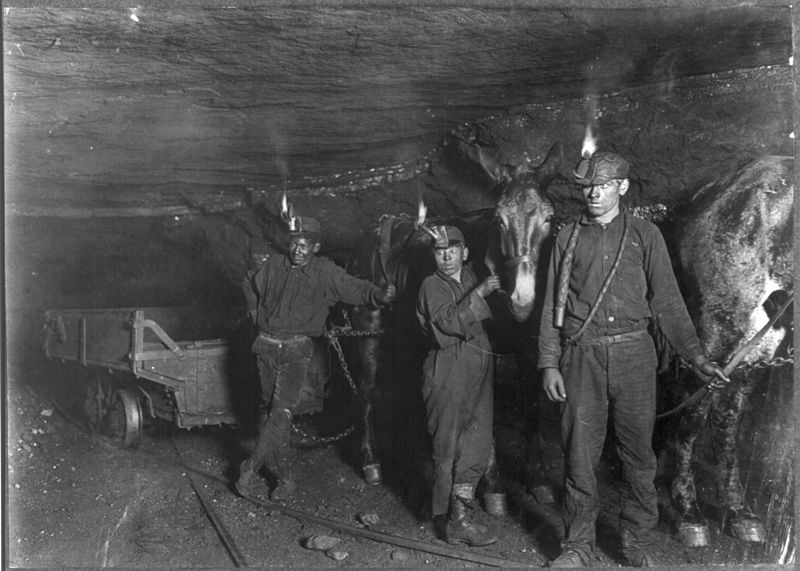
Sounds like a very good illustration of how a recipe for success has become a recipe for disaster. In the 19th century [post-Kant's time] the Prussian mass-production approach to education created the best school and university system in the world. Only now, when knowledge becomes obsolete every 10-20 years, we are beginning to understand its limitations. One important reason to consider here would be the change in student motivation. In the 19th and early 20th century, if a child did not study hard, he would end up working long arduous hours on a farm, in a factory, or a coal mine. For those who could afford it, choosing education was a no-brainer, because it presented a superior life-style alternative. Now, a) kids don't have to work to support the family; b) they have a lot more distractions (TV, computer games, Internet, and etc); b) the process of education takes 12-16 years and is totally detached from practical purposes ( except for computer programming, maybe).

What are we to do to improve the system?