Singapore startups are relatively good on talent and funding, but their output it disproportionately low (data from the Startup Genome Report, Part I. 2012).
Entrepreneurs are much better educated than their Silicon Valley counterparts and they work harder. But I would argue that these advantages fail them because of the wrong market choice: niche vs new.
Singapore entrepreneurs and VCs seem to be suffering from the "Better Mouse Trap" syndrome, i.e. they focus too much on improving existing products/services instead of creating new markets.
tags: mousetrap, startup, entrepreneurship, source, control
I use this blog to gather information and thoughts about invention and innovation, the subjects I've been teaching at Stanford University Continuing Studies Program since 2005. The current course is Principles of Invention and Innovation (Summer '17). Our book "Scalable Innovation" is now available on Amazon http://www.amazon.com/Scalable-Innovation-Inventors-Entrepreneurs-Professionals/dp/1466590971/
Showing posts with label mousetrap. Show all posts
Saturday, July 20, 2013
Sunday, September 23, 2012
A new application for your old light bulbs.
As energy efficient lighting devices take over, some people invent new ways to use the traditional Edison's (or, if you are British, Swan's) light bulb.
Source: New ideas for old tech (Russian).
tags: innovation, mousetrap, invention, art
Source: New ideas for old tech (Russian).
tags: innovation, mousetrap, invention, art
Tuesday, February 28, 2012
Google+ ghost town.
Even Google with its deep pockets and broad user base has trouble competing with Facebook, an established player in the social media industry.
Youtube seems to be a much better social media property for Google than Google+. Unlike Google+ it addresses a new need with a new technology.
If Google enters the enterprise market with Google Apps, then Google+ can become an internal enterprise version of social networking, especially on mobile devices.
tags: mousetrap, social, networking, media, google, facebook, youtube
Feb 28, 2012. WSJ -- Visitors using personal computers spent an average of about three minutes a month on Google+ between September and January, versus six to seven hours on Facebook each month over the same period, according to comScore, which didn't have data on mobile usage.
Behind the lack of engagement are Google's difficulties in differentiating Google+ from Facebook.
Youtube seems to be a much better social media property for Google than Google+. Unlike Google+ it addresses a new need with a new technology.
If Google enters the enterprise market with Google Apps, then Google+ can become an internal enterprise version of social networking, especially on mobile devices.
tags: mousetrap, social, networking, media, google, facebook, youtube
Saturday, February 11, 2012
LunchTalk: (@Berkeley) Demystifying the Chinese Economy.
Speaker: Justin Yifu Lin, Senior Economist and Senior Vice President, World Bank.
Building on a distinguished career as one of China’s leading economists, Mr. Lin is undertaking an ambitious research program that examines the industrialization of rapidly developing countries and sheds new light on the causes of lagging growth in poor regions.
link
tags: lunchtalk, economy, 4q diagram, mousetrap
Friday, February 03, 2012
Finally, some good news for solar energy.
Because the electric grid in India is unreliable and solar panels keep getting cheaper, renewable energy becomes economically competitive with local diesel generators.
tags: system, evolution, mousetrap, energy, source, distribution
Feb 2, 2012. The New Scientist -- A quarter of people in India do not have access to electricity, according to the International Energy Agency's 2011 World Energy Outlook report. Those who are connected to the national grid experience frequent blackouts. To cope, many homes and factories install diesel generators.
Now the generators could be on their way out. In India, electricity from solar supplied to the grid has fallen to just 8.78 rupees per kilowatt-hour compared with 17 rupees for diesel.
The one thing stopping households buying a solar panel is the initial cost, says Amit Kumar, director of energy-environment technology development at The Energy and Resources Institute in New Delhi, India. Buying a solar panel is more expensive than buying a diesel generator, but according to Chase's calculations solar becomes cheaper than diesel after seven years.
tags: system, evolution, mousetrap, energy, source, distribution
Saturday, December 31, 2011
Lunch Talk: Inventing the next amazing thing.
Woody Norris shows off two of his inventions that treat sound in new ways, and talks about his untraditional approach to inventing and education. As he puts it: "Almost nothing has been invented yet." So -- what's next?
Direct link.
tags: lunchtalk, invention, mousetrap
Friday, December 16, 2011
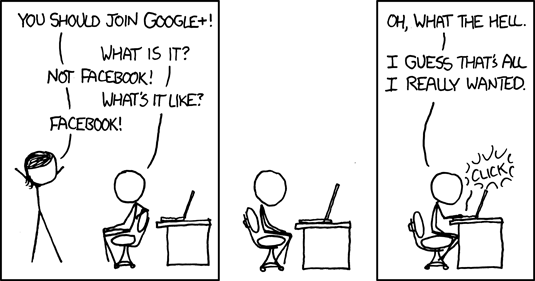
Russian Revolution: Facebook vs Google+
Google+ is doomed. All prep work for the next week's mass protest in Moscow, Russia is done through Facebook.
tags: facebook, social, networking, google, 4q diagram, mousetrap
Labels:
4q diagram,
facebook,
google,
mousetrap,
networking,
social
Sunday, December 04, 2011
Invention of the Day: mouse trap.
Another hundred year old technology that serves us well today: The Animal Trap, as invented in 1899 by John.M.Mast of Lancaster, Pennsylvania (US Patent 744,379)
tags: invention, creativity, mousetrap
The object of the invention is to provide means whereby traps of this class may be readily set or adjusted with absolute safety to the person attending thereto, avoiding the liability of having his fingers caught or injured by the striker when it is prematurely or accidentally freed or released.
Below, is the picture of the most popular mouse trap you can buy today at your neighborhood hardware store. By following a common wisdom "Build a better mouse trap and people will beat a path to you door," inventors wasted 110 years of creative effort.
tags: invention, creativity, mousetrap
Wednesday, November 09, 2011
DARPA: Living Foundries Industry wanted.
DARPA wants something better than 3D printers:
...at the Fifth International Meeting on Synthetic Biology at Stanford University, a representative from the DARPA announced a new program called Living Foundries that will invest in and develop synthetic biology projects.Making semiconductors would probably not be a good idea because conventional technologies are really good at it already. But producing organic solar cells or some kind of other energy converter/storage "devices" could eventually replace burning fossil fuels.
...in reality, she said, yields are low, synthetic biologists can only use a very constrained group of starting products, and they can't make anything they want, only things that are either natural products or slightly modified versions.
Expanding the possible materials that can be made by engineered cells will require making microbes that can deal with other feedstocks—going beyod sugar and cellulose. DARPA wants to open up the periodic table so that cells can make, for example, efficient semiconductor materials.
Wednesday, June 29, 2011
Friday, December 04, 2009
More solar power news:
Sounds more like a geo-scale weapon than a power solution. I hope they don't miss the ground station. Can you imagine if hackers break into the targeting system?
tags: control, energy, distribution, security, innovation, mousetrap
Under a power purchase agreement approved by the California Public Utilities Commission, utility Pacific Gas & Electric will purchase electricity from technology provider Solaren if it successfully deploys its space-based solar collectors, which would be the first of its kind.
.
..1,700 gigawatt hours per year for 15 years from Solar for its space-based solar arrays, which will have a generating capacity of 200 megawatts. That's smaller than a full scale nuclear or natural gas plant but enough to supply thousands of homes.
...electricity [will be] transmitted via microwaves to a ground receiver station in Fresno County, Calif. The receiver then converts the radio frequency energy to electricity and it is fed into the power grid.
.
..1,700 gigawatt hours per year for 15 years from Solar for its space-based solar arrays, which will have a generating capacity of 200 megawatts. That's smaller than a full scale nuclear or natural gas plant but enough to supply thousands of homes.
...electricity [will be] transmitted via microwaves to a ground receiver station in Fresno County, Calif. The receiver then converts the radio frequency energy to electricity and it is fed into the power grid.
Sounds more like a geo-scale weapon than a power solution. I hope they don't miss the ground station. Can you imagine if hackers break into the targeting system?
tags: control, energy, distribution, security, innovation, mousetrap
Labels:
control,
distribution,
energy,
innovation,
mousetrap,
security
Tuesday, November 17, 2009
Meditate or die.
Science Mag. Nov 16, 2009:
Meditation can cut the risk of heart attack, stroke, and death by almost 50% in patients with existing coronary heart disease, according to a new clinical trial. The findings indicate that relaxation and mental focusing can be as effective as powerful new drugs in treating heart disease.
Sunday, November 15, 2009
In an information-based society quality of life is quality of information. That is, relevant information is key to rational decision making, whether it concerns biological (gene-related), cultural (context-related), environmental (constraint-related), or other issues. Since people's attention is limited, I believe there exists an informational equivalent to Gresham's Law: bad information drives out good.
Here's some evidence for it
With regard to quality of information, it's remarkable that the CNet interviewers completely missed the topic of Google Apps, a set of cloud services that targets enterprise software customers. Wave makes a lot more sense as a component of this set, rather than a standalone e-mail replacement application.
tags: control, information, cloud, google, niche construction, mousetrap, 4q diagram, system, infrastructure, video
Here's some evidence for it
from the transcript of CNet's conversation with Eric Schmidt, CEO of Google:
You would think that, based on popular culture, that everyone cares about the stuff that's popular. But our data shows that people are looking deeper and deeper into the Web for even more specialized information.
With regard to quality of information, it's remarkable that the CNet interviewers completely missed the topic of Google Apps, a set of cloud services that targets enterprise software customers. Wave makes a lot more sense as a component of this set, rather than a standalone e-mail replacement application.
tags: control, information, cloud, google, niche construction, mousetrap, 4q diagram, system, infrastructure, video
Labels:
4q diagram,
cloud,
control,
google,
information,
infrastructure,
mousetrap,
niche construction,
system,
video
Tuesday, November 10, 2009
This inventor story is about Hans Berger, the pioneer of electroencephalography (EEG) - technology widely used today in brain research and medical applications.
A happy ending? Not really. Berger developed and used EEG to detect signs of human psychic activity. The popular press was enthusiastic about the technology, but scientists met Berger's direction of research with skepticism. Eventually, funds dried up and "without any prospect of pursuing the project further, Berger, depressed, committed suicide on June 1, 1941."
At the same time, clinical psychiatrists who used the same technology to solve a different problem (detection of brain disorders), succeeded beyond all expectations:
Same technology, drastically different results in its application.
Source: Cornelius Borck. 2005. WRITING BRAINS: Tracing the Psyche With the Graphical Method. History of Psychology. 2005, Vol. 8, No. 1, 79–94. DOI: 10.1037/1093-4510.8.1.79
tags: health, problem, 4q diagram, problem, solution, reverse brainstorm, mousetrap
It is well known that Berger worked for almost 30 years in nearly complete isolation, recording electrical activity from the brain, before he dared to risk his first publication on the EEG in 1929. His first few publications on the new method were neglected until Nobel Prize winner Douglas Adrian repeated his experiments and demonstrated the new method to the scientific community of physiologists. Then, in the second half of the 1930s, groups specializing in EEG recording mushroomed all over the world, particularly in the United States.
At the same time, clinical psychiatrists who used the same technology to solve a different problem (detection of brain disorders), succeeded beyond all expectations:
Quite early on, the new method demonstrated an enormous diagnostic potential with the recording of disease-specific patterns. Brain tumors could be localized by their halo of electrical silence, and epileptic seizures displayed persistently dramatic changes of the record.
Same technology, drastically different results in its application.
Source: Cornelius Borck. 2005. WRITING BRAINS: Tracing the Psyche With the Graphical Method. History of Psychology. 2005, Vol. 8, No. 1, 79–94. DOI: 10.1037/1093-4510.8.1.79
tags: health, problem, 4q diagram, problem, solution, reverse brainstorm, mousetrap
Labels:
4q diagram,
health,
mousetrap,
problem,
reverse brainstorm,
solution
Wednesday, July 22, 2009
Digestion index needed?
NewScientist informs us that our food labels are way out of date. They don't take into account energy required for digestion:
...digestion - from chewing food to moving it through the gut and chemically breaking it down along the way - takes a different amount of energy for different foods.
...in 2003, a team led by Kyoko Oka at Kyushu University in Fukuoka, Japan, investigated the effect of food texture on weight gain. They fed one group of rats their usual hard food pellets, while a second group received a softer version. Both pellets had exactly the same calorie content and flavour. The only difference was that softer ones were easier to chew. After 22 weeks, the rats on the soft food diet were obese and had more abdominal fat.
(Journal of Dental Research, vol 82, p 491)
...in 2003, a team led by Kyoko Oka at Kyushu University in Fukuoka, Japan, investigated the effect of food texture on weight gain. They fed one group of rats their usual hard food pellets, while a second group received a softer version. Both pellets had exactly the same calorie content and flavour. The only difference was that softer ones were easier to chew. After 22 weeks, the rats on the soft food diet were obese and had more abdominal fat.
(Journal of Dental Research, vol 82, p 491)
Wednesday, June 03, 2009
History of the paperclip
Today's equivalent of the paperclip would be an e-mail attachment protocol that binds together the text of the message and the file attached. Given how many times people forget their attachments while sending e-mail, the modern "paperclip" is not as good at providing visual clues of its function as the old one. That is, it's easy to forget to attach a file and not to spot the mistake, while it's almost impossible to forget a paper attachment without realizing that the paperclip is missing.
Speaking of visualizations, Google's Timeline search option helps quickly identify relevant time frames for history-related searches. On the graph below, the first spike shows inventions for the original paperclips; the second - WWII operation "Paperclip"; the third - stories about a dude that managed to trade a paperclip for a house.
To me, the picture also tells a story of how over time an object (paperclip) evolves into a metaphor ("cheap as a paperclip").
Sunday, May 03, 2009
Another hyped up story about the upcoming release of Wolfam Alpha:
The biggest internet revolution for a generation will be unveiled this month with the launch of software that will understand questions and give specific, tailored answers in a way that the web has never managed before.
The new system, Wolfram Alpha ... takes the first step towards what many consider to be the internet's Holy Grail – a global store of information that understands and responds to ordinary language in the same way a person does. ...
Wolfram Alpha has been designed with professionals and academics in mind, so its grasp of popular culture is, at the moment, comparatively poor. ...
With Google now one of the world's top brands, worth $100bn, Wolfram Alpha has the potential to become one of the biggest names on the planet.
The new system, Wolfram Alpha ... takes the first step towards what many consider to be the internet's Holy Grail – a global store of information that understands and responds to ordinary language in the same way a person does. ...
Wolfram Alpha has been designed with professionals and academics in mind, so its grasp of popular culture is, at the moment, comparatively poor. ...
With Google now one of the world's top brands, worth $100bn, Wolfram Alpha has the potential to become one of the biggest names on the planet.
Wolfram's chances to disrupt Google's business model are slim to none.
First, Wolfram targets scientists and professionals, i.e. people who are already good at asking Google questions. Therefore, Wolfram's supposed advantage in being able to respond to "ordinary language" targets the wrong people. The general public might need some help in this department, but Wolfram's software performs here the worst. In other words, Wolfram attacks Google's strengths, not weaknesses.
Second, Google makes money by selling advertisement. In this regard, search is just one of, among many, Google's ad delivery vehicles. The company runs a large-scale computing platform that provides access to web pages, e-mail, media, blogs, pictures, books, analytics, and etc. The number of quantifiable leads that Google can generate for advertisers is orders of magnitude greater that Wolfram's presumably highly sophisticated, but rather niche software. At best, Wolfram will compete with Google Scholar, not Google Inc, the web advertisement giant.
Third, scalability-wise, Wolfram is going to be constrained by the number of professionals (he estimates it at 1,000) needed to update the engine's databases. Compared with hundreds of thousands of people updating Wikipedia, writing blogs and scientific articles, this seems like a very significant limitation.
In my opinion, hulu.com is a much bigger threat to Google than Wolfram Alpha. Search is important, but it is a well understood and, more importantly, addressed problem (see the 4Q diagram).
In general, people a very satisfied with the quality of Google's search results. It's an established technology in an established market. On the other hand access to and monetization of media content is still being fought out in the cyberspace, with no clear winners emerging so far.
Sunday, September 28, 2008
Watermellon cubes
BBC News writes about Japanese cuboid watermelons. The unusual shape was thought up by enterprising farmers to lower the storage and transportation costs. Well, they did not succeed in that department, but square watermelons found their way to upscale grocery shops:
Here in California you can buy a traditional green-black-red spheroid for no more than $10. What a bargain!
Subscribe to:
Comments (Atom)