Showing posts with label control. Show all posts

Monday, March 20, 2017

Lunch Talk: Jay Kaplan: Crowdsourcing Cybersecurity (at Stanford)

Entrepreneur Jay Kaplan, co-founder and CEO of Synack, describes how the idea of creating a cybersecurity service for enterprise businesses by crowdsourcing hackers went from sounding like a long shot to launching as a venture capital-backed startup. Kaplan, previously a senior analyst at the National Security Administration, talks about the virtues of government work and the nuances of “white hat” hacking.

Direct link to Youtube.


tags:network, security, enterprise, control

Thursday, November 17, 2016

From junk food to junk news

Remarkably, surrounded by an abundance of choices people chose what feels good, not what is good. With junk food, it's a combination of fat, sugar and salt that fools taste buds into craving for more. With junk news, it's the confirmation bias that fools brains into craving for more news that conform to their world view.

According to Buzzfeed, during the 2016 election cycle fake news outperformed real news.


Due the difference in feedback mechanisms, the situation with junk news is worse than with junk food. That is, after having a junk food diet for an extended period of time, people can at least use scales to discover that their weight has gone up. By contrast, after having a junk news brain diet, people can only get stronger in their opinions because their social network keeps rewarding them for consuming and sharing the junk.

Can we solve the problem without resorting to censorship? One way to look at it would be to consider the situation from a point of view widely adopted in another domain - money and finance. That is, today's fake money is easily detected and discarded, so that the society doesn't fall into the trap of the Gresham's Law. Similarly, fake news can be detected by a variety of technologies, including a BitCoin-like approach that verifies authenticity of the news and news sources. Fake news, like fake coins should be taken out of circulation. Otherwise, our brains get stupid by consuming junk news, just like our bodies can get fat, by consuming junk food.


Thursday, January 28, 2016

Scalability: from Neanderthals to Twitter

A quote from "Sapiens: A Brief History of Humankind",


Twitter is having trouble competing for users against Facebook and Youtube because it has failed to scale human relationships beyond the threshold of 150 individuals. That is, the social networking niche of "less than 150" is already occupied by Facebook and for Twitter to become successful, the company has to make it easy for each user to organize and curate information dynamically from thousands of people who are not in the immediate network. Moreover, since connections and information on Twitter is more (10X!) dynamic than on Facebook, the degree of organization of information streams has to be at least 10X more sophisticated as well.

Youtube has met its content scalability challenge by enabling users to create and share playlists, channels, and subscriptions. Every user on Youtube is a developer who produces new ways to access contents at a collection or stream level, rather than at single video level. In Scalable Innovation we call it scaling at the aboutness" layer. So far, Twitter can't find a way to enable its users to become developers. All they can do is propagate gossip, which worsens the information overload problem for everybody who gets over the "150 individuals" threshold.

To summarize, Twitter needs to find a way to help people become better Information Sapiens because the Information Neanderthal niche is already occupied by Facebook and Youtube.

tags:scale, innovation, control, aboutness, twitter, social

Sunday, January 03, 2016

Discipline and Punish, 21st century style

My morning twitter feed brought together two seemingly unrelated articles:

1. The MIT Review: overview of Robotics Trends for 2016.
2. The Economist Economist: article on the disappearance of middle managers in 2016 and beyond.


To get an insight into long-term implications of the trends, first consider a quote from each one of them separately:

The Economist,
Existing systems will be replaced by new ones built on more fashionable qualities: speed and transparency. Companies will stop fussing about inputs (how people do things) and focus only on outputs (what they produce). They will be obsessed with data, losing all interest in anything that can’t be measured. Every employee will be monitored every second; every keystroke and click will be tracked and analysed. Some companies will go further and get white-collar workers to wear sensors that track all movements and measure their tone of voice and the number of steps they take.

The MIT Review,
Another trend to look out for this year is robots sharing the knowledge they have acquired with other robots. This could accelerate the learning process, instantly allowing a robot to benefit from the efforts of others (see “Robots Quickly Teach Each Other to Grasp New Objects”). What’s more, thanks to clever approaches for adapting information to different systems, even two completely different robots could teach each other how to recognize a particular object or perform a new task (see “Robots Can Now Teach Each Other New Tricks”).


The Economist talks about tracking and analysing employee performance data, including its physical aspects; the MIT Review describes a scenario where robots teach robots. Now, consider a case where we mix and match the two scenarios. That is, data obtained from monitoring humans (Economist) is used to teach robots (MIT Review). The combination would enable an easy transition from lab prototypes and small-scale production created by humans to large-scale factory in robotic factories. Ultimately, it'll speed up innovation but will make lots of workers redundant.


Wednesday, August 19, 2015

Facebook is taking over Google in sourcing the flow of news

Fortune runs an article showing Facebook's influence growing in the news segment:
...it’s clear that search has hit a kind of plateau and isn’t really growing any more as a referral source for media. Meanwhile, Facebook’s influence has “shown it’s on a continued growth trajectory."

Source: Forbes.com (click images to enlarge)

The competition for advertisers' money between Facebook and Google is heating up. We should expect that Facebook will make further inroads into information segments other than news. Although it's too early to pronounce Search dead, its dominance on the web no longer translates directly into the mobile space, especially, when users spend more and more time on social. (Based on system analysis, we anticipated this trend in Scalable Innovation, Chapters 20-22).

It is also somewhat surprising that Twitter is such a non-factor in the race. Despite the "freshness" of their links, they don't have enough users to play the game. Furthermore, unlike the Facebook's, Twitter connections don't have the strength of social relations.
tags: mobile, information, control, google, facebook, twitter, system

Saturday, August 15, 2015

Lunch Talk: Why Information and Diversity Grows (Cesar Hidalgo at TED)


MIT professor Cesar Hidalgo considers how to deal with diversity and complexity.

tags: lunchtalk, control, system, science, math, economics

Thursday, August 13, 2015

True Detective S2 vs S1 - an inventor perspective

True Detective, Season 2 turned out to be a bit of a disappointment and I wanted to understand why. Reading TV critics and blogs didn't give me much insight beyond the typical "oh, the story was not good" or "oh, the director was not good" or "oh, the pace of the action was too slow", etc. Therefore, I decided to put my inventor hat on and compare the two Seasons as Systems. I applied to both TV series the same system analysis techniques I always use in my invention workshops.


I started the analysis by laying out each story as a system of perspectives. That is, each layer of narration in the series represents a Source of information for the viewers (Scalable Innovation, Section 1). Each Source covers the reality of events on the ground. Paradoxically, it turned out that despite Season 2 has more main characters than Season 1, it also has fewer unique Sources of representation.
In Season 1 we had four key perspectives (2 "real" and 2 "virtual"):
1. Detective Rust Cohle (Matthew McConaughey);
2. Detective Marty Hart (Woody Harrelson);
3. The Official Investigation - a narrative presented by the official police investigation;
4. The Narrator - a director narrative presented by the chronology of events described in an "objective" manner by the video camera and background characters.

The nature of perspectives was also different. All of them were extremely smart but with different flavors. Rust Cohle could be characterized as "weird smart". Marty Hart - "down-to-earth smart". The Investigation - "bureaucracy smart". The Narrator - "visual and story smart". Furthermore, we had variations of each perspective shifted in time and space. In addition to the mystery of the crime, we, as viewers, had to reconcile and process the mysteries of all these Sources that gave us complimentary and conflicting information. The structure of the system provided us with a intricate, intriguing pattern.

Importantly, the system of different perspectives felt natural due to the fact that detectives Cohle and Hart managed to solve their case _because_ they had different perspectives. They also had conflicts _because_ they had different perspectives. Since they broke multiple official rules — and The Narrator shows us how and why — the official investigation perspective provided us with an explanation why a standard bureaucratic police approach to detective work would not solve the mystery. As a result, we had a system of contrasting and explaining Sources that formed a complex but consistent, natural whole.

Finally, the perspectives were not just narrated from a character's point of view. They were SHOWN from that point of view. In short, Season 1 did an excellent job executing the rule "Show, don't tell".

Season 2 had more main characters, but fewer perspectives. Essentially, there was just one perspective - the Narrator, who guided us and the camera through the story. Basically, we had one Source which kept switching microphones and cameras for every character to tell his or her line.
Although the story itself was, arguably, more complicated and somewhat more mysterious, the system of perspectives was no different than in a regular criminal TV piece. As a system, Season 1 turned out to be flat.

Overall, the actors in both Seasons played great, stories were interesting, suspension was adequate for a crime drama, and camera work excellent, especially, the LA aerial shots in Season 2. Unfortunately for Season 2, the script didn't provide a system structure that could support a real thriller of the Season 1 caliber.

tags: system, source, control, entertainment, method

Thursday, July 30, 2015

Facebook gets a patent for tracking user daily routines

This week the US PTO awarded Facebook US 9,094,795, titled "Routine estimation". The patent covers a technology for clustering user locations, e.g. using mobile device data, and deriving daily routine patterns related to the locations.


The technology also enables Facebook and third parties to connect location and social graph data with user activities, "likes", music played, and other personal or group information.


One can easily imagine a real-time map that shows swarms of users chugging along their daily routines and, once in a while, reminding them to do something different. Shop, for example...


In system model terms, Facebook solves a Detection problem, which is typically a precursor to solutions for Control problems, e.g. directing user activities based on detected patterns.

tags: facebook, patent, invention, distribution, control, detection

Sunday, July 19, 2015

Invention of the Day: Brain Cleanup

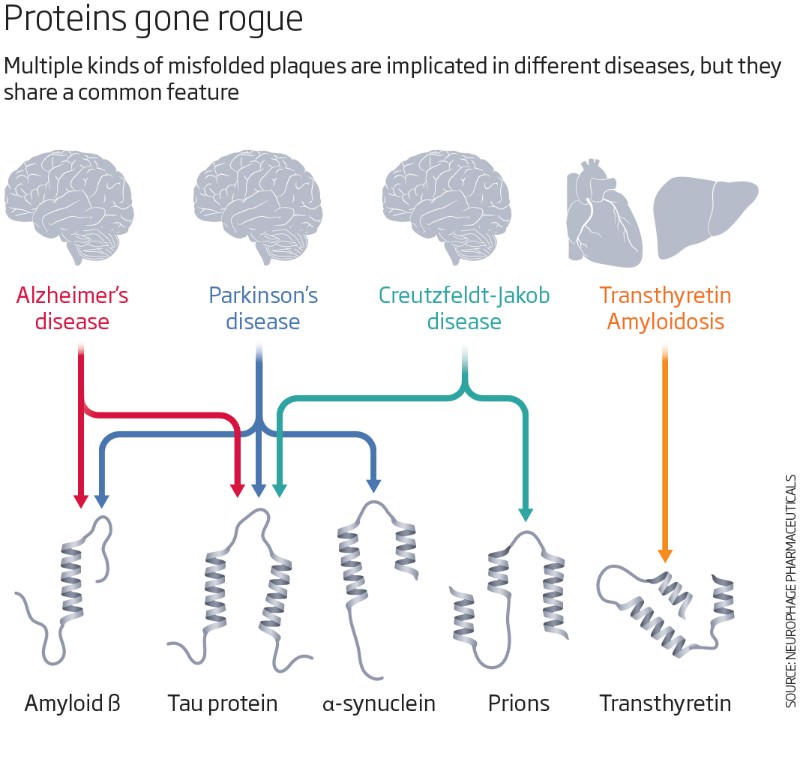
New Scientist reports that NeuroPhage Pharmaceuticals (Cambridge, MA) has found a way to cleanup rogue proteins that form in the brain, causing debilitating mental disorders, such as Alzheimer's and Parkinson's diseases:

The drug is the first that seems to target and destroy the multiple types of plaque implicated in human brain disease. Plaques are clumps of misfolded proteins that gradually accumulate into sticky, brain-clogging gunk that kills neurons and robs people of their memories and other mental faculties. Different kinds of misfolded proteins are implicated in different brain diseases, and some can be seen within the same condition.


The hope is that the novel drug will destroy the plaques but leave healthy brain cells alive.


NeuroPhage's US patent applications can be found here.

tags: medicine, brain, control, tool, entrepreneurship, biology

Wednesday, January 21, 2015

Want to understand your own personality? Ask Facebook!

Stanford researchers have found that computers can judge personality traits more accurately than one's friends and colleagues.

The computer predictions were based on which articles, videos, artists and other items the person had liked on Facebook. The idea was to see how closely a computer prediction could match the subject's own scores on the five most basic personality dimensions: openness, conscientiousness, extraversion, agreeableness and neuroticism.

The researchers noted, "This is an emphatic demonstration of the ability of a person's psychological traits to be discovered by an analysis of data, not requiring any person-to-person interaction.

http://www.pnas.org/content/early/2015/01/07/1418680112

The original idea of using Thumbs UP and Thumbs DOWN buttons in the digital world belongs to TiVo. Facebook took this idea — knowingly or unknowingly — and scaled it across the entire range of digital content, making every piece of communication "likeable."


In System Model terms, Like helps solve Detection and Control problems. We discuss it briefly in Scalable Innovation, Chapter 22, Seeing the Invisible. "Like" represents the Aboutness of an element. Once the Aboutness detected, the Control sub-system uses it to compose and channel content streams according to its policies.


Friday, January 16, 2015

Gut feeling no more - a new device to treat obesity

The WSJ reports on a new medical device approved by the FDA
The device, made by EnteroMedics Inc. of St. Paul, Minn., is the first of its kind to treat obesity by targeting nerves that link the stomach and the brain. The Maestro Rechargeable System would block electrical signals in the abdominal vagus nerve by dispatching high-frequency electrical pulses.

The device is one of a series of products called neuro-modulators that target nerves for a variety of conditions ranging from pain to Parkinson’s disease.

157 patients with the working device lost 8.5% more of their excess body weight than did the control group.

The technology to detect and manipulate the nervous system is getting better. Today, we can get computers to orchestrate bodily functions that we no longer can control, e.g. due to obesity, injury, or brain problems. As the interfaces between biological and computer signals improve, we will see more bio-apps that take advantage of the exponentially growing cloud capabilities.

tags: innovation, control, cloud, interfaces

Sunday, January 11, 2015

Facebook anticipates user engagement - a new US patent

On January 6, 2015 US PTO awarded Facebook patent 8,929,615 "Feature-extraction-based image scoring" (inventors David Harry Garcia and Justin Mitchell).

The new patent covers a technology that extracts features from a photo and makes clever decisions how to use it on a social networking; the decisions are based on predicted user engagement. For example, if you like drinking women  smiling babies the system will be able to include more baby pictures (and ads) into your news feed.


To put the matter in perspective: few months ago a lot of media hoopla was generated about Amazon being able to anticipate where to ship user packages.  The new Facebook technology is much more interesting than that of Amazon because
a) it addresses the growing world of digital social media;
b) it enables anticipatory content distribution;
c) while Amazon can anticipate shipping to the right zipcode within a certain time interval, Facebook can "ship" the right content to the right user at the right time.

In short, Facebook anticipates more and with a greater precision.

Also relevant to this discussions are recent Facebook patents US 8,930,837 "Graphical user interface for map search" (inventors Brandon Marshall Walkin and  Zhen Fang) and US 8,930,243 "System, process and software arrangement for providing multidimensional recommendations/suggestions" (inventors Alexander Tuzhilin and Gediminas Adomavicius). The latter patent goes back to a 2001 invention!

From our system model perspective, the patents describe novel Control systems that take advantage of the Aboutness, extracted from the Packaged Payload.

tags: control, aboutness, detection, model, 


Saturday, January 03, 2015

Facebook patents a tech to provide socially relevant ads - US 8,924,406

On December 30, 2014 the United States Patent Office awarded Facebook a patent titled "Ranking search results using social-networking information" US 8,924,406 ( Inventors: Christopher Lunt, Nicholas Galbreath, Jeffrey Winner).

The patent covers a technology that provides a new way to determine relevant ads and/or additional content shown to the user along the search results. According to the invention, a search engine takes into account the popularity of sponsored links associated with the results. The popularity is calculated based on clicks in the user's social network and a social relevancy threshold (degrees of separation).

From a business perspective, Facebook continues strengthening its challenge to the Google "relevant ads" model created in the early 2000s. Today, some of you may already see sponsored relevant links inserted in your Facebook stream or page. The patent would be a good illustration to the brief discussion "GOOGLE VERSUS FACEBOOK: THE BATTLE FOR THE CONTROL" Max and I outlined in Chapter 22 of our book Scalable Innovation.

Another interesting aspect of the patent: it shows the brave new "Me-centric" world of social networking (see Fig 1 above). From a technical and business perspective it indicates a large-scale transition from relational (excel-like rows and columns) representations of data to a graph-based one, with nodes and edges. The patent also provides a good working definition of a social network:
the social-networking system comprising a graph that comprises a plurality of nodes and edges connecting the nodes, each edge between two nodes representing a relationship between them and establishing a single degree of separation between them, wherein the first user corresponds to a first node of the graph.
tags: patent, facebook, innovation, invention, social, networking, search, control, internet

Thursday, November 06, 2014

The Internet of Things: malware threat to US energy infrastructure

Destructive "foreign" software is becoming a weapon of choice for covert international operations. For example, according to today's ABC report:


National Security sources told ABC News there is evidence that the malware was inserted by hackers believed to be sponsored by the Russian government, and is a very serious threat.

The hacked software is used to control complex industrial operations like oil and gas pipelines, power transmission grids, water distribution and filtration systems, wind turbines and even some nuclear plants. Shutting down or damaging any of these vital public utilities could severely impact hundreds of thousands of Americans.

In our book, Scalable Innovation, Chapter 3, we discuss in detail one of the system security inventions I made back in 2000, while at Philips Research. The invention, US Patent 7,092,861, aims to detect novel viruses that can target networked equipment in the home, office, or industrial cite (the patent is now owned by Facebook).


More than a decade ago, it was clear to us in the labs that the emerging Internet of Things creates new types of threats. Unless such threats are addressed through a broad, consistent industry and government efforts, our critical infrastructure will be highly vulnerable to vicious attacks that could dwarf in their destructive power the events of 9/11. Ideally, all existing industrial software has to be upgraded - a difficult, but essential task for the next two decades.

Wednesday, August 20, 2014

Facebook's market power

The Facebook patent I briefly discussed yesterday points to a business and technology revolution, similar to the one that made Chicago a major commercial center in the United States in the 19th century. Back then, the proliferation of railroads helped move grain and cattle from small, scattered farms to large grain elevators and slaughterhouses. As the result, Chicago merchants benefited enormously from the new economies of scale. Similarly, Facebook enjoys enormous economies of scale by aggregating and processing huge amounts of scattered pieces of user preferences data. 


Furthermore, Chicago merchants developed a new standardization system that
...partitioned a natural material — a steer or a bushel of wheat into a multitude of standardized commodities, each with a different price, each with a different market (Nature's Metropolis: Chicago and the Great West, by William Cronon).
The new partitioning system allowed the merchants to sell their commodities to those consumers who were interested in a particular grain variety or beef cut and willing to pay the right price for the right commodity.

Similarly, Facebook has the ability to partition their user social graphs (and even individual users like you and I) into a multitude of parts that can be sold to advertisers and content providers for the right price at the right time and in the right place. The only difference is that instead of the Beef Chart of the 19th century they have the User Interest Chart of the 21st century.

tags: innovation, technology, control, packaged payload, distribution, scale, facebook, social, advertisement

Monday, August 04, 2014

Invention of the Day: Electrocardiography (EKG)

Today we take medical sensors for granted. Most recently Digital Health, a combination of sensing and wireless networking technologies, has become one of the fastest growing areas for innovation. For example, electronic hand bands from FitBit can track your sleep patterns, continuously collect your physical activity levels, calculate calories burned during exercises, and transmit the data to your smartphone, which relays the information further to the cloud. Ultimately, Digital Health should help us improve our lifestyles, prevent cardiovascular diseases, and reduce healthcare costs.

CardioMEMS wireless heart sensor compared to a dime. (Photo credit: IntelFreePress).
A large portion of the modern sensing technology is based on detecting weak electric signals from the heart and other organs. Medical researchers became aware of the hearts electric activity during the second half of the 19th century. Nevertheless, it was hard for them to come up with a practical application for their knowledge.
As late as 1911, Augustus Waller, who was the pioneer of electrocardiography, said, “I do not imagine that electrocardiography is likely to find any very extensive use in the hospital. It can at most be of rare and occasional use to afford a record of some rare anomaly of cardiac action.”
While Waller struggled with his imagination, a Dutch physiologist Willem Einthoven developed the first practical EKG device that was based on his newly invented string galvanometer.


In 1906, unknown to Waller, Einthoven demonstrated clinical usefulness of the electrocardiograph (EKG). In 1924 he was awarded a Nobel Prize in Medicine for his invention.

Over the last 100 years EKG has become one of the most common techniques for heart monitoring and diagnostics. Since then, many generations of inventors improved upon the original idea, with micro-electronics, networking, and cloud computing being the latest additions to Einthhoven's breakthrough. Most likely, innovation in this area will continue well into the 21st century.

tags: invention, innovation, detection, healthcare, medicine, control

Tuesday, February 04, 2014

Facebook wireless wake-up patent (US 8,644,892)

Today, US Patent Office awarded Facebook a patent on a wireless device with a passive RFID tag that can trigger different power modes. In one scenario, when your iPhone is in sleep mode it receives a wake-up call from an RFID reader, powers up the main battery, and transfers the data from the tag to the device.


Again, the easiest way to explain the patent is through the train analogy we used in Scalable Innovation (Chapter 3). 

Imagine that instead of wireless devices and Radio Frequency signals you are running a train station operation. You also have a telegraph machine that allows you to receive and read telegrams from neighboring stations. It's early in the morning; no major load-unload processes are in progress; the only half-awake person in the building is one Thomas Alva Edison, your trainee telegraph operator.
Suddenly, his telegraph machine starts chattering and he receives a telegram from a neighboring station that a big train is departing toward you. Mr. Edison reads the telegram, wakes up your station crew, and reads the contents of the telegram to the station manager.


In the Facebook patent, the wireless device is your train station in wake up or sleep mode. The RFID tag is Edison with his telegraph apparatus. First, he can receive a telegram that no trains are coming and send everybody home. Then, the tag receives a wake-up signal from an RFID reader (the neighboring station) and transfers the contents of the signal (the telegram) to the main memory with a processor (the manager), which is configured to run a pre-defined program. That's it. The rest of the wording in the patent is for obfuscation purposes.

The invention fits the Telegram before the Train invention pattern we consider in detail in Chapter 25. 

tags: patent, packaged, payload, control, system, example, facebook


Thursday, January 30, 2014

Facebook latest patents - connectivity.

In 2012, Facebook bought a large patent portfolio from AOL for $550M. Now, we can see some of the results from the new owner. For example, here's five US Patents with the same title:


A couple of days ago, the US PTO office awarded the #1 on the list with a new set of claims. While the original invention was about establishing an alternative connection when setting a broadband link, the latest patent claims a broad concept of a mobile device with two connections. Arguably, the patent covers a smartphone app that first uses a low-bandwidth 3G connection, then switches to Wi-Fi.

1. A method comprising: establishing a first communications connection between a mobile user device and a host, the first communications connection enabling an application on the mobile user device to exchange data; establishing a second communications connection between the mobile user device and the host; enabling, using at least one processor, display of an indication that the second communications connection is established; and enabling the application on the mobile user device to continue to exchange data by way of the second communications connection.
For example, the claim describes a scenario when I start downloading a song on 3G, then switch to Wi-Fi to save mobile bandwidth. Not bad. After 10 years of lawyering, a black pig turns into a white swan.

In system terms, we have a Distribution element that has different Routes. The Control system selects a specific set, based on operating conditions, e.g. failure. Conceptually, this is no different from our favorite 19th century railroad analogy: if the Indians destroy one rail link try to ship your troops via another one. In a more sophisticated shipping system, heavy loads are shipped by sea; light ones by air.

tags: patent, example, distribution, control


Smartphone apps: mobile and insecure.

MIT Technology review writes:

A 2012 study of 13,500 Android apps by researchers in Germany found that only 0.8 percent used encrypted connections exclusively, and that 43 percent use no encryption at all. Last week mobile app security company MetaIntell reported that 92 percent of the 500 most popular Android applications communicated some data insecurely.

To move into the enterprise on scale, mobile devices and apps have to become secure. The same goes for mobile payments and NFC-based apps. Enhanced security requirements will demand more computing power, which many companies would not able to afford. As a result, secure cloud-based services will have an opportunity for long-term growth. Although before that, NSA surveylance issues have to be resolved, so that customers feel comfortable with having their vital data hosted externally.

tags: mobile, security, packaged, payload, control, business, enterprise

Wednesday, January 29, 2014

Solving the Life vs Glory dilemma - 2

Recap: In my earlier posts I described and analyzed in detail a typical dilemma situation: a person faces mutually exclusive choices. For example, the ancient Greek hero Achilles has to choose between dying young with eternal glory or living a long, uneventful life. The modern hero Neo from the Matrix has to chose between the Red pill and the Blue pill.

In art, heroes choose dilemmas. In real life, we try to get away from them by picking a reasonable trade-off - "the middle way." A fundamental characteristic of a dilemma or trade-off situation is the existence of "The Box." The Box represents a set of constraints, either visible or invisible. The first step to think outside the box is to discover what the box is.


In the Achilles example, we've established that he is locked in the box of personal mortal combat with an opposing fighter - Patroclus. Even if Achilles wins today, sooner or later a new fighter will be born to kill him. That is, once you've entered the dilemma box, the choices are unavoidable: Achilles wins some great battles, but he is eventually killed by Paris, who, in turn, dies in combat later.

At the first glance, the Achilles' Life vs Glory dilemma seems to have no happy outcome. On the other hand, we've established that another Greek Hero - Odysseus - had found a breakthrough solution: he reached eternal glory AND lived a long, fulfilling life. How did he do that?

First, let me say that the Achilles' box is version of a theoretical construct created by economist Francis Ysidro Edgeworth in the 19th century. It serves as a foundational principle for the modern economics of free markets, where people make rational choices about allocation of limited resources. That is why the first principle of economics is often stated as "Everything is a trade-off."

In Sclalable Innovation (Prologue), we show that great innovations often happen when people break trade-offs and dilemmas, instead of strengthening them. Odysseus is no exception. As a creative individual, he sees outside the Achilles' box. In his thinking, a 3-rd dimension exists - gods and other people (fig below).


When Odysseus encounters a tough challenge he leverages this dimension to generate a broad variety of coordinated actions. During the siege of Troy, he finally defeats the enemy city by getting one group of Greeks build the Trojan Horse, another group to hide inside it, yet another to rush the city when the Horse is inside, etc. This pattern of problem solving repeats when Odysseus runs into trouble on his way back home to Ithaca. For example, he uses the help of his team to defeat the Cyclops and escape from the cave. (Even the Cyclops' sheep act as "members" his team.) Odysseus accomplishes the impossible feat of listening to the song of the Sirens and surviving it too. (I posted about his solution in detail in 2011). Odysseus returns home to Ithaca and restores himself as the rightful king, by craftily creating a coalition of players and arranging the circumstances to benefit his cause. As the result of his adventures, Odysseus achieves eternal glory AND ensures that he has a long life.

In short, Odysseus is a 3D strategist, while Achilles is a 2D tactician. Achilles thinks inside the box, while Odysseus thinks outside it, by discovering dimensions of the situation that Achilles cannot see. In these dimensions, he finds opportunities for novel actions and their novel combinations. To motivate his allies, he uses certain psychological effects, which I'm going to cover later.

tags: creativity, problem, solution, dilemma, trade-off, separation, breakthrough, luck, control