Showing posts with label medicine. Show all posts

Wednesday, September 27, 2017

Invention of the Day: Hypodermic Syringe

I'm reading a wonderful book by Roger Bridman - 1,000 Inventions and Discoveries. It documents an incredible range of human ingenuity from thousands years ago to our days. For example, here's an invention that we take for granted today: hypodermic syringe.


Remarkably, it was invented by two people in different countries. As the book says, "[in 1853] In Scotland, physician Alexander Wood invented the hollow needle and adapted Pravaz’s device to go with it, forming the first hypodermic syringe." That is, the invention cannot be attributed to each of them separately because a new system — the syringe — provides functionality beyond the sum of its parts. A well-defined interface between the parts, the cylinder and the needle respectively, enabled rapid innovation in manufacturing technologies and use. For example, here's how hollow needles are produced today.


From an innovation timing perspective, we need to be aware that the business success of the new injection technology was determined by a major invention that came about much later.
By the late 1800s hypodermic syringes were widely available, though there were few injectable drugs (less than 2% of drugs in 1905). Insulin was discovered in 1921. This drug had to be injected into the bloodstream, so it created a new market for manufacturers of hypodermic needles and drugs.

Overall, the invention of the hypodermic syringe illustrates a number of important principles for pragmatic creativity:
- a new combination of parts has to produce a new system effect;
- no new science is necessary for making a technology breakthrough;
- a well-defined interface between parts enables rapid innovation on both sides, e.g. the cylinder and the needle;
- the success of the invention comes from a new use, which may require a new science, e.g. liquid penicillin;
- the combination of new parts (cylinder + needle) and use (liquid drug) form Dominant Design and Use patterns that remain stable for decades, if not centuries.

Wednesday, July 20, 2016

A new way to map brains

Neuroscientists at Washington University Medical School created a method to build maps for individual brains:

(MIT Tech Review) Researcher Matthew Glasser says that unlike many previous studies, this map considers several features of the brain simultaneously to mark its boundaries. Some neuroscientists still define brain regions based on a historical map called Brodmann’s areas that was published in 1909. That map divided each half of the brain into 52 regions. Each hemisphere on the new map has 180 regions.

Glasser defined these regions by looking for places where multiple traits—such as the thickness of the cortex, its function, or its connectivity to other regions—were changing together. After drawing the map onto one set of brains, the researchers developed an algorithm to recognize the regions in a new set of brains where the size and boundaries vary from person to person. “It’s not just a map that people can make reference to,” Glasser says. “You can actually find the areas in the individuals that somebody is studying.”

From an innovation perspective, mapping methods create opportunities to systematically explore and coordinate knowledge about a broad class of objects. This particular approach enables scientists and engineers to move back and forth from generalized information about human brain to specific aspects in a particular brain. For example, we might be able to understand why 3D VR can replace painkillers in some medical applications.

Sunday, July 19, 2015

Invention of the Day: Brain Cleanup

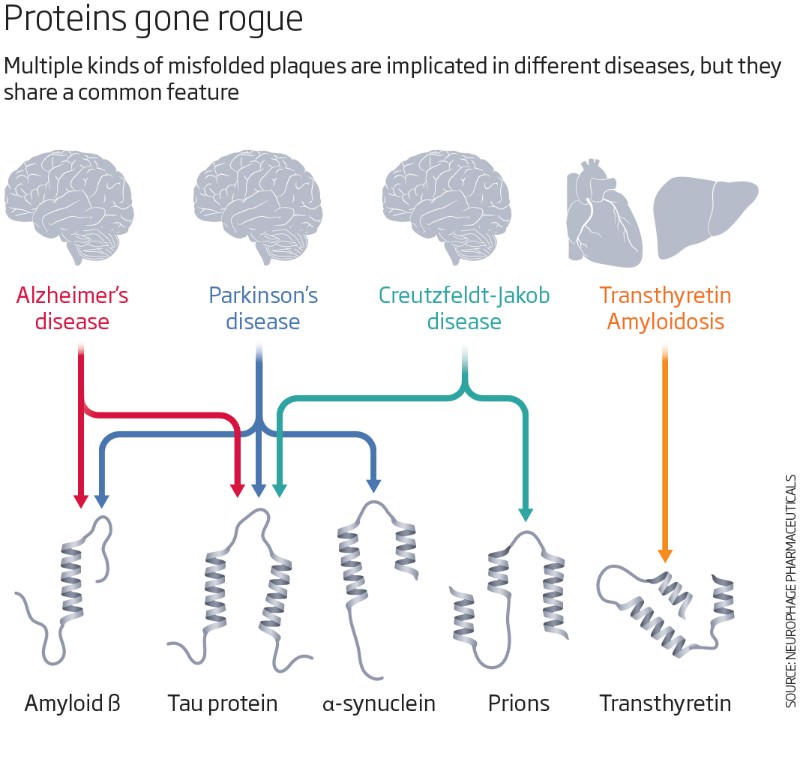
New Scientist reports that NeuroPhage Pharmaceuticals (Cambridge, MA) has found a way to cleanup rogue proteins that form in the brain, causing debilitating mental disorders, such as Alzheimer's and Parkinson's diseases:

The drug is the first that seems to target and destroy the multiple types of plaque implicated in human brain disease. Plaques are clumps of misfolded proteins that gradually accumulate into sticky, brain-clogging gunk that kills neurons and robs people of their memories and other mental faculties. Different kinds of misfolded proteins are implicated in different brain diseases, and some can be seen within the same condition.


The hope is that the novel drug will destroy the plaques but leave healthy brain cells alive.


NeuroPhage's US patent applications can be found here.

tags: medicine, brain, control, tool, entrepreneurship, biology

Friday, January 09, 2015

Touching a revolution: a breakthrough 18th century medical book in Leuven, Belgium

In Scalable Innovation we mention the genius of Giovanni Battista Morgagni (1682-1771), an Italian doctor who started a revolution in healthcare, by systematically cataloguing human diseases and matching them with autopsy results. According to Encyclopedia Britannica,
In his voluminous work On the Seats and Causes of Diseases as Investigated by Anatomy (1761), he compared the symptoms and observations in some 700 patients with the anatomical findings upon examining their bodies.
Today I had a chance to work with this remarkable 18th century book at the University Library in Leuven, Belgium.

The library staff brought the 2-volume book on special pillows; you can see one of them on the first picture above. Morgagni's printed work was designed to help practicing doctors and students of medicine; its first 100+ pages comprise several indices, so that the reader can identify a disease or a body part by symptoms, patient complaints, autopsy results, anatomic details, etc. (see the third picture above).

While touring the library, I discovered a Stanford connection too. In the 1920s, President Herbert Hoover ( the very first student of Stanford University) chaired the Commission for Relief in Belgium that sponsored restoration of the library after it was burned down by German troops during the World War I. The United States provided $500,000 for the project.

tags: history, innovation, medicine, healthcare, storage

Monday, August 04, 2014

Invention of the Day: Electrocardiography (EKG)

Today we take medical sensors for granted. Most recently Digital Health, a combination of sensing and wireless networking technologies, has become one of the fastest growing areas for innovation. For example, electronic hand bands from FitBit can track your sleep patterns, continuously collect your physical activity levels, calculate calories burned during exercises, and transmit the data to your smartphone, which relays the information further to the cloud. Ultimately, Digital Health should help us improve our lifestyles, prevent cardiovascular diseases, and reduce healthcare costs.

CardioMEMS wireless heart sensor compared to a dime. (Photo credit: IntelFreePress).
A large portion of the modern sensing technology is based on detecting weak electric signals from the heart and other organs. Medical researchers became aware of the hearts electric activity during the second half of the 19th century. Nevertheless, it was hard for them to come up with a practical application for their knowledge.
As late as 1911, Augustus Waller, who was the pioneer of electrocardiography, said, “I do not imagine that electrocardiography is likely to find any very extensive use in the hospital. It can at most be of rare and occasional use to afford a record of some rare anomaly of cardiac action.”
While Waller struggled with his imagination, a Dutch physiologist Willem Einthoven developed the first practical EKG device that was based on his newly invented string galvanometer.


In 1906, unknown to Waller, Einthoven demonstrated clinical usefulness of the electrocardiograph (EKG). In 1924 he was awarded a Nobel Prize in Medicine for his invention.

Over the last 100 years EKG has become one of the most common techniques for heart monitoring and diagnostics. Since then, many generations of inventors improved upon the original idea, with micro-electronics, networking, and cloud computing being the latest additions to Einthhoven's breakthrough. Most likely, innovation in this area will continue well into the 21st century.

tags: invention, innovation, detection, healthcare, medicine, control

Sunday, January 19, 2014

Invention of the Day: Anaesthesia.

October 16, 1846 is the official birthday of anaesthesia, the art of preventing a surgery patient from feeling pain. On that day, surgeon Dr. Warren publicly demonstrated a painless tumor removal at the operating theater of the Massachusetts General Hospital. To anaesthetise the patient, Dr. Warren used the method invented by dentist William T.G. Morton. Under the invention, the patient was rendered unconscious by inhaling ether, an organic compound known to people since the 8th century, but never used in medicine before. The invention of practical anaesthesia (along with methods to prevent wound infection) created the world of modern surgery. The 1846 invention was a breakthrough that allowed people to control one of the basic biological experiences - pain.

Morton's US Patent 4,848 on the medical use of ether was never enforced due to public outcry.


Friday, July 06, 2012

Invention of the Day: Robotic Legs. pls RT

BBC reports an invention that mimics the work of human legs by collecting and processing control information from the whole body, rather than the legs themselves:
US experts have developed what they say are the most biologically-accurate robotic legs yet. Writing in the Journal of Neural Engineering, they said the work could help understanding of how babies learn to walk - and spinal-injury treatment. They created a version of the message system that generates the rhythmic muscle signals that control walking.

The team, from the University of Arizona, were able to replicate the central pattern generator (CPG) - a nerve cell (neuronal) network in the lumbar region of the spinal cord that generates rhythmic muscle signals.


The CPG produces, and then controls, these signals by gathering information from different parts of the body involved in walking, responding to the environment.
This is what allows people to walk without thinking about it.
...
"Previous robotic models have mimicked human movement: this one goes further and mimics the underlying human control mechanisms driving that movement.

"It may offer a new approach to investigate and understand the link between nervous system control problems and walking pathologies."


Source: Theresa J Klein and M Anthony Lewis. A physical model of sensorimotor interactions during locomotion. 2012 J. Neural Eng. 9 046011. doi:10.1088/1741-2560/9/4/046011

tags: biology, medicine, control, tool,3x3

Sunday, January 15, 2012

Alcohol: Jewish Nature vs Russian Culture

The Nurture vs Nurture debate is usually centered around psychological and/or intelligence factors. For example, there's strong evidence that happiness, i.e. one's ability to be satisfied with his/her own life, is highly heritable.

Alcohol dependence seems to be another area where genes and culture collide.
Sept 16, 2002. BBC News -- Statistics suggest that Jews have fewer problems with alcohol than Caucasians in general. Previous studies have suggested that one in five Jews have this gene [ADH2] variation - higher than in a Caucasian population.

Among more recent immigrants from the Soviet Union, the protective effect was far less strong. They generally had a history of far heavier drinking.

Dr Hasin [Columbia University] said: "The study's findings suggest that the recent Russian immigrants' previous exposure to the heavy-drinking environment of Russian culture overcame the protective effects of the gene.
The culture appeared to be winning this particular battle. But as the result of massive Jewish emigration from the Soviet Union, over last 50 years the number of Jews in Russia shrunk from 2.5 million to about 150 thousand. The genes had won the war.


tags: health, biology, medicine, culture


Monday, September 26, 2011

Too much progress.

Reuters reports that a recipe for scientific success is turning into a recipe for economic disaster:


Some 12 million people worldwide are diagnosed with cancer each year and that number is expected to rise to 27 million by 2030. The cost of new cancer cases is already estimated to be about $286 billion a year, with medical costs making up more than half the economic burden and productivity losses account for nearly a quarter, according to Economist Intelligence United data cited in the report.

A paradox of modern healthcare is that specialization increases costs, a trend opposite to what is going on with other major products and services.

tags: health, evolution, medicine, problem, solution, s-curve, infrastructure, economics, 10X

Thursday, August 11, 2011

Invention of the Day: Epidermal Electronics

Science Magazine reports on research that found an invisible way to attach electronics to the skin:

Known as epidermal electronics, they can be applied in a similar way to a temporary tattoo: you simply place it on your skin and rub it on with water (see video). The devices can even be hidden under actual temporary tattoos to keep the electronics concealed. Rogers and his colleagues have separately demonstrated that they can add other useful features to epidermal electronics. Solar cells could one day power the devices without an external source; meanwhile, signals recorded by the devices could be transmitted to a base station wirelessly with antennas. In the long term, Rogers believes the technology could provide an electronic link to the body's most subtle processes, including the movement of enzymes and antibodies, to track the path of disease. "

On one hand it's a more or less traditional patch, though an ultra-thin one. On the other, they have figured out a way to customize electronic circuits according to a particular behavior of body surface:

Place the components and wires too close and they will stiffen the device, making it liable to tear. So Rogers's group uses a computer program to predict all the stresses and strains that arise with different designs and then picks the one that keeps elasticity at a maximum.
All together, should probably help in longitudinal studies by making patches less cumbersome to wear.
 
tags: trade-off, 10x, control, dynamic, medicine, information, detection

Wednesday, August 03, 2011

9 billion people by 2050.

The July 29 issue of Science magazine is a special issue on population. The charts below show some interesting story lines.
Something incredible happened in the 17th century. Just by looking at the chart on the left you can see that population growth started taking off. By 1800, we reached 1B people, and kept growing ever since. Neither wars, nor epidemics could arrest the trend.


The right chart shows projected numbers for the next 40 years. Seems like India is going to take the lead on population growth among economically developed countries.
Source: Science 29 July 2011:Vol. 333 no. 6042 pp. 540-543. DOI: 10.1126/science.333.6042.540

Another article talks about most prevalent chronic diseases (NCD) today and projections for the future. Based on those pictures, I can guess that somehow in the 17-18th centuries humans managed to develop resistance to infections diseases, either through natural and/or social immunity. The latter we call science and medicine, but it also should include business methods for running large scale public health services and hospitals.


Being poor kills.

Source: Science 29 July 2011: Vol. 333 no. 6042 pp. 558-559. DOI: 10.1126/science.333.6042.558


tags: medicine, history, technology, business, distribution, control