If you tried to doubt everything you would not get as far as doubting anything. The game of doubting itself presupposes certainty.
The child learns by believing the adult. Doubt comes after belief.
- Wittgenstein.
If you tried to doubt everything you would not get as far as doubting anything. The game of doubting itself presupposes certainty.
The child learns by believing the adult. Doubt comes after belief.
- Wittgenstein.
Beyond merely tracking where you've been and where you are, your smartphone might soon actually know where you are going—in part by recording what your friends do.
Researchers in the U.K. have come up with an algorithm that follows your own mobility patterns and adjusts for anomalies by factoring in the patterns of people in your social group (defined as people who are mutual contacts on each other's smartphones).
The method is remarkably accurate. In a study on 200 people willing to be tracked, the system was, on average, less than 20 meters off when it predicted where any given person would be 24 hours later. The average error was 1,000 meters when the same system tried to predict a person's direction using only that person's past movements and not also those of his friends, says Mirco Musolesi, a computer scientist at the University of Birmingham who led the study.

Philosopher Dan Dennett makes a compelling argument that not only don't we understand our own consciousness, but that half the time our brains are actively fooling us.
January 1, 2012. MTR -- Brain imaging in human subjects undergoing anesthesia is tricky because it requires anesthetizing people within a scanner and outside a normal operating room. Brown and his colleagues found a way to solve the technical and safety problems: they recruited volunteers who had already received tracheostomies, or surgical holes in the throat. That meant a tube could readily be used to restore their breathing in an emergency. In 2009, the researchers demonstrated that they could safely record both EEG and fMRI data on people under anesthesia; now they are working to correlate the imaging and EEG data with the observable changes seen as patients enter an anesthetized state.Rather than "modifying" people to make their key vital signs exposed, they found those who's already been "modified" for other purposes. (This approach is generally outlined in Principles 9 through 11 in classical TRIZ problem-solving recommendations. These are instances of Separation in Time from the dilemma resolution techniques.)
Anesthesia studies have already cast doubt on one popular theory, which links consciousness to a particular type of brain wave with a frequency around 40 hertz. Mashour points out that research in anesthesia shows these waves can exist even when patients are unconscious. But the patterns that anesthesiologists see do support another theory: that consciousness emerges from the integration of information across large networks in the brain.

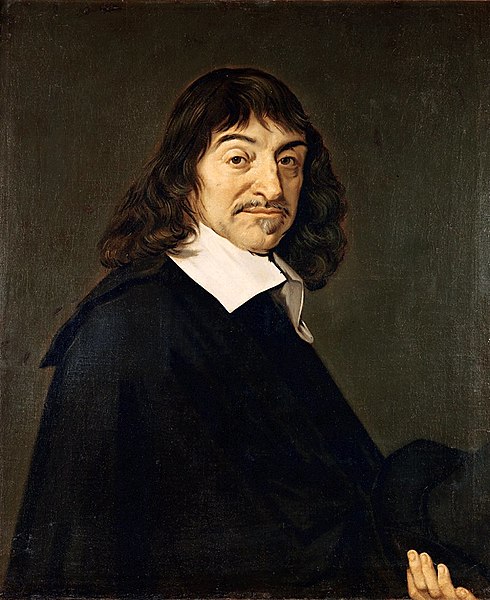
Descartes (1596-1650), the founder of modern philosophy, invented a method which may still be used with profit—the method of systematic doubt. He determined that he would believe nothing which he did not see quite clearly and distinctly to be true.
Whatever he could bring himself to doubt, he would doubt, until he saw reason for not doubting it. By applying this method he gradually became convinced that the only existence of which he could be quite certain was his own.
He imagined a deceitful demon, who presented unreal things to his senses in a perpetual phantasmagoria; it might be very improbable that such a demon existed, but still it was possible, and therefore doubt concerning things perceived by the senses was possible. (Bertrand Russell. Problems of Philosophy.)
The first serious attempt to establish idealism .... was that of Bishop Berkeley.
He fully admits that the tree must continue to exist even when we shut our eyes or when no human being is near it. But this continued existence, he says, is due to the fact that God continues to perceive it; the 'real' tree, which corresponds to what we called the physical object, consists of ideas in the mind of God, ideas more or less like those we have when we see the tree, but differing in the fact that they are permanent in God's mind so long as the tree continues to exist. All our perceptions, according to him, consist in a partial participation in God's perceptions, and it is because of this participation that different people see more or less the same tree.
All our perceptions, according to him, consist in a partial participation in God's perceptions, and it is because of this participation that different people see more or less the same tree.Let's run a thought experiment and think about Berekeley's 'tree' as 'customized webpage.' On Facebook all pages are built on demand. They are assembled on-the-fly from bits and pieces for a particular individual. Therefore, a customized webpage only exists when the individual invokes and perceives it. Once the individual turns off her demand for the page, it disappears. In this case, Facebook infrastructure plays the role of God's mind, ensuring that the page will be available when the individual invokes it next time.

I regard as no less pertinent a warning against apparent proper names having no reference. ... This lends itself to demagogic abuse as easily as ambiguity -- perhaps more easily. 'The will of the people' can serve as an example; for it is easy to establish that there is at any rate no generally accepted reference for this expression.
Gottlob Frege. On Sense and Reference. (Über Sinn und Bedeutung, 1892.)

When Swift invites us to consider the race of Struldbugs who never die, we are able to acquiesce in imagination. But a world where two and two make five seems quite on a different level. We feel that such a world, if there were one, would upset the whole fabric of our knowledge and reduce us to utter doubt.Children before age 3 or 4 live in this wonderful world where 2+2=5. Actually, it's quite obvious for them that you can take two pieces of playdough, add another two pieces of playdough, and out of them make any natural number of playdough pieces: 5 or 1 or whatever. Then they grow up, become adults and a simple statement like 2+2=5 throws their world into utter doubt. Amazing, how fragile the world of adults is.

Nevertheless, Plato did not see this as a Nature vs Nurture issue. Rather, he believed that education was essential to the development of one's natural abilities. Though over time, his Nature & Nurture approach turned into today's Nurture vs Nature debate about IQ and general intelligence factor.Citizens, we shall say to them in our tale, you are brothers, yet God has framed you differently. Some of you have the power of command, and in the composition of these he has mingled gold, wherefore also they have the greatest honour; others he has made of silver, to be auxillaries; others again who are to be husbandmen and craftsmen he has composed of brass and iron; and the species will generally be preserved in the children.

