Showing posts with label invention. Show all posts

Wednesday, September 27, 2017

Invention of the Day: Hypodermic Syringe

I'm reading a wonderful book by Roger Bridman - 1,000 Inventions and Discoveries. It documents an incredible range of human ingenuity from thousands years ago to our days. For example, here's an invention that we take for granted today: hypodermic syringe.


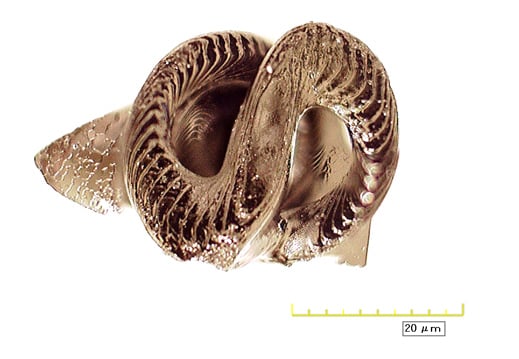
Remarkably, it was invented by two people in different countries. As the book says, "[in 1853] In Scotland, physician Alexander Wood invented the hollow needle and adapted Pravaz’s device to go with it, forming the first hypodermic syringe." That is, the invention cannot be attributed to each of them separately because a new system — the syringe — provides functionality beyond the sum of its parts. A well-defined interface between the parts, the cylinder and the needle respectively, enabled rapid innovation in manufacturing technologies and use. For example, here's how hollow needles are produced today.


From an innovation timing perspective, we need to be aware that the business success of the new injection technology was determined by a major invention that came about much later.
By the late 1800s hypodermic syringes were widely available, though there were few injectable drugs (less than 2% of drugs in 1905). Insulin was discovered in 1921. This drug had to be injected into the bloodstream, so it created a new market for manufacturers of hypodermic needles and drugs.

Overall, the invention of the hypodermic syringe illustrates a number of important principles for pragmatic creativity:
- a new combination of parts has to produce a new system effect;
- no new science is necessary for making a technology breakthrough;
- a well-defined interface between parts enables rapid innovation on both sides, e.g. the cylinder and the needle;
- the success of the invention comes from a new use, which may require a new science, e.g. liquid penicillin;
- the combination of new parts (cylinder + needle) and use (liquid drug) form Dominant Design and Use patterns that remain stable for decades, if not centuries.

Tuesday, May 10, 2016

Facebook patents recommendations from contact lists

The USPTO awarded Facebook US Patent 9,338,250, titled "Associating received contact information with user profiles stored by a social networking system" (inventors: Michael Hudack, Christopher Turitzin; Edward Baker; Hao Xu). The patent covers the now standard feature in many social networks, both consumer and professional, where the system finds potential connections in your imported contact list and recommends adding a person who is currently not in your network.


From an innovation methodology perspective, the invention solves a typical problem that arises when users need to be migrated from an old technology space into a new one. In the System model, an effective solution improves scalability, by dramatically reducing costs of adding Sources and Tools during the synthesis phase.

tags: facebook, innovation, invention, patent, social, networking, synthesis

Wednesday, January 06, 2016

3D Printing - the new Clay Age

Consider a recent MIT Review article about the latest 3D printing lab experiments. What is their importance to inventors and what can we use to predict evolution of this technology?


When we study history, especially, history of innovation, people conventionally mention the Stone Age, the Bronze Age, the Iron Age, etc. At the core of such descriptions lies a wonder material — stone, bronze, iron, steel, silicon — something that enables a huge range of applications, which power technology developments for decades or even hundreds and thousands of years.

Paradoxically, there's no Clay Age (see fig below).

This is really unfortunate because the clay turned out to be the ultimate material that served us, humans, for thousands of years and enabled us to produce an amazing range of objects and technologies: from bricks to construction and architecture, from jars to storage and shipping, from ceramics to chemistry and modern waterworks, from concrete to skyscrapers and highway transportation systems. From an inventor's perspective, I see clay-based technologies as the first example of what we call today additive manufacturing.

Let's go back few thousands of years and compare stone (Before) and clay (After) as manufacturing materials. If you live in a cave and use stone to make your tools you have to chip away, blow-by-blow, certain parts of the original piece of rock that don't fit your design.


Even when we consider "raw" rocks being cheap and disregard the waste of material itself, our ability to shape the rock or change its internal physical structure is severely limited by what we can find in nature. By contrast, clay is extremely malleable: you can shape it, add filaments, make it hollow, make it solid, make it hard, glaze it, and much more. If you are a hunter-gatherer, by combining clay and fire you can create all kinds of sharp weapons that your stone age competition can't even imagine. If you are a gatherer, you can create jars and jugs, using one of the cornerstone inventions of human civilization: the Potter's Wheel.


If you are a house builder, even a primitive one, you can use mud bricks and reinforce them with straw. As you master fire and masonry, you learn how to create bricks and construct buildings that last decades and centuries, instead of years. You can even print money tokens with appropriate clay technologies! Furthermore, with advanced firing techniques, you discover how to melt and shape metals and discover important alloys, such as Bronze. Ultimately, you develop communities of innovation and economies of scale unheard of in the Stone Age.

Why thinking about the Clay Age is important today, when we are well beyond using mud for building cities? The main goal is to gain an insight into what additive manufacturing can do for us for years to come. Just like clay, 3D printing represents a technology approach with a promising long-term potential. That is, when working with both, clay and 3D printing, instead of removing and wasting extra, we add materials and shape surfaces to achieve desired designs. Luckily, for 3D printing we can leverage the learnings from clay.

Over the thousands of years, humans learned to work with clay by combining 6 key modifying methods:
1. Shape - change the outer geometry (e.g. brick).
2. Thin or thicken - change the inner geometry (e.g. thin jar).
3. Fill - change the inner structure (e.g. reinforced concrete)
4. Fire - modify inner and/or outer hardness or other material properties (e.g. hardened stove brick)
5. Slip - modify or create an outer layer with specific properties (e.g. ceramic glazes)
6. Decorate - paint or other exterior designs to make things aesthetically appealing.

With 3D printing we are still working on items 1 and 2, barely touching 3. Some of the research labs approach item 4 on our list - firing, or its equivalents.  For example, the MIT article that I've mentioned in the beginning of the post uses the ancient sequence of a clay-based technology: shape your piece from a soft material with special additives, then fire in the kiln, to achieve desired hardness and durability. Remarkably, modern 3D printing combines the ancient material — ceramics — with modern design techniques — computer modeling and manufacturing.

In the short term, 3D printing went through a lot of hype that fizzled a bit by now. In the long term,  the age of 3D printing, just like the Clay Age, is going to create a strong foundation for a broad range of human technologies. Basically, we are in the hunter-gatherer stage of our 3D evolution curve.

tags: technology, innovation, history, invention, creativity

Thursday, July 30, 2015

Facebook gets a patent for tracking user daily routines

This week the US PTO awarded Facebook US 9,094,795, titled "Routine estimation". The patent covers a technology for clustering user locations, e.g. using mobile device data, and deriving daily routine patterns related to the locations.


The technology also enables Facebook and third parties to connect location and social graph data with user activities, "likes", music played, and other personal or group information.


One can easily imagine a real-time map that shows swarms of users chugging along their daily routines and, once in a while, reminding them to do something different. Shop, for example...


In system model terms, Facebook solves a Detection problem, which is typically a precursor to solutions for Control problems, e.g. directing user activities based on detected patterns.

tags: facebook, patent, invention, distribution, control, detection

Wednesday, July 15, 2015

Smartphone: the greatest personal device ever?

According to Gallup, more and more people can't imagine their life without their smartphone:


The device has become our ultimate interface into the world of social interactions and productivity. It's hard to find in the history of technology a device that is more personal than that. Adding more devices to one's personal network is likely to increase our dependance on the smartphone.

tags: invention, innovation, mobile, interface, social, biology, networking, psychology

Thursday, July 02, 2015

LunchTalk: "Tesla" | Talks at Google

Bernard Carlson is the Joseph L. Vaughan Professor of Humanities and Chair of the Department of Engineering and Society at the University of Virginia, where he also holds a joint appointment with the History Department. As an historian of technology, Dr. Carlson has written widely on invention and entrepreneurship as well as on the role of technology in the rise and fall of civilizations. His publications include "Innovation as a Social Process: Elihu Thomson and the Rise of General Electric, 1870-1900" and "Technology in World History", 7 volumes. In 2008, the latter was awarded the Sally Hacker Prize from the Society for the History of Technology as the best book aimed at a broad audience.


Link

Wednesday, June 24, 2015

Scalable Innovation and the future of American jobs

Manju Puri and Rebecca Zarutskie, economics researchers from Duke University and Federal Reserve Board, used data over 25 years to understand the difference between VC- and non-VC-financed US firms.* They discovered that VC-financed firms had a disproportionately large positive impact on job creation in the country. For example, in the period between 2001 and 2005 VC-financed firms represented just 0.16% of all firms in existence. At the same time, they employed %7.3 of all workers, which is about 50 times greater than "normal." Also, VC- and non-VC-financed firms differed dramatically in sales (see the chart below).

Source:
On the Life Cycle Dynamics of Venture-Capital- and Non-Venture-Capital-Financed Firms. THE JOURNAL OF FINANCE VOL. LXVII, NO. 6 DECEMBER 2012 
Another important finding from the paper:
...the key firm characteristic on which VC focuses is scale or potential for scale, rather than short-term profitability.

Although the common wisdom in Silicon Valley is that VCs select for the best team, the data tells us that potential scale of the startup matters the most. This finding strengthens the argument we put forward in Scalable Innovation: scalability of the target innovation space is the fundamental differentiator between successful and unsuccessful innovation attempts.

* Source: Puri, Manju and Zarutskie, Rebecca, On the Lifecycle Dynamics of Venture-Capital- and Non-Venture-Capital-Financed Firms (June 13, 2010). EFA 2007 Ljubljana Meetings Paper; US Census Bureau Center for Economic Studies Paper No. CES-WP-08-13. Available at SSRN: http://ssrn.com/abstract=967841 or http://dx.doi.org/10.2139/ssrn.967841

Tuesday, April 21, 2015

Lunch Talk: Chemistry of Dyes

In most of human history people couldn't afford clothes of bright colors. Moreover, certain colors were reserved for the highest authority. For example, during the times of Roman Emperor Diocletian (245–311) purple silk was to be used only at the direction of the Emperor under penalty of death.

The chemistry revolution of the 19th century changed all of that. Back then, synthetic dyes were the equivalent of silicon-based electronics in the second half of the 20th century and mobile apps of the early 21st century. If you wanted to do a technology startup, you would think "chemistry."


tags: invention, innovation, startup, science, technology, lunchtalk

Sunday, April 12, 2015

Lunchtalk: Invention of the automobile


This short episode introduces Karl Benz and Gottlieb Daimler, two independent creators of the automobile. It also talks about the industrial revolution sparked by Henry Ford.

tags: lunchtalk, transportation, invention, innovation

Friday, March 27, 2015

Finally, I have my magic formula for analyzing problems and inventing new stuff!

Actor(s) {A}
in Context(s) {E},
using Stuff {S} and incurring Cost(s) {C},
perform Action(s) {P}
produce Result(s) {R},
which counts as Outcome(s) {O}

Several immediate thoughts:
- Dilemma resolution techniques apply to Actor(s) and/or Context(s).
- 10X analysis applies to Cost(s) and/or Result(s).
- The Three Magicians, esp. the second one, move us between Results and Outcomes and provide different levels of Contexts.
- Elements quantize!

There's a lot more but I have to think about how to describe this 6-dimensional innovation space in detail.

Also, we live in a world abundant with high-tech startups, while Christinsen's "Innovator's Dilemma" was formulated for a world with sparse startups. Today's successful high-tech companies — Google, FB, Apple, etc — feast on this abundance.

tags: invention, innovation, system, model, dilemma, 10x

Tuesday, February 17, 2015

Invention of the Day: Piano

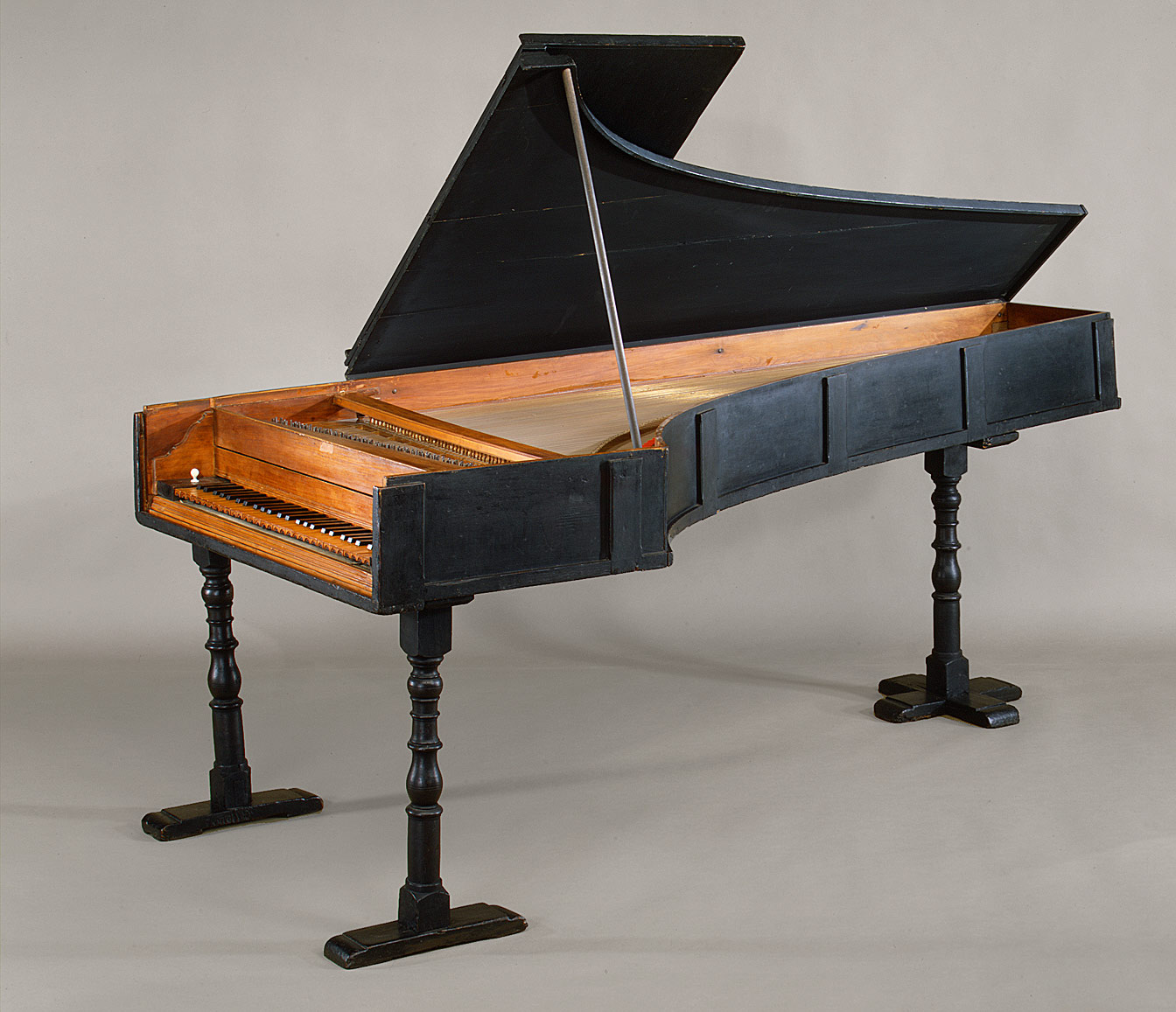
In the end of the 17th century, Bartolomeo Cristofori di Francesco (May 4, 1655 – January 27, 1731), a maker of musical instruments working for the Medici family in Florence, invented the piano.

A Cristofori piano at the Metropolitan Museum of Art in New York.
From a modern inventor perspective, the Cristofori's solution deserves our attention because its success can be directly attributed to breaking a trade-off. In the case of the piano, the trade-off was between the sound volume and the expressive control that a musical instrument afforded the player. Before the piano, musicians had to use two instruments: clavichord and harpsichord,
While the clavichord allowed expressive control of volume and sustain, it was too quiet for large performances. The harpsichord produced a sufficiently loud sound, but offered little expressive control over each note. The piano offered the best of both, combining loudness with dynamic control.
Although we are taught throughout engineering, design, economics, and business courses that good solutions create trade-offs, the invention of the piano shows us that great solutions break trade-offs.

We discuss the topic in greater detail in the Prologue of Scalable Innovation. Some of the invention techniques for breaking trade-offs and dilemmas can also be found in my blog.

tags: trade-off, invention, innovation, art

Saturday, February 14, 2015

Invention of the Day: Power Plug

Q: How many lawyers does it take to change a light bulb?
A: How many can you afford?

The screw-in electric socket invented by Edison in the late 19th century has become the gold standard for ease of use. You don't need to take a Design Thinking class to appreciate the technical beauty of the solution.

In Scalable Innovation (Chapter 4) we use the Edison's invention as an example of interface "stickiness". That is, light bulb technologies keep changing, but the socket is likely to stay with us for another hundred years.

Nevertheless, there's even a better 100-year-old electric interface invention that is still in use today. We can appreciate its value by just looking at the picture of an early 20th century GE toaster (below):


Notice that to connect the toaster to a power outlet you have to use Edison's screw-in plug. It works great for light bulbs that need to be changed once a year, but for everyday electric appliances screwing-in and screwing-out the plug multiple times a day could be a problem.

Enter Harvy Hubbell, a prolific American inventor and entrepreneur. In 1903, he invents the modern power plug. You can see below a picture from his patent that shows two major parts of his solution: an Edison-compatible screw-in body (1) and a two-prong plug (2) that goes into it (US Patent 774,250). With this invention, attaching electric appliances becomes even easier than changing a light bulb.


Originally, Hubbell wanted to use round prongs, but after several months of experimenting with the idea, he decided on the now familiar flat prongs (US Patent 774,251).


The Hubbell's interface solution turned out to be so good that eventually people got rid of the vast majority of Edison's screw-in sockets in favor of plug-in power outlets.

tags: 10x, invention, innovation, scalability, STM-operator

Monday, January 19, 2015

Invention of the Day: anti-caries chewing gum and toothpaste

When we don't brush our teeth a plaque forms on the surface and, when untreated, causes tooth decay.

Last July, the United States Army got a US Patent 8,778,889 (Inventor Kai P. Leung) that covers a chewing gum or toothpaste that can prevent formation of the plaque and save the US military — and the rest of the world! — tons of pain and money. The patented technology uses KSL-W, a "member of a decapeptide family with demonstrated effectiveness to prevent biofilm formation on teeth, inhibit the growth of oral microorganisms, and reduce the development of plaque or dental caries."


Go Army!

Monday, January 12, 2015

Today I learned (TIL) a new word: Skeuomorph

Skeuomorph (n. from the Greek words skeuos and morph) - A design feature that is carried forth from the original version of a product in order to make people feel comfortable with the new device. For example, the click sound on a digital camera comes from an audio clip; however, the original sound was the actual shutter opening and closing.

The original iTunes logo featured the CD but the application actually provided a way for the users to get rid of their CDs. 

iPhone would be a typical skeuomorph too because it intentionally links a new category of mobile devices ("i"-device) with the familiar functionality of the phone. The name lowers psychological barriers to technology adoption by consumers


I'm reading Stefan Larsson's article about how the legal system deals with innovation in conflict situations: "Metaphors, law and digital phenomena: the Swedish Pirate Bay court case." Stefan extends the original meaning of skeuomorph from the world of physical objects into the realm of metaphors and legal concepts. He argues that
In line with conceptual metaphor theory, which states that abstract thinking is largely metaphorical, the article argues that this is true also for digital phenomena that, thus, are largely understood through metaphors and skeumorphs.
I find this N. Katherine Hayles quote particularly relevant to my invention work:
The new becomes more acceptable when it refers back to the earlier iteration that it is displacing, while the earlier iteration becomes more valuable when it is placed in a context where we can experience the new. A skeumorph simultaneously focuses on the past and future, while reinforcing and undermining both.
Usually, the baggage of old thinking embedded into a skeumorph constrains inventor's imagination, limiting the range of scenarios that can be achieved by a new technology. To get rid of skeuomorphs and associated with them mental entanglements, I try to use non-technical terms as much as possible ("pretend that you are explaining your new ida to a 10-year-old"). Another way to deal with the issue is to use the system model, which prompts abstract, analytical thinking.

tags: psychology, invention, science

Saturday, January 03, 2015

Facebook patents a tech to provide socially relevant ads - US 8,924,406

On December 30, 2014 the United States Patent Office awarded Facebook a patent titled "Ranking search results using social-networking information" US 8,924,406 ( Inventors: Christopher Lunt, Nicholas Galbreath, Jeffrey Winner).

The patent covers a technology that provides a new way to determine relevant ads and/or additional content shown to the user along the search results. According to the invention, a search engine takes into account the popularity of sponsored links associated with the results. The popularity is calculated based on clicks in the user's social network and a social relevancy threshold (degrees of separation).

From a business perspective, Facebook continues strengthening its challenge to the Google "relevant ads" model created in the early 2000s. Today, some of you may already see sponsored relevant links inserted in your Facebook stream or page. The patent would be a good illustration to the brief discussion "GOOGLE VERSUS FACEBOOK: THE BATTLE FOR THE CONTROL" Max and I outlined in Chapter 22 of our book Scalable Innovation.

Another interesting aspect of the patent: it shows the brave new "Me-centric" world of social networking (see Fig 1 above). From a technical and business perspective it indicates a large-scale transition from relational (excel-like rows and columns) representations of data to a graph-based one, with nodes and edges. The patent also provides a good working definition of a social network:
the social-networking system comprising a graph that comprises a plurality of nodes and edges connecting the nodes, each edge between two nodes representing a relationship between them and establishing a single degree of separation between them, wherein the first user corresponds to a first node of the graph.
tags: patent, facebook, innovation, invention, social, networking, search, control, internet

Thursday, November 13, 2014

Invention of the Day: Wine

In 2007, a team of Armenian and Irish archeologists discovered a 6,100-year-old winery in the Areni cave near a small Armenian village.


The discovery meant that people started producing wines in significant volumes thousands of years ago. More importantly, our ancient ancestors had specifically selected and cultivated grapes because of their high sugar content. That is, since grapes contain up to 20% glucose by volume, when fermented, they produce a large amount of alcohol (ethanol).


Although we know that even wild animals enjoy an occasional doze of alcohol feasting on fermented fruit, wine is different.


The significance of the invention of wine thousands of year ago becomes apparent when we compare it to the invention of large scale food production, e.g. grain cultivation, domestication of animals, irrigation, etc.

It [the invention of wine] completely defies the common wisdom "Necessity is the mother of invention." The proverb implies that people invent or solve problems when they are compelled to do so. But, unlike food, water,  and shelter, wine is not a necessity; one can survive without it. Moreover, certain cultures and religions explicitly forbid alcohol consumption.

Therefore, wine is not a necessary, but, rather, an opportunistic invention; something that makes life more fun (when taken in moderation). Here's how an ancient Greek poet Eubulus (4th century BCE) describes  the effects of wine:
Three bowls do I mix for the temperate: one to health, which they empty first; the second to love and pleasure; the third to sleep. When this bowl is drunk up, wise guests go home. The fourth bowl is ours no longer, but belongs to violence; the fifth to uproar; the sixth to drunken revel; the seventh to black eyes; the eighth is the policeman's; the ninth belongs to biliousness; and the tenth to madness and the hurling of furniture.
Wine is like modern computer games: you can live without it, but life would be less enjoyable.

As human inventors, we create necessities by coming up with novel ideas and making them useful to other humans on a large scale. Based on thousands of years of ever-improving and ever-increasing wine production, I would say that "Invention is the mother of necessity."

Friday, November 07, 2014

ArborLight startup wins 2014 Next Generation Luminaires (NGL) competition

Congratulations to my co-author Max Shtein! The startup he co-founded won a national competition for innovative energy efficient indoor lighting fixtures.


<blockquote>Arborlight is virtually inventing a new lighting product category: daylight emulation. We all love daylight. It makes us feel good, be more productive, have more energy, the list goes on and on. Yet, the reality for many is that to work, learn, shop and generally go about our daily business, we are forced to spend most of our time indoors with little or no access to daylight. The aim of Arborlight’s Solis is to remedy that situation. The Solis product allows you to create an indoor environment that simulates daylight in where it would be otherwise impossible, literally mimicking the sun. It’s Wi-Fi enabled, has the appearance of a traditional skylight, emulates daylight conditions, and autonomously adjusts color, intensity, and directionality throughout the day to match outdoor illumination. Essentially, it provides people with the ability to experience morning, high noon, and evening light conditions in a windowless space.</blockquote>


Thursday, November 06, 2014

The Internet of Things: malware threat to US energy infrastructure

Destructive "foreign" software is becoming a weapon of choice for covert international operations. For example, according to today's ABC report:


National Security sources told ABC News there is evidence that the malware was inserted by hackers believed to be sponsored by the Russian government, and is a very serious threat.

The hacked software is used to control complex industrial operations like oil and gas pipelines, power transmission grids, water distribution and filtration systems, wind turbines and even some nuclear plants. Shutting down or damaging any of these vital public utilities could severely impact hundreds of thousands of Americans.

In our book, Scalable Innovation, Chapter 3, we discuss in detail one of the system security inventions I made back in 2000, while at Philips Research. The invention, US Patent 7,092,861, aims to detect novel viruses that can target networked equipment in the home, office, or industrial cite (the patent is now owned by Facebook).


More than a decade ago, it was clear to us in the labs that the emerging Internet of Things creates new types of threats. Unless such threats are addressed through a broad, consistent industry and government efforts, our critical infrastructure will be highly vulnerable to vicious attacks that could dwarf in their destructive power the events of 9/11. Ideally, all existing industrial software has to be upgraded - a difficult, but essential task for the next two decades.

Sunday, October 12, 2014

Invention of the Day: the Integrated Circuit

During the Nobel Prize week it's only appropriate to remember Nobel-worthy inventions that changed the world. Today it's almost impossible to imagine our lives without some kind of use of the Integrated Circuit (IC) because the technology has become a fundamental building block in modern computing, communications, data storage, power supply, sensor, and many other applications. (see the Wiki article linked above).

In 2000, Jack S. Kilby received 1/2 of the Nobel Prize in Physics for his 1958 invention of the IC. Here's a picture and diagram of his original invention:


When I read Kilby's Nobel Prize lecture, several of his passages strike me as remarkable because they show how difficult it is for contemporaries to recognize a great innovation:


Note that one of the core objections was that the new system doesn't use the best individual elements (resistors and transistors). Similarly, many years later — in the early 1990s — people doubted that video was ever going to be streamed over the Web because the Internet Protocol was poorly suited for synchronous data transmission. As innovators, we often have to remind people that the system is greater than a simple sum of its parts.

Kilby's speech also gives us a new perspective on the Moore's law. Here's what Kilby says:


Just one year later, Gordon Moore published his now famous article where he formulated his "law", stating that the density of elements in ICs would double every 18 months:

The chart from that article promised exponential performance riches to the "few adventurous companies" that were willing to bet on the new technology. Perhaps it is not a coincidence that tiny, unknown Silicon Valley startups, rather than large established companies, took full advantage of the opportunity and eventually created a new reality that we all live in today.

tags: invention, innovation, technology, market, 10X, cinderella

Tuesday, August 19, 2014

Facebook patents user tracking for advertisers and content providers

Today, August 19, 2014, USPTO awarded Facebook patent 8,812,591 titled Social networking system data exchange (Inventors: Kent Schoen and Gokul Rajaram)

The patent covers a technology that tracks users across multiple service providers by matching service provider ID and social network ID. The match results in an aggregated user profile that determines user eligibility for content and ad targeting. The system uses a tracking pixel instead of the web cookie, which makes it suitable for mobile applications.


The technology breaks the wall between different publishers with regard to what they know about the user. As the patent says:
...a publisher may know very limited information about a user visiting the publisher's web page or the publisher's application. Thus, a publisher is unable to effectively target content item and advertisements to the user based on the user's interests and characteristics. The exchange server aggregates a user's information from several sources, including a social networking system, publishers, retailers, content item providers, etc.
The exchange server matches advertisements to users based on whether users' characteristics as provided by the aggregated social graph match the advertisements' targeting criteria. Additionally, the exchange server selects one or more advertisements to display to the user based on expected revenue to be generated from displaying the advertisement to the user.


tags: patent, invention, innovation, facebook, social, networking, graph, content