Showing posts with label separation. Show all posts

Saturday, March 04, 2017

Creative Solution of the Day: the Publication Dilemma

Typically, inventors face a disclosure dilemma: on the one hand, you want to explain your idea to a potential investor or a customer; on the other hand, you don't want to explain it because the idea can be easily stolen. Researchers face a similar dilemma when they consider publishing their results that  might have valuable commercial implications.


In the 1840s, Samuel Colt used the US patent system to overcome the dilemma:
When Samuel Colt, of revolver fame, was trying to sell the U.S. government a system of naval mines, he had to establish that his device was original without giving away its secret. His imaginative solution was to submit the plan to the Patent Office, obtain a confirmation of its originality, and then withdraw the application before the patent was granted, thereby avoiding the publication of the patent specifications.*
The Colt's approach exemplifies a powerful problem-solving technique often called "Separation in Time." According to the principle:
- you perform the useful action first — in the Colt's case: explaining the invention via a patent application — at the time when your potential customer needs to be convinced;
- then you perform a reverse action — withdraw the patent application — at a different time, so that the competition doesn't learn about the idea.

Snapchat provides the most recent example of a successful application of the "Separation in Time" principle along the lines of Samuel Colt's solution. That is, a Snapchat picture or a post is published for a short period of time to a limited group of subscribers; then, the post disappears, so that the information doesn't leak out to the general public. Clearly, the technique can be used for a broad variety of "limited offers."

* Source: Alex Roland, "Secrecy, Technology, and War: Greek Fire and the Defense of Byzantium, 678-1204." 1992.

tags: dilemma, problem, solution, social, separation

Sunday, August 17, 2014

Invention of the Day: SGML (Standard Generalized Markup Language)

SGML is the second great invention (that I know of) by an American lawyer; the first one being the Cotton Gin, by  Eli Whitney.

The Cotton Gin (1793) revolutionized the cotton industry in the US and, arguably, triggered the Industrial Revolution in England. Similarly, the SGML, co–invented by Charles F. Goldfarb, revolutionized the way we work with electronic documents. For example, the World Wide Web would be impossible without HTML, a simplified extension of SGML. Another extension of SGMIL is XML, a critically important document format used extensively in modern web and mobile applications.


In 1969, together with Ed Mosher and Ray Lorie, Goldfarb invented the SGML to make electronic documents compatible between different computing systems. Before SGML, a document would have instructions on how to handle it — procedural markup — embedded into the text. Since different IBM computer systems had different command sets, moving documents with procedural markup created a problem, because the same document would not "work" on a different computer. To solve the problem, the inventors came up with a language that could describe the contents of the document independently from the application or computer system that stored or processed it. Here's how Goldfarb wrote about the breakthrough in a 1971 paper:
The principle of separating document description from application function makes it possible to describe the attributes common to all documents of the same type.
20 years later, this feature of SGML turned out to be highly useful for the World Wide Web, a system designed for a seamless exchange of documents from networked computer systems around the world. HTML, a simplified version of SGML, allowed web enthusiasts to put together simple web pages that could be rendered in browsers on all kinds of machines. With the web, the invention turned into a great innovation.

tags: invention, innovation, separation, internet, web, packaged, payload,  

Wednesday, January 29, 2014

Solving the Life vs Glory dilemma - 2

Recap: In my earlier posts I described and analyzed in detail a typical dilemma situation: a person faces mutually exclusive choices. For example, the ancient Greek hero Achilles has to choose between dying young with eternal glory or living a long, uneventful life. The modern hero Neo from the Matrix has to chose between the Red pill and the Blue pill.

In art, heroes choose dilemmas. In real life, we try to get away from them by picking a reasonable trade-off - "the middle way." A fundamental characteristic of a dilemma or trade-off situation is the existence of "The Box." The Box represents a set of constraints, either visible or invisible. The first step to think outside the box is to discover what the box is.


In the Achilles example, we've established that he is locked in the box of personal mortal combat with an opposing fighter - Patroclus. Even if Achilles wins today, sooner or later a new fighter will be born to kill him. That is, once you've entered the dilemma box, the choices are unavoidable: Achilles wins some great battles, but he is eventually killed by Paris, who, in turn, dies in combat later.

At the first glance, the Achilles' Life vs Glory dilemma seems to have no happy outcome. On the other hand, we've established that another Greek Hero - Odysseus - had found a breakthrough solution: he reached eternal glory AND lived a long, fulfilling life. How did he do that?

First, let me say that the Achilles' box is version of a theoretical construct created by economist Francis Ysidro Edgeworth in the 19th century. It serves as a foundational principle for the modern economics of free markets, where people make rational choices about allocation of limited resources. That is why the first principle of economics is often stated as "Everything is a trade-off."

In Sclalable Innovation (Prologue), we show that great innovations often happen when people break trade-offs and dilemmas, instead of strengthening them. Odysseus is no exception. As a creative individual, he sees outside the Achilles' box. In his thinking, a 3-rd dimension exists - gods and other people (fig below).


When Odysseus encounters a tough challenge he leverages this dimension to generate a broad variety of coordinated actions. During the siege of Troy, he finally defeats the enemy city by getting one group of Greeks build the Trojan Horse, another group to hide inside it, yet another to rush the city when the Horse is inside, etc. This pattern of problem solving repeats when Odysseus runs into trouble on his way back home to Ithaca. For example, he uses the help of his team to defeat the Cyclops and escape from the cave. (Even the Cyclops' sheep act as "members" his team.) Odysseus accomplishes the impossible feat of listening to the song of the Sirens and surviving it too. (I posted about his solution in detail in 2011). Odysseus returns home to Ithaca and restores himself as the rightful king, by craftily creating a coalition of players and arranging the circumstances to benefit his cause. As the result of his adventures, Odysseus achieves eternal glory AND ensures that he has a long life.

In short, Odysseus is a 3D strategist, while Achilles is a 2D tactician. Achilles thinks inside the box, while Odysseus thinks outside it, by discovering dimensions of the situation that Achilles cannot see. In these dimensions, he finds opportunities for novel actions and their novel combinations. To motivate his allies, he uses certain psychological effects, which I'm going to cover later.

tags: creativity, problem, solution, dilemma, trade-off, separation, breakthrough, luck, control


Sunday, June 23, 2013

The Problem Creation Problem: A Game of Thrones.

In "A Storm of Swords" (one of the fantasy novels that serve as a literary foundation for the popular HBO TV Show A Game of Thrones) the author creates a lot of problems for his characters to solve and for readers to enjoy. The more intractable the problem, the more entertainment value it provides because it requires ingenious solutions and plenty of opportunities for dangerous mistakes.
Personal intrigues about love, lust, and power aside, the novel poses interesting technical problems as well. For example, we find Jon Snow and less than a hundred of his fellow guards in charge of defending The Wall against more than a hundred thousand of Wildlings. The Wall itself is impregnable to the low tech assailants, but it has a narrow passage that allows people to get beyond the Wall. Jon Snow's biggest challenge is to prevent the Wildlings from getting through the passage.


In the book, both sides show great creativity in attacking and defending the passage. There's a king of giants who rips out its iron gate; there's a brave dozen of guards who kill him in the process, etc. The fight goes on for pages and its a lot of fun to read.

But when I put my inventor hat on, I wonder why have the passage at all. On the internal side of the Wall, the guards use an equivalent of a large elevator to get on and off the Wall. Since the guards on the Wall are in full control of the elevator, no enemy can get over the Wall. In short, the elevator is the safest method to get people "through" the Wall. You would think that the builders of the Wall should be smart enough to use the elevator on both sides; especially, on the dangerous side because the Wildlings would have no chance to penetrate the Wall when the guards lift or temporarily disable the elevator. Furthermore, according to the book, the passage is so narrow that its throughput capacity is no greater than that of the elevator. Then, why do we have the passage at all if it introduces a major design flaw?

Well, from a fun creation perspective, the passage is a "planted" intractable problem that allows the author to keep the struggle for the Wall going for pages and pages and pages. Not having the passage would be a great technology solution, but its entertainment value would be almost non-existent. As we discuss in the Prologue of Scalable Innovation, we humans prefer the entertainment value. That's why our discussions and practices of creativity are skewed toward fun and games, including games of thrones.

--
my earlier post on the Problem Creation Problem.

tags: problem, solution, entertainment, separation, bundle


Thursday, January 05, 2012

Designer pets: multiple DNAs inside a single body.

New Scientist reports today on a successful experiment to create chimeric monkeys with fragments of six DNAs.
Jan 5, 2012. -- Shoukhrat Mitalipov of the Oregon National Primate Research Center in Beaverton created them by extracting individual cells from up to six very early embryos, each containing just four cells, then mixing these together in a single, new embryo.
After post-mortems on seven miscarried chimeras, Mitalipov discovered that the genotypes from each of the six original embryos were dispersed throughout their bodies, rather than segregated into discrete tissues.
Chimera mice are widely used in biology research and chimera humans occur naturally when, for example, two embryos merge into one in the womb. Genetically modified plants are a part of mainstream agriculture already. It's reasonable to expect that in a couple of generations creating a chimera organism could go mainstream too. Today, the results are random, but with proper genetic engineering we can get control over the process.

Maybe instead of growing whole organisms, which is technically difficult and ethically challenging, it will be possible to build individual organs that are compatible with multiple people. Transplanting such organs will be easier than the ones with a single DNA.

P.S. I vaguely remember a science fiction story where the main character was a human chimera. He had his twin's conciseness embedded in his mind. I think the novel was by Stephen King.

tags: biology, health, separation, innovation, science

Wednesday, December 21, 2011

Will tablets help creativity?

Slow, deliberate problem solving is hard because our working memory is severely limited. Psychologist Daniel Kahneman describes how the brain deals with the overload,
We normally avoid mental overload by dividing our tasks into multiple easy steps, committing intermediate results to long-term memory or to paper rather than to an easily overloaded working memory. (Thinking fast and slow. 2011.)
Sketches and simple diagrams also help capture intermediate results. Unlike PCs, tablets are better suited for hand drawings. I'd say they are even better than paper because you can use practically unlimited number of pages and colors. It's quite possible that children who grow up with tablets rather than PCs will be able to escape mental overload during problem solving sessions.

I wish blogspot had doodling tools...

tags: creativity, tool, process, control, separation

Tuesday, November 22, 2011

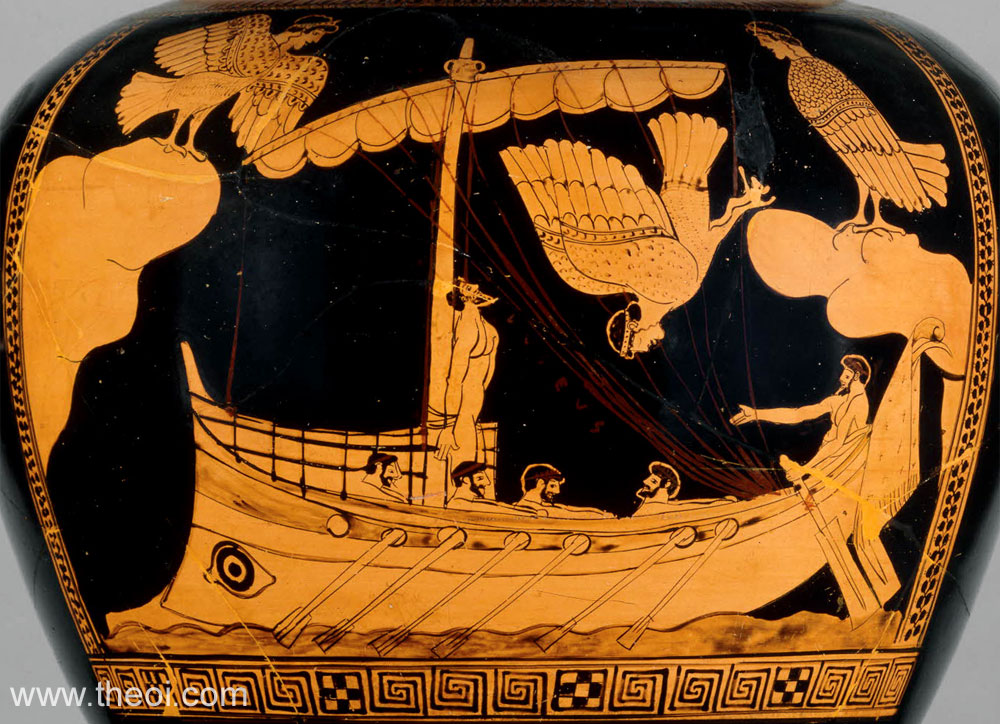
Solving dilemmas: Odysseus and the Sirens. [Separation in Action]

In two previous posts (1, 2) about the separation principles we considered the dilemma Odysseus encounters when he approaches the island where the three Sirens live:
[Odysseus]... faces a dilemma. On one hand, he wants to listen to the Sirens' song because it is the most beautiful song in the world. On the other hand, he doesn't want to hear the song because it will cause him to forget himself and run his ship into deadly rocks.
In Homer's poem, Odysseus resolves the dilemma in space and I propose another, more modern solution, using separation in time.

The third key TRIZ principle for solving dilemmas is Separation in Action [Interaction]. In the Odysseus dilemma we have two important incompatible interactions: a) listening to the song of the Sirens (Action 1); b) steering the ship away from the rocks (Action 2).

To get the best of both worlds, i.e. experience the song and not crash the ship on the rocks, the actions have to happen in the same space and in the same time, but independently from one another. In other words, the crew, including Odysseus, should be listening to the song (Action 1), and the ship,
independently from the crew, should be steering away from the rocks (Action 2).

A natural implementation of this concept would be a ship that steers itself. For example, the ship can be on auto-pilot or steered by a robot. This solution was not available to Odysseus, but is available to us. Further, a combination of separation in Action and Space can give us steering by remote control ( or by the will of gods.) You can think up other solutions as well.

====


To summarize all three posts: When solving dilemmas it is important to be patient, i.e. deploy slow deliberate thinking, and explore multiple potential solutions using all three separation principles as well as their combinations. Some of the ideas will be ripe for immediate implementation, others for future development. Since patents last 20 years, it usually makes sense to write up all of the ideas, not only the ones that are going to work immediately.

tags: triz, separation, problem, solution, example, strategy

Sunday, November 13, 2011

Solving dilemmas: Odysseus and the Sirens. [Separation in Time]

Last time we considered the dilemma Odysseus encounters when he approaches the island where the three Sirens live:
[Odysseus]... faces a dilemma. On one hand, he wants to listen to the Sirens' song because it is the most beautiful song in the world. On the other hand, he doesn't want to hear the song because it will cause him to forget himself and run his ship into deadly rocks.
In Homer's poem, Odysseus resolves the dilemma in space (see my earlier post). The obvious downside of his solution is that his crew did not get to hear the Sirens' song. That is, only Odysseus tied to the mast experiences it.

Another important TRIZ principle for solving dilemmas is Separation in Time. To get the best of both worlds, i.e. experience the song and not crash the ship on the rocks, everybody on the ship sails safely during the time of the song (Time 1) AND listens to the song when the ship is out of danger (Time 2.)


In other words, while they sail near the Sirens' island, all crew including Odysseus have their ears plugged so that the beautiful song does not distract them from steering the ship safely. As the result, everybody survives the encounter. But how will they hear the beautiful song of the Sirens? By listening to it later, e.g. by having the song recorded during the encounter and playing it back at the crew's convenience.

Of course, audio/video recording was not available at the Odysseus time, but it doesn't mean we should discount the possibility of applying the Separation in Time principle. After all, TiVo and other time-shifting devices are all based on this idea.

tags: triz, separation, problem, solution, example

Friday, November 11, 2011

Solving dilemmas: Odysseus and the Sirens. [Separation in Space]

In ancient Greek mythology, the Sirens were sea nymphs who lured sailors to their death with a bewitching song. On his way home from Troy to Ithaca, Odysseus has to sail by the flowery island of Anthemoessa, where the Sirens lived.

The man faces a dilemma. On one hand, he wants to listen to the Sirens' song because it is ones in a lifetime opportunity to experience the most beautiful song in the world. On the other hand, he doesn't want to hear the song because it will cause him to forget himself and steer the ship toward deadly rocks.


Odysseus solves the dilemma by using the Separation in Space principle. To get the best of both worlds, i.e. to hear the song and avoid the deadly rocks, steering should not be mixed with listening. Odysseus, "that ingenious hero who traveled far and wide", tells his crew (Space 1) to plug their ears with wax and do the steering. The crew cannot hear the song and can't run the ship into the rocks. So far, so good.

He also tells the crew to tie him (Space 2) to the mast of the ship, so that when he hears the song he can't take over steering of the ship.

As a result, we've got a Space 1 element (the crew) that does the steering, and Space 2 (Odysseus) element that does the listening. Voilà, the dilemma is solved!

tags: dilemma, problem, solution, separation, triz
P.S. From a behavioral economics point of view, tying oneself to a mast is a commitment device that allows you to overcome the temptation of the present in favor of the future.
P.S.S. Separation in Space is a one of classical TRIZ principles for solving dilemmas. I needed a simple illustration of the principle for my book draft about problem solving methods. This one should probably work.

Friday, August 19, 2011

Trade-off of the Day: Creativity vs Self-Control

A few years ago there was a research article showing that simple walks in a park, sleeping, gardening, and meditation restore people's thinking and self-control abilities, while a walk on a busy street does not. The key to restorative brain activities is low requirements for attention.

Today’s world presents numerous challenges to maintaining one’s focus. It offers a plentiful supply of interesting but unimportant stimulation, whereas many important stimuli lack interest.


Thus, people must ignore much of what surrounds them. This act seems to require frontal and parietal brain mechanisms that mediate cognitive control and are susceptible to fatigue.


In order to replenish these resources, a person should engage in activities high in soft fascination that will activate involuntary attention in non-conflicting ways.


...what makes an environment restorative is the combination of attracting involuntary attention softly while at the same time limiting the need for directing attention.


Watching TV or browsing the web are not restorative activities because the media is designed to draw our attention.

Along the same lines, two days ago, NYT published a general interest article: Do You Suffer From Decision Fatigue? Among other things, it talks about how our brain resources are depleted by attention-demanding tasks, with self-control being one of the more important ones.

Since problem-solving and willpower draw on the same resource, it probably makes sense that people come up with creative ideas, i.e. experience an aha moment, in soft fascination environments. How can we break the trade-off and improve our creativity? One way would be to routinize creative efforts, so that they require minimal involvement of will power. Another, would be to intersperse information acquisition (learning) or focused thinking/writing with low-attention activities, e.g. walking in a park, etc. One more, engage in free-form, divergent thinking "what if" exercises, e.g. "if we could solve any problem, which problem would be worth our blood, sweat, and tears?"


tags: creativity, psychology, trade-off, dilemma, separation, reverse brainstorm, brainstorming, control

Tuesday, October 27, 2009

Dilemma of the Day: modern reproductive strategies

One one hand, in today's society people get married and have children when they are over thirty and forty. This trend relates to increased amounts of time spent on education, carrier building, and partner selection.
On the other hand, research shows that "genetic disease is more likely in the children of older fathers".

Therefore, to ensure mature partner choices, marriage should be delayed. But to avoid the likelihood of genetic diseases of the offspring, marriage should happen earlier in one's life.

The dilemma can be solved by applying the Separation in Time principle: marriage is delayed (best time to choose a mate), but sperm and eggs are selected and tested way before marriage (best time to get the genetic material).

One implementation of the solution, e.g. by using frozen eggs, got a boost from a recent study:

EGG freezing looks increasingly promising as an insurance policy for women who need or want to delay having children, according to the first systematic monitoring of success rates for IVF using eggs that were frozen then thawed out.

It's highly likely that future babies will be born to older parents using their "young" genetic material.

problem, solution, dilemma, separation, health

Thursday, September 10, 2009

The best way to create a problem is to tie seemingly unrelated issues together:

Much more than the future of US health care hangs on the fate of health care reform. That was the message delivered by Connecticut senator Joseph Lieberman, a long-term environmental campaigner, to Capitol Hill on the Senate's first day back in office after the August recess.

"If the health care bill fails, the climate change bill will fail too," Lieberman told the Climate Change, Energy and National Security conference hosted by the political think tank Partnership for a Secure America yesterday.

The system of quid pro quo favors between politicians succeeds at creating connections where naturally none exists. Logically, solutions to global warming and health care problems should be evaluated on their own merits. But in practice, by acting opposite to the recommendations of the separation principle, politicians tie them together to create problems for their opponents.

Sunday, September 06, 2009

Dilemma of the Day: picking a crushed nut on a busy road

From the NS review of Crow Planet:

A Japanese study of urban crows found that the birds dropped hard-shelled nuts in the road at traffic intersections for cars to roll over and crack. When the traffic was heavy, the crows waited for the walk signal before grabbing their snacks from the street. How can you not admire that?

Friday, March 20, 2009

An interesting tidbit on the new 3D movie technology:
Unlike the 3-D movies of past decades, where two separate projectors displayed images (one for each eye) and had to remain synchronized for the duration of the film, the latest 3-D systems use a single digital projector. They quickly alternate between images seen by the right and left eyes, which the brain marries into a three-dimensional picture. The process still requires glasses to pick up separate left and right eye images, but not the clunky red and green kinds popularized in the 1970s and 1980s with 3-D films. Today's 3-D eyewear looks more like sunglasses.

== using separation in time after separation in space. 

Monday, March 09, 2009

Distributed electricity network is coming to a neighborhood near you.
CAMBRIDGE, Mass.--Utility company American Electric Power (AEP) plans this year to place equipment in residential areas capable of storing a few hours of electricity, one of the first tests of distributed storage on the power grid.
The storage units would be the size of a relatively small "backyard transformer," each wired to provide enough electricity for four to six houses, he said. Together, those storage units could provide back-up power to neighborhoods during outages and potentially for other applications, Nourai said.

"Aggregated, hundreds of these units controlled (by AEP)...effectively do the same as one big storage unit," he said. "It's closer to the load, and it has the potential to (create) competition on price."

This is great news. The development of distributed storage will enable efficient local energy production: solar, wind, termal, etc. Rather than sending electricity into a vast inefficient regional grid, household will be able to store, and later consume, energy locally. In the future, we might even see a partial transition from AC to DC, because the new distribution scheme significantly reduces energy distribution distances, therefore, DC becomes more practical than AC.

Wednesday, November 29, 2006

Stanley Bostitch

HurriQuake Nail

This invention demonstrates the separation principles:

different parts of the nail are working against different types of destructive load.

separation in action and space

tags: interface example invention course book solution patent dilemma

also see US Patent 6,758,018

http://www.popsci.com/popsci/flat/bown/2006/innovator_5.html