Showing posts with label biology. Show all posts

Wednesday, July 20, 2016

A new way to map brains

Neuroscientists at Washington University Medical School created a method to build maps for individual brains:

(MIT Tech Review) Researcher Matthew Glasser says that unlike many previous studies, this map considers several features of the brain simultaneously to mark its boundaries. Some neuroscientists still define brain regions based on a historical map called Brodmann’s areas that was published in 1909. That map divided each half of the brain into 52 regions. Each hemisphere on the new map has 180 regions.

Glasser defined these regions by looking for places where multiple traits—such as the thickness of the cortex, its function, or its connectivity to other regions—were changing together. After drawing the map onto one set of brains, the researchers developed an algorithm to recognize the regions in a new set of brains where the size and boundaries vary from person to person. “It’s not just a map that people can make reference to,” Glasser says. “You can actually find the areas in the individuals that somebody is studying.”

From an innovation perspective, mapping methods create opportunities to systematically explore and coordinate knowledge about a broad class of objects. This particular approach enables scientists and engineers to move back and forth from generalized information about human brain to specific aspects in a particular brain. For example, we might be able to understand why 3D VR can replace painkillers in some medical applications.

Tuesday, June 28, 2016

Stanford CSP 74 Principles of Invention and Innovation (BUS 74). Session 2 Quiz 1

In a recent MIT Technology Review article, Antonio Regaldo describes a new genetic engineering approach that promises to eliminate malaria:
Malaria kills half a million people each year, mostly children in tropical Africa. The price tag for eradicating the disease is estimated at more than $100 billion over 15 years. To do it, you’d need bed nets for everyone, tens of thousands of crates of antimalaria drugs, and millions of gallons of insecticides.
...
A gene drive is an artificial “selfish” gene capable of forcing itself into 99 percent of an organism’s offspring instead of the usual half. And because this particular gene causes female mosquitoes to become sterile, within about 11 generations—or in about one year—its spread would doom any population of mosquitoes. If released into the field, the technology could bring about the extinction of malaria mosquitoes and, possibly, cease transmission of the disease.

Question 1: Using the "Divergeng-Exploratory-Convergent" thinking technique,
a) list lots of benefits and problems that the new approach creates;
b) create an explicit criteria for selecting top benefits and problems;
b) according to your criteria, what are the most important short- and long-term benefits/problems (at least one each)?

Question 2 (optional): What dilemma did the researchers solve, while trying to create their genetically modified mosquito?

Question 3 (optional): What's the difference between system levels that the existing and the new malaria solutions target?

Tuesday, January 05, 2016

Life sciences vs Computer Sciences - a challenge for the 21st century

Investor Peter Thiel captures the core difference between bio and computer tech in his recent interview to MTR:
This goes back to that famous Bill Gates line, where he said he liked programming computers as a kid because they always did what he told them to. They would never do anything different. A big difference between biology and software is that software does what it is told, and biology doesn’t.

One of the challenges with biotechnology generally is that biology feels too complicated and too random. It feels like there are too many things that can go wrong. You do this one little experiment and you can get a good result. But then there are five other contingencies that have to work the right way as well. I think that creates a world where the researchers, the scientists, and the entrepreneurs that start companies don’t really feel that they have agency.
Unlike computer science, biology doesn't have the equivalent of the Church-Turing thesis that, essentially, guarantees an implementability of a valid algorithm. The success of Silicon Valley is built on top this important discovery of the 20th century. That is, once a "computation" entrepreneur, either in software or hardware, finds a way to express his useful idea in an algorithmic way, he or she can be sure that it will work, provided the computational power, storage, and networking capacity grow exponentially. Most famously, Larry Ellison created his Relational Database business in mid-1970s when people did not understand implications of the Moore's Law yet.


Biology is different. Vernon Vinge, a science fiction writer, aptly calls our future successes in medicine "A Minefield Made in Heaven" because it's hard to predict the specific locations of magical "mines" that we are going to discover and cure various diseases.

Peter Thiel uses word "random" to describe biology; but from a practical perspective it's actually worse than that. If it were random we could use known randomization techniques from computer science and make new biological discoveries by almost brute force. We can't. Therefore, I'd rather use a different term – arbitrary, and there's no algorithm for generating useful arbitrariness yet - only human ingenuity.

The good news is that some of the life sciences fields are compatible with computation. We are going to make a lot of progress in areas where we can hook up analog biological experiments to the exponentially growing computing platforms. Diagnostics and pattern matching for known problems seem to be the most promising field.

tags: biology, innovation, science, technology, silicon valley

Thursday, July 23, 2015

How marketing affects the brain

I'm taking Dr. Hunt's History of Wine course at Stanford University CSP - a great learning experience. Wine fascinates me not only because (in moderate amounts) it stimulates creative thinking. From an inventor perspective, wine is interesting because it defies the common wisdom "Necessity is the mother of invention." We, humans, invented and perfected an incredible variety of wines and spirits just to make our lives more enjoyable. Arguably, the invention of wine turned enjoyment into a necessity in the modern society. Since enjoyment is a highly subjective matter, wine can serve as our entry point into the world of studying how attitudes affect human perceptions and thinking.

In 2007, a group of scientists from CalTech used wine tasting to study the impact of marketing on people's brains.


It's been widely reported that when subjects know the price of wine they consistently give high ratings to expensive wines. It's also known that in blind trials subjects don't find much difference between expensive and cheap wines. The important questions are, "How does the price information skew our brainwork? Does expensive wine taste better because we anticipate a better tasting experience from an implicit marketing message that a higher price means a higher product quality?" Here's an excerpt from the published paper:
Because perceptions of quality are known to be positively correlated with price (9), the individual is likely to believe that a more expensive wine will probably taste better. Our hypothesis goes beyond this by stipulating that higher taste expectations would lead to higher activity in the medial orbitofrontal cortex (mOFC), an area of the brain that is widely thought to encode for actual experienced pleasantness (6, 10–16). The results described below are consistent with this hypothesis. We found that the reported price of wines markedly affected reported EP and, more importantly, also modulated the blood-oxygen-level-dependent (BOLD) signal in mOFC.


In short, a $90 price tag activated the brain's pleasure center more than a $10 one - an almost 10X impact! Since in both cases researchers used the same wine, areas of the brain responsible for the more basic perceptions, including smell and taste, did not make any difference. The findings of the study was consistent with the placebo effect. External marketing information dominates internal perceptions.

As an exercise in creative thinking, we can try to use these results beyond the realm of wine tasting. For example, how does a perceived value of a startup or its founders affect the valuation in the early stages of financing when no objective data can be found yet? Are hype cycles are endemic in the high-tech industry because there's an inevitable time gap between the real and imaginary results of proposed innovations? Is the Mathew Effect hardwired into human brains?

tags: effect, brain, entrepreneurship, biology, research, science, perception, hype

Sunday, July 19, 2015

Invention of the Day: Brain Cleanup

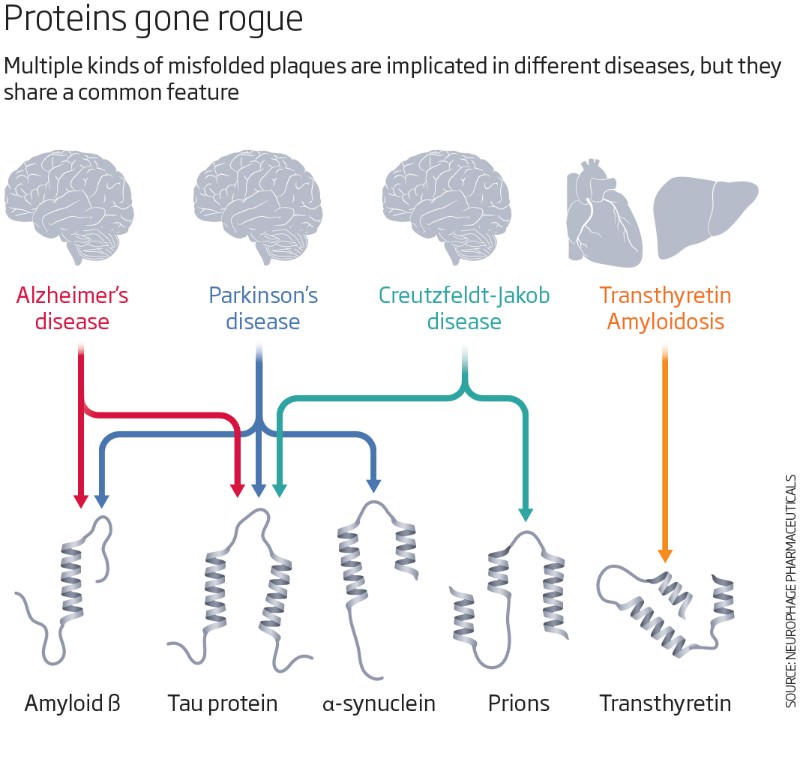
New Scientist reports that NeuroPhage Pharmaceuticals (Cambridge, MA) has found a way to cleanup rogue proteins that form in the brain, causing debilitating mental disorders, such as Alzheimer's and Parkinson's diseases:

The drug is the first that seems to target and destroy the multiple types of plaque implicated in human brain disease. Plaques are clumps of misfolded proteins that gradually accumulate into sticky, brain-clogging gunk that kills neurons and robs people of their memories and other mental faculties. Different kinds of misfolded proteins are implicated in different brain diseases, and some can be seen within the same condition.


The hope is that the novel drug will destroy the plaques but leave healthy brain cells alive.


NeuroPhage's US patent applications can be found here.

tags: medicine, brain, control, tool, entrepreneurship, biology

Wednesday, July 15, 2015

Smartphone: the greatest personal device ever?

According to Gallup, more and more people can't imagine their life without their smartphone:


The device has become our ultimate interface into the world of social interactions and productivity. It's hard to find in the history of technology a device that is more personal than that. Adding more devices to one's personal network is likely to increase our dependance on the smartphone.

tags: invention, innovation, mobile, interface, social, biology, networking, psychology

Tuesday, June 30, 2015

Lunch Talk: Steve Fodor of Affymetix gives a talk at Stanford eCorner

Dr. Fodor and colleagues were the first to develop and describe microarray technologies and combinatorial chemistry synthesis.

In 1993, Dr. Fodor co-founded Affymetrix where the chip technology has been used to synthesize many varieties of high density oligonucleotide arrays containing hundreds of thousands of DNA probes.

The Market or The Technology


The Scientist vs The Entrepreneur


Sunday, January 11, 2015

Lunch Talk: From Terrestrial Field Science to Deep-Space Human Exploration

Dr. Darlene Lim is a geobiologist and an expert in the development of concepts for human scientific exploration. She has spent over two decades leading field research around the world, including the Arctic, the Antarctic, and various underwater environments (where she has spent many hours piloting submersibles as a scientist and explorer). Darlene is also Founder of the Haven House Family Shelter "STEM Explorers' Speakers Series", which brings NASA and academic researchers to homeless children in the Bay Area.


tags: lunchtalk, science, biology, time, communications

Wednesday, January 29, 2014

Lunch Talk: (@Google) Cognitive Science and Mediation.

Speaker: Philippe Goldin
Philippe is a research
scientist and heads the Clinically Applied Affective Neuroscience group in
the Department of Psychology at Stanford University.

He spent 6 years in India and Nepal studying various languages, Buddhist philosophy and debate at Namgyal Monastery and the Dialectic Monastic Institute, and serving as an interpreter for various Tibetan Buddhist lamas. He then returned to the U.S. to complete a Ph.D. in Clinical Psychology at Rutgers University. His NIH-funded clinical research focuses on (a) functional neuroimaging investigations of cognitive-affective mechanisms in adults with anxiety disorders, (b) comparing the effects of mindfulness meditation and cognitive-behavioral therapy on brain-behavior correlates of emotional reactivity and regulation, and (c) training children in family and elementary school settings in mindfulness skills to reduce anxiety and enhance compassion, self-esteem and quality of family interactions.


lunchtalk, psychology, biology, social

Wednesday, December 18, 2013

Vitamins is a $28B+ placebo industry

Based on multiple medical studies, Annals of Internal Medicine declares the multivitamin industry a fraud:

...we believe that the case is closed— supplementing the diet of well-nourished adults with (most) mineral or vitamin supplements has no clear benefit and might even be harmful. These vitamins should not be used for chronic disease prevention. Enough is enough.

Despite sobering evidence of no benefit or possible harm, use of multivitamin supplements increased among U.S. adults from 30% between 1988 to 1994 to 39% between 2003 to 2006, while overall use of dietary supplements increased from 42% to 53% (9). Longitudinal and secular trends show a steady increase in multivitamin supplement use and a decline in use of some individual supplements, such as β-carotene and vitamin E. The decline in use of β-carotene and vitamin E supplements followed reports of adverse outcomes in lung cancer and all-cause mortality, respectively. In contrast, sales of multivitamins and other supplements have not been affected by major studies with null results, and the U.S. supplement industry continues to grow, reaching $28 billion in annual sales in 2010. Similar trends have been observed in the United Kingdom and in other European countries.

The key notion here is "well-nourished." Since people don't know whether they are well-nourished or not, taking vitamins solves an important problem: it simplifies our efforts to find and stick to the right diet. That is, instead of a complex task to select the right food, we can simply take a vitamin pill to make sure we (our children, parents, and pets) get "the right" nourishment.

When food supplies were scares and of low quality supplementing it with vitamins and minerals was a great innovation. As the food industry caught up with the trend, the need for the supplements disappeared, but the perception of the need did not.

Moreover, the trend spread to pets! When we got our dog, the breeder recommended a whole range of dietary supplements from vitamins to "grass" tablets. Needless to say, that dogs don't need any of that stuff because they, unlike humans and monkeys, produce most vitamins internally. Despite being useless, pet food supplements are extremely popular and profitable. And they serve the same purpose as supplements for humans - generate a placebo effect.

I wonder, when a similar "enough is enough" article is going to be published about organic foods.

tags: control, industry, trend, science, biology, business

Wednesday, November 20, 2013

Lunch Talk: Placebo Effects.

UC Berkeley Cognitive Science C102, Lecture 6.


Expensive placebos work better than cheap ones.
Big placebo pills are more effective than little placebo pills.
Dark-colored placebo pills are more effective than light-colored placebo pills.
Placebo pills that taste bad are more effective than placebos that taste good.
Placebo delivered intravenously is more effective than a placebo delivered intra-muscularly.
Placebo delivered through a needle are more effective than delivered through the mouth.

If you tell somebody that you are giving him a placebo it stops being effective.

Friday, November 08, 2013

Lunch Talk: Changing your brain (TEDxToronto)


Barbara Arrowsmith-Young talks about brain plasticity and how mental exercises can help overcome problems with one's own thinking.

tags: aboutness, brain, lunchtalk, psychology, biology

Wednesday, November 06, 2013

Emotion and perception: brighten up!

A study published in 2012 by Yale cognitive scientists (Song, H., et al, 2012) shows that people perceive smiling faces as being brighter than frowning ones. The paper also mentions a field of research that investigates psychological truths behind common metaphors,
For instance, immoral or guilty feelings increase the perception that one is physically dirty (Zhong & Liljenquist, 2006), a sad mood biases people's visual attention in the vertical plane (Meier & Robinson, 2006), and feelings of loneliness are experienced as physical coldness (Bargh & Shalev, in press).
So, if you feel cold, dirty, and see mostly vertical lines it might be the right time to smile.

tags: psychology, biology, control, emotion, science

Friday, October 18, 2013

Lunch Talk: Cognitive neuroscience of sleep and dreams. (UC Berkeley)

Two lectures from UC Berkeley Cognitive Science 102 podcast.


tags: lunchtalk, psychology, science, cognition, biology

Sunday, March 24, 2013

Growing new body parts.

The March 22 issue of the WSJ reports that biologists have found a working solution to the problem of creating "spare" body parts for transplantation. Before diving into the solution, let's consider the core problem first.

Traditionally, doctors took organs from healthy donors (live or recently dead) and used them to replace failed organs in their patients. The method had (and still has) two major problems: 1) high-quality body organs are rare and expensive; 2) other people's organs can be rejected by the patient's immune system.
Although creating biological organs from scratch from the patient's own cells can address both aspects of the problem, such method would be extremely difficult and take a long time. Besides, the vast majority of people don't require transplants during their lives. Therefore, growing organs that nobody needs would be a tremendous waste.

The new solution allows to create one's "own" organs on demand. It uses sanitized cadaver organs as a scaffold that supports the patient's own stem cells that grow around it. (The figure above shows steps involved in building a heart.) As the result, we have an abundant supply of cheap "prototype" organs that in combination with the patient's stem cells have a great chance to be compatible with the host body. The method would probably work for most functional body parts, except the brain.

tags: trade-off, dilemma, problem, solution, biology

Saturday, March 02, 2013

Invention of the Day: Effective Placebo

A year ago The New Yorker ran an article about placebo research at Harvard:
The findings, while difficult to translate into medicine, have been compelling. In most cases, the larger the pill, the stronger the placebo effect. Two pills are better than one, and brand-name pills trump generics. Capsules are generally more effective than pills, and injections produce a more pronounced effect than either. There is even evidence to suggest that the color of medicine influences the way one responds to it: colored pills are more likely to relieve pain than white pills; blue pills help people sleep better than red pills; and green capsules are the best bet when it comes to anxiety medication.

In short, how people feel about the pills they receive makes a real difference in the way their bodies respond to pain and disease. In a classic experiment mentioned in the article, researchers found brains of those who responded positively to placebos produced endorphins,  substances chemically similar to opiates.

I wonder if the same effect works in creativity. Many experiments show that how people feel about their chances for success directly affects outcomes (e.g. math scores, athletic achievements). It would be interesting to give people "creativity pills" and see if they come up with better ideas. Based on the placebo research, we know that the pills should be large and colorful :)

tags: creativity, biology, science, technology

Tuesday, February 26, 2013

Better life through brain stimulation

Synchronizing brain cells appears to do wonders for at least one mental disorder. Although researchers still wander in the dark, they are at least in the right house.
(MTR 02/25/2013)A brain-pacemaker helped put out-of-sync brain circuits back on track in patients with extreme forms of obsessive-compulsive disorder (OCD), reported researchers in yesterday’s Nature Neuroscience. The work could help improve treatment of severe OCD and even lead to other, less invasive new forms of treatment.

The next step, says Figee [, will be to see if he and his colleagues can use the brain activity measures to determine if a patient’s deep-brain stimulator is working properly. An implant has several electrodes, and it can take a lot of trial and error to learn which should be active and at which pulse settings for each patient. “We still don’t really know what we do; sometimes people respond, sometimes they don’t, sometimes it takes weeks or a year trying all kinds of settings,” he says. Using the brain scanning tools in the clinic may be years away, but it is possible, says Figee. “This may help us focus on the brain synchronization that we should aim for,” he says.

tags: control, brain, science, biology, health

Thursday, February 14, 2013

A simple relationship between creativity, innovation, sex, and love.

Here's my simple formula - a Valentine Day edition.

Creativity / Innovation == Sex / Love

Research shows that the feeling of being creative doesn't last over night. In contrast, innovation — like love — is a process that requires commitment to stick with your loved one through thick and thin.

Happy Valentine's Day to the readers of this blog!

tags: biology, creativity

Saturday, February 02, 2013

A potential technology for ultra hi-res MRI machines.

MTR reports on an early stage research in nanoscale magnetic field detectors.
(MIT Tech Review. Feb 1, 2013) Currently, researchers have limited tools to study the molecular structure of proteins. X-ray diffraction can give them an atomic-level view of some proteins, but many copies of the protein must be crystallized into a rigid lattice, a process that does not work for all proteins and results in an averaging of protein shape. Conventional MRI, which can be used by doctors to peek inside the body, doesn’t let researchers see anything smaller than a few micrometers in size because the detectors aren’t sensitive enough to pick up magnetic field signals from very small structures.

Two reports published online in Science on Thursday open up the possibility that researchers may be able to determine the structure of individual proteins in living cells. ...the researchers show how specially modified diamond flakes can be used as nanoscale magnetic field detectors.
These tiny sensors can elucidate the structure of single organic molecules. With nanoscale MRI, researchers may one day be able to directly image proteins and other molecules at the atomic scale.


It would be amazing to trace individual proteins in live cells. For example, we could see how specific medicines work in real time, or how DNA decoding results in signalling, etc.

tags: health, biology, detection, packaged payload, control, science, research

Sunday, July 22, 2012

Lunch Talk: BBC - The Human Mind (Part 2).

The second part of The Human Mind, a BBC documentary about the brain. The focus of this part is human personality.


link

tags: lunchtalk, emotion, biology, brain