Showing posts with label trade-off. Show all posts

Wednesday, September 27, 2017

Invention of the Day: Hypodermic Syringe

I'm reading a wonderful book by Roger Bridman - 1,000 Inventions and Discoveries. It documents an incredible range of human ingenuity from thousands years ago to our days. For example, here's an invention that we take for granted today: hypodermic syringe.


Remarkably, it was invented by two people in different countries. As the book says, "[in 1853] In Scotland, physician Alexander Wood invented the hollow needle and adapted Pravaz’s device to go with it, forming the first hypodermic syringe." That is, the invention cannot be attributed to each of them separately because a new system — the syringe — provides functionality beyond the sum of its parts. A well-defined interface between the parts, the cylinder and the needle respectively, enabled rapid innovation in manufacturing technologies and use. For example, here's how hollow needles are produced today.


From an innovation timing perspective, we need to be aware that the business success of the new injection technology was determined by a major invention that came about much later.
By the late 1800s hypodermic syringes were widely available, though there were few injectable drugs (less than 2% of drugs in 1905). Insulin was discovered in 1921. This drug had to be injected into the bloodstream, so it created a new market for manufacturers of hypodermic needles and drugs.

Overall, the invention of the hypodermic syringe illustrates a number of important principles for pragmatic creativity:
- a new combination of parts has to produce a new system effect;
- no new science is necessary for making a technology breakthrough;
- a well-defined interface between parts enables rapid innovation on both sides, e.g. the cylinder and the needle;
- the success of the invention comes from a new use, which may require a new science, e.g. liquid penicillin;
- the combination of new parts (cylinder + needle) and use (liquid drug) form Dominant Design and Use patterns that remain stable for decades, if not centuries.

Monday, September 25, 2017

Psychology of Creativity: Art, Science and Technology

Until the middle of the 20th century, creativity was generally considered as a psychological attribute of an artist and, sometimes, of a scientist. Then in the late 1950s, J.P. Gulliford applied the idea of creative thinking to technological inventions.

Nowadays, engineers and scientists are expected to be creative. A recent paper shows how creativity in science/tech and art relate to personality traits, the so-called Big Five:
The Big Five personality dimension Openness/Intellect is the trait most closely associated with creativity and creative achievement.

We confirmed the hypothesis that whereas Openness predicts creative achievement in the arts, Intellect predicts creative achievement in the sciences. Inclusion of performance measures of general cognitive ability and divergent thinking indicated that the relation of Intellect to scientific creativity may be due at least in part to these abilities. Lastly, we found that Extraversion additionally predicted creative achievement in the arts, independently of Openness. Results are discussed in the context of dual-process theory.
A related paper outlined the overall relationship between the Big Five, by grouping them into two complementary categories - Stability and Plasticity.

Remarkably, the brain uses a broad range of cognitive strategies to pursue goals within a social context. Given a chance, we can exercise our creative options through technological innovation.

As a side remark, from an innovation theory perspective, the brain and society solve the stability-plasticity dilemma by using both traits, e.g. through the separation in space and time.

Thursday, July 13, 2017

Stanford CSP BUS 74, Session 2 Quiz 3


Questions

1. Watch the video (8min) and identify 2-3 trade-offs The Three Little Pigs make in the story.
2. Does any of the major technology breakthroughs discussed during Session 2 address one of the trade-offs? Explain your reasoning.

tags: bus74, quiz, video, trade-off, stanford

Wednesday, July 12, 2017

Stanford CSP BUS 74, Session 2 Quiz 1

Background:
Founded in 1943, IKEA grew from a small mail-order shop to a major global manufacturing and retail business. Flat-pack easy-to-assemble furniture turned out to be the key innovation that powered the company. For example, the Billy bookcase, originally designed in 1979, sold over 50 million units and is still in production at the rate of 15 units per minute.


Quiz:
Listen to a BBC podcast (9 min) about the Billy Bookcase and read the article about its inventor Gillis Lungren. Using different perspectives, e.g. consumer, retailer, manufacturer, list at least 3 trade-offs that the company broke on its way to global success.

Sunday, January 08, 2017

The Structure of Technology Revolutions

Since last summer, I've been working on a book project tentatively (and modestly!) titled "The Structure of Technology Revolutions." The purpose of the book is to show how technology enables completely new possibilities, by breaking trade-offs that are considered unbreakable.

To demonstrate the underlying structure of the innovation process, I'm using Category Theory tools (OLOGs) originally created by D.I. Spivak from MIT.

Here's a series of draft figures with an example of how the logic of innovation had worked in the technology revolution initiated by the automobile with the internal combustion engine (see below).

 Note, that the same logic can be applied to the modern autonomous vehicle. The technology is going to be successful because it creates incredible maneuverability at the "traffic" level of abstraction.

Now, back to the horses example:

Fig. 1 introduces the trade-off between Power and Maneuverability. An eight-horse carriage has a lot of power, but it's difficult to maneuver. Adding more horses will create a huge maneuverability problem. On the other hand, a horse rider is highly maneuverable but he lacks the carrying capacity of the horse carriage.


Fig. 2 introduces a logical representation of a horse carriage and maps it onto a "Conflicting Desires Diagram." That is, we show that any "designer" of a horse carriage faces a trade-off between Power and Maneuverability.


Fig. 3 sheds horse pictures and shows a logical generalization: a horse carriage is a kind of power-driven vehicle. 


Fig. 4 indicates the desired situation (the green dot on the right): We want a vehicle that has the best of both worlds, it's highly powerful and highly maneuverable.

Fig. 5 shows that the Automobile breaks the trade-off and creates a vehicle with the potential to hit the green dot. That is, we create a technology that disentangles human ability to control horses from the power. Thus, we achieve a new state that was considered impossible before.


To model the Autonomous Vehicle technology revolution we need to abstract from "a vehicle" to "traffic" and show how the new technology breaks the traffic congestion trade-off. In general, congestion trade-offs are ubiquitous in economic systems and technology revolutions break through them quite often.

Fig. 6 is a generalized diagram of how technological innovations make the impossible possible.


tags: innovation, trade-off, logic, technology, revolution

Monday, May 09, 2016

Trade-off of the Day: Warmth vs Competence

In Scalable Innovation, we show how breaking, instead of making trade-offs, allows innovators create breakthrough technology and business solutions. It turns out, successful solutions to trade-offs in human psychology can also be beneficial in one's personal or professional life.

For example, here's how people typically perceive others in two psychologically important dimensions - Warmth and Competence*:

Figure 1 Each quadrant represents a unique combination of warmth and competence. The Partner, combining warmth and competence, inspires admiration. Its opposite, the Parasite, inspires contempt or disgust. The Predator and Pet inspire ambivalent feelings: the cold and competent Predator breeds resentment, while the warm and incompetent Pet inspires pity.

As you can see from the diagram, an ideal situations puts one into the upper right corner labeled "Partner", which combines high Warmth with high Competence. But research shows that in real life, people typically judge others in just one dimension and infer the other one through an implicit trade-off:

Theoretically, warmth and competence judgments vary independently, but in practice they are often negatively correlated, so that groups are stereotyped ambivalently as warm but incompetent, or competent but cold — an effect termed social compensation. For example, older people are perceived as warm but incompetent, and regarded with pity, whereas rich people are perceived as competent but cold, and regarded with envy. 
These ambivalent stereotypes are so ingrained that accentuating only one positive dimension about a person actually implies negativity on the omitted dimension — a secret language of stereotypes perpetuated by communicators and listeners. Indeed, the tendency to focus on the positive dimension of an ambivalent stereotype while implying the negative dimension has increased as social norms against expressing prejudice have developed.**

As we can see, even being perceived in a positive light can lead to negative personal and professional consequences. Therefore instead of succumbing to the trade-off, a psychologically-aware problem-solver would have to use one of the separation techniques to break the trade-off and demonstrate both warmth and competence.

I think I'll turn this real-life problem into a quiz for one of Stanford CSP invention/innovation courses.

* source: The Middleman Economy, by Marina Krakovsky
** source: doi:10.1016/j.jesp.2016.01.004. Promote up, ingratiate down: Status comparisons drive warmth-competence tradeoffs in impression management. Swencionis & Fiske, 2016.

Saturday, February 06, 2016

Stanford CSP Scalable Innovation (BUS 134) Session 3, Quiz 1

Autonomous vehicles (formerly known as self-driving cars) can drive safely at fast speeds and maintain short distances between cars, reducing road congestion. Furthermore, electric autonomous vehicles can accelerate and maintain high speeds without dramatically increasing pollution.


On the other hand, human drivers are required to drive under the speed limit and maintain a certain, relatively large, distance between cars, e.g. the Two-Second Rule. Arguably, introduction of modern breaking technologies doesn't reduce the rate of accidents significantly.*

As a result, large-scale deployment of autonomous vehicles creates a situation that involves multiple trade-offs.

Questions:

1. List trade-offs relevant to the situation (use divergent thinking). Select one (use convergent thinking) that you anticipate to become the most important in the future. What selection criteria did you apply?
2. Propose solutions that can break the trade-off: realistic, futuristic, fantastic, etc.
3. (Bonus 1 - optional). What technology and business opportunities you can create by breaking the trade-off?
4. (Bonus 2 - optional) Using analogical thinking, what solutions from the history of the automobile can you re-use to solve the current situation?

* See, for example, Foolproof: How Safety Can Be Dangerous and How Danger Makes Us Safe, by Greg Ip, 2015.

Sunday, January 10, 2016

The paradox of "healthy food"

The "Lunch Talk" video I posted earlier today defies a popular misconception that healthy food is expensive. The healthy food confusion is a version of a common human perception that expensive things or experiences are inherently better than inexpensive ones. For example, in experiments with differently labeled wines people report "expensive" as being of a higher quality. In experiments with painkillers, people report that large, colorful, "expensive" pills work better than plain pills. The trade-off between quality and price seems to be fundamental to our understanding of how things work in the world.


Remarkably, there's nothing fundamental neither in nature, nor technology that determines good stuff should cost more than bad stuff. Moreover, major business breakthroughs happen when inventors deliver high quality products and services at dramatically lower prices. For example, Henry Ford created a technology revolution when he introduced Ford-T and the assembly line to manufacture the most reliable and most affordable automobile in history. Before him, people believed that reliable automobiles must be expensive. Similarly, Amazon introduced a business model where a company can inexpensively provide a great shopping experience with lots of choices, knowledgeable explanations, quality ratings and fast convenient delivery. Before Amazon, retailers believed that high quality shopper experience was only possible in high-end stores managed by highly compensated staff. They were proven wrong with dire consequences for their shareholders.

Today, businesses like Whole Foods and Sprouts are built on the assumption that healthy food must be expensive. Leanne Brown's book shows that this trade-off can be broken. As a result, we might see a revolution in many health-related areas, from retail food outlets to obesity prevention apps to government welfare services.

tags: health, trade-off, quality, innovation

Thursday, August 20, 2015

Learning computer science - a new priority and a new problem

According to a new Gallup-Google poll,

Nine in 10 parents say offering opportunities to learn computer science is a good use of resources at their child's school, and about as many (91%) want their child to learn more computer science in the future.
...
Most parents say computer science learning is at least as important to a student's future success as required courses such as math, science, history and English.


The figure above shows an "implementation gap" between parents and school superintendents. Somehow, superintendents need to fit a new subject into an existing school curriculum, hire teachers, and provide accreditation. Since school budgets are practically fixed, computer science would have to replace another important subject - a typical trade-off situation, which will not lead to a breakthrough. Unfortunately, Gallup didn't ask parents which subject they want their children to stop learning.

An alternative solution would be to introduce an entirely new curriculum based on the online education model. The 21% of the parents is a good initial market. In the future, we should see an emergence of private high schools with emphasis on online STEM + CS.

tags: education, computer, science, trade-off, problem

Tuesday, July 28, 2015

Trade-off of the Day: Smartness vs Ease of Use

Steve Jobs shows how Apple broke the trade-off with the iPhone.


tags: trade-off, dilemma, interface, mobile, software, apple

Friday, July 10, 2015

Principles of Invention and Innovation (BUS 74), Session 2, Quiz 2.

During Session 2, several teams came up with a typical real estate trade-off: the nicer the neighborhood, the pricier it is going to be to buy or rent there.

Assignment 1. Using divergent thinking, list as many constraints behind the trade-off as you can (no criticism; both pragmatic and wild ideas are welcome). Optional: to help expand the scope of your search, apply either the Three Magicians or the STM operator (Scalable Innovation, Part II, Chapters 6, 9-10).


Assignment 2. In his book "Triumph of the City", Edward Glaeser, professor of economics at Harvard University, writes,
One of the bedrock principles of economics is that free lunches are rare and markets require trade-offs. [...] suburbanites can get a bigger lot at the cost of a longer commute. In comparing metropolitan areas, there is a three-way trade-off among wages, prices, and quality of life.
Question: Can you come up with an example of an existing or future solution that breaks at least one of these trade-offs?

Friday, July 03, 2015

Principles of Invention and Innovation (BUS 74), Session 2, Quiz 1

A 2008 Harvard Business Review article by Noam Wasserman describes a difficult choice that a start-up founder faces when his company begins to grow rapidly:

As start-ups grow, entrepreneurs face a dilemma — one that many aren’t aware of, initially. On the one hand, they have to raise resources in order to capitalize on the opportunities before them. If they choose the right investors, their financial gains will soar. My research shows that a founder who gives up more equity to attract cofounders, non-founding hires, and investors builds a more valuable company than one who parts with less equity. The founder ends up with a more valuable slice, too. On the other hand, in order to attract investors and executives, entrepreneurs have to give up control over most decision making.

This fundamental tension yields “rich” versus “king” trade-offs. The “rich” options enable the company to become more valuable but sideline the founder by taking away the CEO position and control over major decisions. The “king” choices allow the founder to retain control of decision making by staying CEO and maintaining control over the board—but often only by building a less valuable company.

-------------------------
Since the publication of the artcile, a number of successful technology companies, including Google, Facebook, Twitter, and Uber, managed to break, rather than make the trade-off. That is, the founders have retained a large degree of control while building highly valuable companies.

Question 1: What's common between these companies with regard to the relationship between control and funding? Describe the existing or propose a new breakthrough solution to the founder's trade-off.

Question 2: Provide at least one example where the investors' decision to fire the founder(s)
a) destroyed value of the company;
b) greatly increased value of the company.

tags: innovation, entrepreneurship, vc, trade-off, dilemma, bus74

Sunday, May 31, 2015

NY Times picking your friends' noses

"You can pick your friends, you can pick your nose, but you can't pick your friends' noses," so an old saying goes. This notion has become largely obsolete in the age of social networking. For example, when you sign up with your Facebook account on a popular website they typically get not only your public profile, but also your friend list.


Imagine now doing real business, e.g. making a purchase or contacting customer service, using your social networking profile as a login. For the price of the transaction the other party gets access to your entire social graph, which (with a little bit of triangulation through other customer logins) provides an incredible wealth of marketing information. As a result, you give up a large chunk of your privacy for free, without even being aware of it.

We used to think about privacy as a trade-off: you get access to free content by giving up your right to stay anonymous, i.e. providing the content distributor with the information about what kind of content you like to read. If the current trend continues, people will be giving away for free not only their own privacy, but also their friends' privacy too.

tags: trade-off, trend, social, networking, composite actor, privacy, internet

Tuesday, February 17, 2015

Invention of the Day: Piano

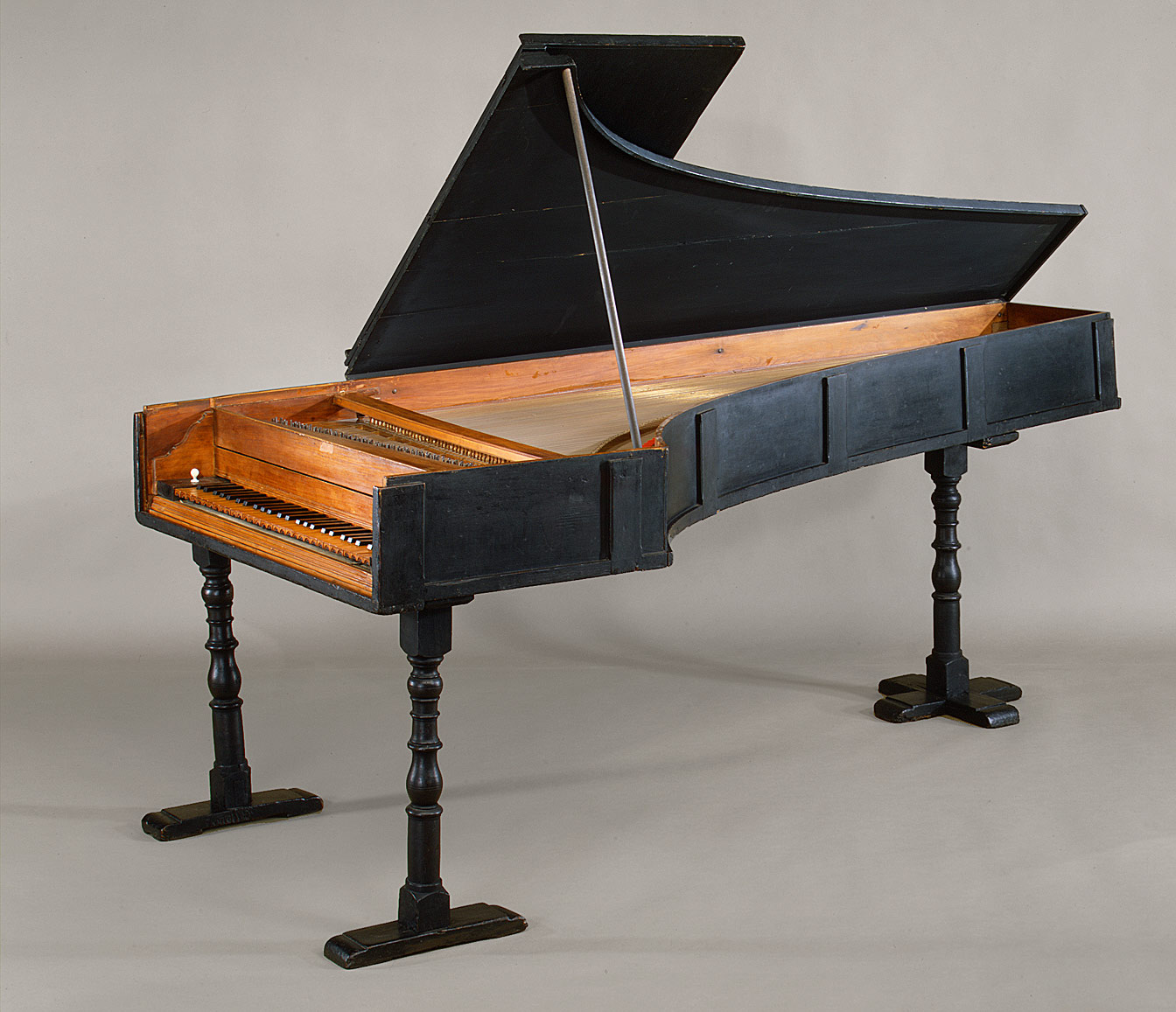
In the end of the 17th century, Bartolomeo Cristofori di Francesco (May 4, 1655 – January 27, 1731), a maker of musical instruments working for the Medici family in Florence, invented the piano.

A Cristofori piano at the Metropolitan Museum of Art in New York.
From a modern inventor perspective, the Cristofori's solution deserves our attention because its success can be directly attributed to breaking a trade-off. In the case of the piano, the trade-off was between the sound volume and the expressive control that a musical instrument afforded the player. Before the piano, musicians had to use two instruments: clavichord and harpsichord,
While the clavichord allowed expressive control of volume and sustain, it was too quiet for large performances. The harpsichord produced a sufficiently loud sound, but offered little expressive control over each note. The piano offered the best of both, combining loudness with dynamic control.
Although we are taught throughout engineering, design, economics, and business courses that good solutions create trade-offs, the invention of the piano shows us that great solutions break trade-offs.

We discuss the topic in greater detail in the Prologue of Scalable Innovation. Some of the invention techniques for breaking trade-offs and dilemmas can also be found in my blog.

tags: trade-off, invention, innovation, art

Monday, January 19, 2015

The myopia epidemic among children, continued

Several years ago, I blogged about the myopia epidemic among children. The problem was caused by an increase in the time kids spent staring at their computer screens instead of playing outdoors. The change impacted their peripheral vision and, eventually, resulted in myopia.


I wonder whether the mobile revolution has increased myopia rates further. There several factors that point to it. First, compared with computer screens, smartphones and tablets are even smaller; therefore, they require less peripheral vision. Second, children carry their phones everywhere, increasing the overall screen time. Third, the new touchscreen interface, mobile apps and games make it easier for younger children to use phones and tablets. As a result, they start using technology at an earlier age, which should have a greater impact on their vision over time.

Based on the latest technology developments, we can easily predict that 3D virtual reality devices will also increase our collective screen time. Although it's a speculation on my part, I believe we should start looking for ways to solve the problem before it gets completely out of hand.

tags: health, trend, mobile, innovation, trade-off

Thursday, December 04, 2014

Lunch Talk: Adopter's trade-off – expensive is better (Stanford Entrepreneurship)

http://ecorner.stanford.edu/authorMaterialInfo.html?mid=1937
Christine has been President of Humane Society Silicon Valley for the past 13 years.


Whether you're running a for-profit or non-profit enterprise, the price point is crucial - and cheaper is not always better. The less people pay, the less value that's attributed, discovered Christine Benninger, President of the Humane Society Silicon Valley, and her organization decided to raise the prices of animal adoption four-fold in the hopes that clients would feel they're getting a better product, and that they'd be more likely to keep it. Did customers take their business elsewhere? Hardly. Despite having the highest adoption prices in the county, the HSSV showed a ten percent increase in adoptions, with half as many returns.

tags: trade-off, lunchtalk

Monday, July 07, 2014

Invention of the Day: Thinking Inside the Box

When we participate in invention workshops and other creative activities, as I often do, we hear the moderator urge us to think "outside the box." Most often, though, nobody knows where the box is. As a result, we often get from one box into another, which is even worse than the first one.

Despite common "creative" wisdom, thinking inside the box can be extremely productive. One of the great inventions in economics of the 19th century was the Edgeworth Box, named after Francis Ysidro Edgeworth (1845 – 1926). While trying to figure out an efficient allocation of limited resources between two people, Edgeworth decided to represent their positions graphically inside a two-dimensional box.


For example, in a simplified model the patent war between Apple and Google can be described as a fight for a position inside the box (Figure 1). At the given moment, the number of patents is fixed, the amount of money at stake is also fixed. Outcome 1 (p1, m1) shows the initial position where Apple has more patents, but less money. Since the number of patents and money is fixed, Google is positioned in exactly the same spot, at the Outcome 1 dot. From Apple's perspective, the purpose of the war is to move the situation from O1 to Outcome 2 (p1, m1), where some of Google's money goes to Apple in exchange for patents. As a result, Apple will have more money, and fewer patents.

The Edgeworth box is extremely useful for analyzing allocations of fixed resources. It is essential to modern finance and economics when it comes to understanding and explaining equilibrium states. (See for example, Financial Theory course from Yale. Econ 251).


For an inventor, it is critical to know where the box is before starting to think "outside the box." Our goal would to discover a dimension where the trade-off inside Edgeworth Box becomes irrelevant.

tags: creativity, trade-off, tradeoff, economics, invention, innovation

Tuesday, May 27, 2014

Invention of the Day: Teleprompter

The teleprompter made live TV programs possible because it allowed news anchors and performers to deliver long speeches without spending days and weeks memorizing them.


According to a Smithsonian article:
“For those that had been either in theater or the movies, the transition to television was difficult, because there was a much greater need for memorizing lines,” says Christopher Sterling, a media historian at George Washington University. “At the time, there was a lot more live television, which many people today tend to forget.” Instead of memorizing the same batch of lines over the course of months, Barton was now expected to memorize new lines on a weekly or even daily basis. Cue cards were sometimes used, but relying on unsteady stagehands to flip between them could sometimes cause catastrophic delays.

Here, we can see how a new media technology — "the TV world" — lead to a 10X increase in demand for live content. During radio broadcasts, announcers could read long texts from a written or typed page. By contrast, live television required direct eye contact with the audience. In short, a successful TV program required the best of both worlds: lots of fresh content to compete with the radio, and direct contact with the audience like in the traditional theater. The invention of the teleprompter solved this problem.


As usually the case with major innovation, teleprompter was rejected by the convention professional thinking:
Although Schlafly, Barton and Kahn pitched the device to 20th Century Fox, the company was not interested. They promptly quit the company and started their own, founding the TelePrompTer Corporation.

A major refinement of the original invention came from Jess Oppenheimer, who invented an in-camera teleprompter.


Since then, the teleprompter's been a fixture in television, movies and political speeches. It'll be with us until, probably, somebody invents a brain-machine interface suitable for imitating direct human speech.

tags: invention, innovation, 10X, trade-off, dilemma, problem, solution

Saturday, February 15, 2014

Invention of the Day: High-Speed Roller-Coaster

Inventor and entrepreneur J.A. Miller (Mueller) started working on roller coaster designs and implementations in 1893, when he was just 19. During his entire career, he kept creating installations that provided greater and greater thrills to the riding public. At a certain point, he hit a problem: the more exciting the curves of the coaster are, the less safe the roller coaster becomes for the riders. On vertical curves especially, the more abrupt the turn, the greater the chances that the ride will fly off the rails, injuring or even killing the thrill-seekers.
Here's how the inventor describes his challenge:

...vertical curves on pleasure railway structures have been limited on account of centrifugal force, the curves being` confined within limits which will permit gravity to overcome centrifugal force sufficiently to keep the cars on the rails and the passengers in their seats. More abrupt vertical curves will be more sensational as it will give the passengers the feeling of being lifted off their seats as the cars take the incline.


It seems like the only way to provide for user safety is to reduce the acceleration on the curve and the thrill, which would be a typical trade-off. As with many other breakthrough inventions, Miller found a solution that allowed a roller-coaster designer to escape the trade-off: the car would stay on a sharp vertical curve, held on the rails with three pairs of wheels: two vertical and one horizontal.


Before the Miller's solution, the force of gravity was not strong enough to hold the car in place when it accelerated along sharp curves, either vertical or horizontal. After the new side and bottom rollers were introduced, the car would stay on rails, compensating for centrifugal acceleration. Today, many roller-coasters use the 90 year-old solution to give the riders as much fun as they can bear.

tags: invention, trade-off, solution, problem

Monday, February 03, 2014

More organic food => harsher moral judgements.

A recent research paper on the influence of organic foods shows the "moral licensing" effect:
After viewing a few organic foods, comfort foods, or control foods, participants who were exposed to organic foods volunteered significantly less time to help a needy stranger, and they judged moral transgressions significantly harsher than those who viewed nonorganic foods.

(Source: Kendall J. Eskine. Social Psychological and Personality Science 2013 4: 251 originally published online 15 May 2012 DOI: 10.1177/1948550612447114).


People feel morally superior when they have even an unconscious perception of doing good things (eating organic, being "green," describing self in positive terms, etc.). There seems to be a trade-off between doing something prosocial now and anti-social later; as if we have limited "goodness" resources in our minds.

Another paper on the effects of green purchasing concludes:

...people act less altruistically and are more likely to cheat and steal after purchasing green products than after purchasing conventional products. ( Source: Do Green Products Make Us Better People? Nina Mazar and Chen-Bo Zhong Psychological Science 2010 21: 494 originally published online 5 March 2010 DOI: 10.1177/0956797610363538 )

tags: trade-off, psychology, social