tags: ted, lunchtalk, infrastructure, distribution
Showing posts with label infrastructure. Show all posts
Showing posts with label infrastructure. Show all posts
Sunday, February 24, 2013
Lunch Talks: (@TED) Reinventing cities.
How can we fit more people into cities without overcrowding? Kent Larson shows off folding cars, quick-change apartments and other innovations that could make the city of the future work a lot like a small village of the past.
tags: ted, lunchtalk, infrastructure, distribution
tags: ted, lunchtalk, infrastructure, distribution

Sunday, July 01, 2012
Same technology, different S-curves, different results.
Using solar power in areas where there's no power grid, e.g. in Asia and Africa, looks a lot more promising and cost-effective than introducing the same solar power technology in mature energy systems in the US or Europe.
In Asia and Africa, introduction of the technology does not depend on infrastructure investment. Furthermore, as recent power outages in the US show, the bottleneck in the energy system is not power generation, but power distribution. Also, Germany's introduction of "green" energy involves massive investment into new distribution lines. As a result, adoption of the same technology in different areas produces dramatically different economic outcomes.
This difference is obvious to me on the personal level as well. Every day I walk my dog by our local high school. Two years ago it used a government subsidy and a local bond to install solar panels to cover its parking lot. Paradoxically, during the summer months when the largest amount of solar power is generated, the school is not in session. Therefore, the power cannot be used locally and has to be distributed through the grid - with losses - to remote users. In other words, there's a fundamental mismatch between the power generation and the power use patterns.
In contrast, the MIT article cited above talks about a solar panel installation in Asia that feeds irrigation pumps. Because the pumps have to work the hardest when there's a lot of sunshine, solar-based power generation and power consumption by the pumps are almost perfectly synchronized. Therefore, there's no need to store or distribute the power - with inevitable losses - to other users.
As we can see, economic efficiency of the same technology is quite different in these two cases. Here in California, we face a trade-off: the "greener" the energy, the more expensive it is. Opposite to that, in Asia the trade-off is broken: the "greener" the energy, the cheaper it is. Clearly, the technology's upside is much greater there.
tags: s-curve, synthesis, growth, distribution, infrastructure, niche construction, 4q diagram, market
(MIT Tech Review, June 8, 2012). Diesel is a major source of power in south Asia and Africa, where many areas lack access to the grid and frequent blackouts prompt those who can afford it to install backup generators. These markets could help a solar industry that’s struggling with low profit margins due to an oversupply of panels. In turn, the lower prices for solar power could speed up deployment in poor countries by providing a more economical alternative to diesel-powered pumps and generators, and a much faster path to electrification than waiting for grid infrastructure.
One of the first economical applications for solar is replacing diesel-powered irrigation pumps, Gopalan says. These pumps don’t have to run at night, so batteries aren’t needed, keeping costs down. “The total available market in India alone is 15 to 20 gigawatts, and irrigation pumping is a massive application in all of Asia and Africa,” he says. For perspective, the current total installed capacity for solar power is 65 gigawatts, according to the management consulting firm McKinsey.
In Asia and Africa, introduction of the technology does not depend on infrastructure investment. Furthermore, as recent power outages in the US show, the bottleneck in the energy system is not power generation, but power distribution. Also, Germany's introduction of "green" energy involves massive investment into new distribution lines. As a result, adoption of the same technology in different areas produces dramatically different economic outcomes.
This difference is obvious to me on the personal level as well. Every day I walk my dog by our local high school. Two years ago it used a government subsidy and a local bond to install solar panels to cover its parking lot. Paradoxically, during the summer months when the largest amount of solar power is generated, the school is not in session. Therefore, the power cannot be used locally and has to be distributed through the grid - with losses - to remote users. In other words, there's a fundamental mismatch between the power generation and the power use patterns.
In contrast, the MIT article cited above talks about a solar panel installation in Asia that feeds irrigation pumps. Because the pumps have to work the hardest when there's a lot of sunshine, solar-based power generation and power consumption by the pumps are almost perfectly synchronized. Therefore, there's no need to store or distribute the power - with inevitable losses - to other users.
As we can see, economic efficiency of the same technology is quite different in these two cases. Here in California, we face a trade-off: the "greener" the energy, the more expensive it is. Opposite to that, in Asia the trade-off is broken: the "greener" the energy, the cheaper it is. Clearly, the technology's upside is much greater there.
tags: s-curve, synthesis, growth, distribution, infrastructure, niche construction, 4q diagram, market
Thursday, June 28, 2012
MIT Tech Review: What Facebook Knows.
MIT Technology Review has an article about Facebook's effort to study social aspects of information flows:
tags: distribution, infrastructure, interface, facebook, control
"For the first time," Marlow says, "we have a microscope that not only lets us examine social behavior at a very fine level that we've never been able to see before but allows us to run experiments that millions of users are exposed to."Once they've discovered the infrastructure of social interactions, Facebook and its partners will have the ability to inject information into key nodes (just like the doctors do when they need to anesthetize the patient.) Further, they'll be able to shape the infrastructure in certain ways to streamline information flows.
"The biggest challenges Facebook has to solve are the same challenges that social science has," he says. Those challenges include understanding why some ideas or fashions spread from a few individuals to become universal and others don't, or to what extent a person's future actions are a product of past communication with friends.
tags: distribution, infrastructure, interface, facebook, control
Sunday, June 24, 2012
Germany's emerging electric power infrastructure.
MIT Tech Review discusses Energiewende - an energy revolution designed to put Germany firmly into "green."

tags: distribution, control, synthesis, build-up, energy, infrastructure
This switch from fossil fuels to renewable energy is the most ambitious ever attempted by a heavily industrialized country: it aims to cut greenhouse-gas emissions 40 percent from 1990 levels by 2020, and 80 percent by midcentury.

This is a much better designed economic stimulus than we've seen in the US over the last three years. It invests into a future infrastructure built with new electric grid technologies. Even if the project fails it has a chance to create a industrial base for an export economy that targets fast growing Asian countries.
To help replace nuclear power, they are racing to install huge wind farms far off the German coast in the North Sea; new transmission infrastructure is being planned to get the power to Germany's industrial regions. At the same time, companies such as Siemens, GE, and RWE, Germany's biggest power producer, are looking for ways to keep factories humming during lulls in wind and solar power. They are searching for cheap, large-scale forms of power storage and hoping that computers can intelligently coordinate what could be millions of distributed power sources.
Until large-scale, cheap storage is available, gas power plants, which can start up quickly and efficiently, will be the most practical way to cope with these situations. But there's little incentive to build such plants. Owners of gas plants meant to meet peak power needs can no longer count on running for a certain number of hours, since the need will no longer fall on predictable workday afternoons but come and go with the sun and wind.
Now energy companies are planning to install 10,000 megawatts of wind power as far offshore as 160 kilometers, at depths of up to 70 meters. Several 10,000- to 20,000-ton offshore substations will convert gigawatts of AC output to DC, which can span such distances without large energy losses.
Various economic think tanks predict that the country will spend somewhere between $125 billion and $250 billion on infrastructure expansion and subsidies in the next eight years—between 3.5 and 7 percent of Germany's 2011 GDP.

tags: distribution, control, synthesis, build-up, energy, infrastructure
Saturday, February 18, 2012
Herding the cars of the future.
Transition from passive to active sensing, i.e. when cars proactively talk to each other, promises a major shift in driving patterns.

tags: detection, control, infrastructure, payload
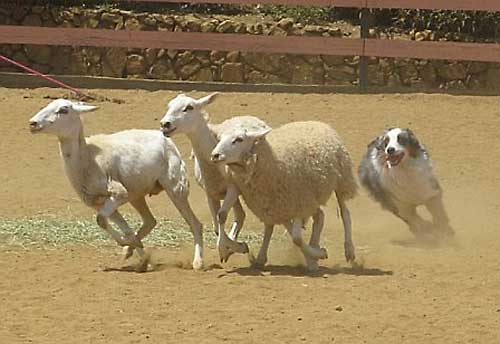
Feb 17, 2012. MTR -- As more models become saturated with sensing technologies, the next big shift could see cars transmit data between each other. When cars network with one another, they can broadcast data about rapid slowdowns or a wheel-slippage possibly caused by icing. Such information will hop among cars—including ones coming in the other direction—to notify drivers approaching the problem areas.We should start inventing and investing into smart roads, with virtual lanes herding flocks of cars toward their destinations.
tags: detection, control, infrastructure, payload
Tuesday, February 14, 2012
Lunchtalk: (@ TED) Creating new architecture.
In a wildly entertaining discussion with Richard Saul Wurman, architect Frank Gehry gives TEDsters his take on the power of failure, his recent buildings, and the all-important Then what? factor.
link
tags: lunchtalk, creativity, architecture, infrastructure
Tuesday, January 24, 2012
Modern Marvels: Pacific Coast Highway.
Driving on Hwy 1 from San Francisco to Santa Barbara was one of the best travel experiences of my life. It's amazing how much engineering went into constructing the road.
link
tags: lunchtalk, infrastructure
Sunday, January 22, 2012
A database to store the cloud.
Amazon continues to push hard into cloud services with a database designed to handle disjoint information.
tags: source, system, evolution, information, infrastructure
Jan 19, 2012. Wired -- NoSQL is a widespread effort to build a new kind of database for “unstructured” information — the sort of information that comes spilling off the internet with each passing second. Five years ago, Amazon introduced a NoSQL database service called SimpleDB, and now, it’s offering what you might think of as Amazon NoSQL Mark II. It’s called DynamoDB.This is an important technology transition. Until fairly recently, internet applications were re-using (and are still using) database designs created for the previous generations of IT applications. Now, we see internet-specific architectures becoming available as a 24/7 service. Should be really good for mobile apps, games, ads, and connected devices.
Like SimpleDB, DynamoDB is one of many Amazon Web Services (AWS), a set of tools offering online access to various computing resources, from virtual servers to virtual storage to databases and other software.
tags: source, system, evolution, information, infrastructure
Saturday, January 21, 2012
On the road to driverless cars.
Leading automakers, including certain European luxury brands, are working to create a different driving experience. They seem to be taking an evolutionary, rather than revolutionary approach.
tags: transportation, control, distribution, detection, infrastructure
January 20, 2012. MTR -- Lasers, cameras, and other sensors are the most expensive part of autonomous driving systems. Some experimental self-driving cars are estimated to carry more than $200,000 worth of cameras and other gear. Those costs are also leading automakers toward a gradual approach that starts with sensor technologies and then extends capabilities to control driving tasks as well.
Several automakers already sell cars with so-called adaptive cruise control that automatically applies the brakes during highway driving if traffic slows. Next, BMW plans to extend that idea in its upcoming i3 series of electric cars, whose traffic-jam feature will let the car accelerate, decelerate, and steer by itself at speeds of up to 25 miles per hour—as long as the driver leaves a hand on the wheel.Making cars and elements of road infrastructure easily detectable by simple sensors will solve the problem of the high costs mentioned above. For the car to become truly driverless, the road itself has to change.
tags: transportation, control, distribution, detection, infrastructure
Sunday, December 25, 2011
Enabling constraint: single width axle (China 3rd cent BCE).
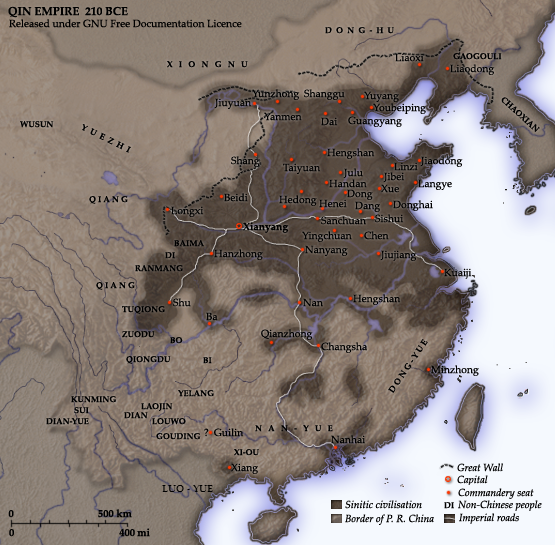
Standardization of transportation was one of the long-lasting legacies of the Qin dynasty in ancient China. Ideology-wise, standardization had roots in legalism, a doctrine of universal application of clear laws; the doctrine developed in the 4th century BCE by Shang Yang, the prime minister of Qin. After Qin defeated the majority of other Chinese kingdoms and established a unified empire, they undertook enormous efforts to transform the state, including building advanced road infrastructure.

Standard roads and single width axles were enabling constraints because the helped develop commerce. On the other hand, standardization of thought imposed by Qin turned ugly. They ordered and enforced destruction of all books that were in conflict with their ideology. Moreover, because at the time thought was largely transferred through oral teachings, Qin buried alive hundreds of Confucian scholars, who disagreed with Legalism.
Contrast this with Facebook, which established a standard way of communicating between people (social utility as Zuckeberg calls it) but allowed for free expression on top of the utility.
tags: constraint, payload, distribution, facebook, social, network, infrastructure
A 4,700 mile network of roads was developed to ease travel in the empire and to the frontiers. Regular staging posts allowed horses to be changed frequently and provided places to sleep at night. The single width of cart axles encouraged trade as there was no delay in moving goods through the provinces. All carts would travel in the same wheel ruts and there would be no need to change to a cart with a different axle width in different provinces.
Standard roads and single width axles were enabling constraints because the helped develop commerce. On the other hand, standardization of thought imposed by Qin turned ugly. They ordered and enforced destruction of all books that were in conflict with their ideology. Moreover, because at the time thought was largely transferred through oral teachings, Qin buried alive hundreds of Confucian scholars, who disagreed with Legalism.
Contrast this with Facebook, which established a standard way of communicating between people (social utility as Zuckeberg calls it) but allowed for free expression on top of the utility.
tags: constraint, payload, distribution, facebook, social, network, infrastructure
Friday, December 16, 2011
Mobile phone is not a phone.
The new data is in and it confirms the prediction (iPhone is not a phone) I made two and a half years ago. Mobile devices we buy and use today are computers that live on data. Voice is but one application that runs on them.
tags: mobile, communications, infrastructure, information, apple
Dec 15, 2011. VBeat ...data usage is up 256 percent from last year with the average 13- to 17-year-old teen now consuming 320 MB of data per month. Should the trend continue — and we think it will — teens will easily get up to 1 GB of data usage a month by next year.Mobile communications infrastructure will have to be rebuilt with new technologies to accommodate the emerging usage patterns.
The cell phone’s primary purpose (i.e. to make calls), according to the data, is quickly becoming lost on teens. Voice usage dropped from 685 to 572 minutes in one year.
tags: mobile, communications, infrastructure, information, apple
Monday, December 12, 2011
Zynga Timeline
VBeat has a timeline of Zynga, from April 19, 2007 when Mark Pincus started PresidioMedia, till present. I pulled out a piece around the key social media platform acquisition on June 5, 2009.
tags: social, games, networking, platform, 4q diagram, infrastructure, evolution
July 31, 2009 — Surpassing Yahoo Games, Zynga becomes biggest online game operator in the U.S. with 44 million monthly unique users. Pincus says that Zynga will generate more than $100 million in revenues in 2009. Zynga has 330 employees and 110 open jobs.Around that time, Zynga had become a game platform on top of Facebook application platform.
June 30, 2009 — Zynga hires Brian Reynolds as chief game designer. He sets up Zynga East as a new game studio in Baltimore, Md.
June 22, 2009 — FarmVille launches. It will grow to become the biggest social game of its time.
June 13, 2009 — The company bans a number of players for hacking the system to get more poker chips.
June 12, 2009 — Mark Pincus says Zynga is not planning an IPO. The company has more than 250 employees. Top rivals include Playfish, Playdom and SGN.
June 5, 2009 — Zynga acquires social network and game maker MyMiniLife. The company’s game engine becomes the infrastructure for FarmVille.
March 24, 2009 — At the first annual GamesBeat conference, Mark Pincus declares that social gaming isn’t a fad.
tags: social, games, networking, platform, 4q diagram, infrastructure, evolution
Wednesday, December 07, 2011
Lunch Talk. Paul Romer's radical idea: Charter cities.
Stanford economist Paul Romer talks about his idea of Charter Cities and rules for changing rules.
tags: lunchtalk, infrastructure, constraints, control
tags: lunchtalk, infrastructure, constraints, control
Tuesday, November 29, 2011
Leadership principles in hi-tech.
John Riccitiello, the CEO of Electronic Arts, describes his two principles of leadership:
Very similar to Steve Jobs' "reality distortion field" and Jeff Bezos' long-term bets, which is also a form of making people believe into a certain future.
tags: niche construction, control, infrastructure, virtual
(Nov 26, 2011. NYT) - So you’ve got to find a way to be incredibly consistent, so when other people repeat the same thing it conjures up the same picture, the same vision for everyone else.
...people are afraid, and you need to paint a picture that everyone can buy into, even though you’re not even sure yourself it’s going to work because you’re trying to see to the other side of a technology transformation. And if you’re not confident, then they remain scared.
And the second thing is that if you were a key contributor to a process of bringing a great product to market, not only were we going to support you, but my No. 1 job is to get the blockers out of the way so your product can find a marketplace.
Very similar to Steve Jobs' "reality distortion field" and Jeff Bezos' long-term bets, which is also a form of making people believe into a certain future.
tags: niche construction, control, infrastructure, virtual
Thursday, November 24, 2011
The Brave New China.
(November 23, 2011. VBeat) - Smartphone sales in China for the third quarter of 2011 surpassed U.S. sales, making China the largest smartphone market by volume, reports Strategy Analytics.It is important to note that China is entering a stage in its technological development when its scale requires new solutions. That is, over the last thirty years, since the introduction of economic reforms, the country could reuse solutions developed elsewhere. Now, they will be increasingly encountering unsolved problems (see e.g. my earlier post about diabetes II in China.) There's no country on the planet that has experience in solving those problems on China's population scale of 1.3 billion people.
The firm’s research found that smartphone shipments reached 23.9 million units in China during Q3, while the U.S. had 23.3 million units shipped.
Nokia leads China’s smartphone market with a share of 28 percent. HTC, on the other hand, leads the US market with 24 percent .
In view of that, I believe, over time China will adopt IP laws and enforcement practices similar to those of the US and Europe. The society will have to provide IP protection incentives to inventors and innovators who take on the new problems.
tags: trend, intellectual, property, scale, infrastructure, china
Wednesday, November 23, 2011
Can we predict that electric battery technology will be the next big thing? Yes, because it will allow us to harvest free energy from the Sun (and the wind). Unfortunately, we blew the last investment cycle on solar (and wind) without much thinking about the readiness of the infrastructure. Therefore, it will take another 10-15 years to mature the technology. In the meantime, here's another candidate for large-scale grid storage:
P.S. From a system perspective, storage solves the same kind of dilemma I described in the post about Odysseus and the Sirens [separation in Time.]
tags: infrastructure, energy, economics, storage, system, dilemma
(November 22, 2011. MTR) - Researchers at Stanford University have now demonstrated a high-efficiency new nanomaterial battery electrode that lasts for 40,000 charge cycles without significantly losing its charge-holding capacity. The work was led by Yi Cui, a materials science and engineering professor at Stanford University.For completeness, Aquion Energy is developing a competing battery technology.
The electrodes maintain 83 percent of their charge capacity after 40,000 cycles—in comparison, lead-acid batteries last a few hundred cycles, while lithium-ion batteries typically last for 1,000. The electrodes also show 99 percent energy efficiency.
P.S. From a system perspective, storage solves the same kind of dilemma I described in the post about Odysseus and the Sirens [separation in Time.]
tags: infrastructure, energy, economics, storage, system, dilemma
Sunday, November 20, 2011
Type 2 diabetes: it's all in the mind.
Nov. 21 (Bloomberg) - “In Chinese medicine 2,000 years ago, people knew urine could be sweet and people would be thirsty -- they knew the signs of diabetes,” Xing said. “But it wasn’t common.”
The same pace of social change and urban prosperity that has fueled China’s economy in the past decade has fanned the spread of Type 2 diabetes, the most common form of the disease, as people ate fattier foods and led more sedentary lifestyles.
Type 2 diabetes linked to obesity affected almost 1 in 10 Chinese adults in 2008, the New England Journal of Medicine said in a study published last year. That would be a higher rate than in the U.S., where the National Institutes of Health estimates 8.3 percent of the population had diabetes in 2010. Another 148 million Chinese are on their way toward developing the disease.
Clearly, type 2 diabetes is an urban environment disease. Just like swamps facilitate malaria and close proximity to livestock produces flu strains, cities create hundreds of millions of diabetics. Our commitment to certain types of mass manufactured foods is incompatible with the lifestyle. Ever since I did the diabetes 2 project with Roche, I've been amazed of how simple the cure for this disease is and how hard it is to make it work on a large scale. Mind seems to be the most difficult organ to inoculate against wrong commitments.
tags: health, care, problem, solution, scale, infrastructure, mind
Saturday, October 29, 2011
Invention of the Day: Credit Card system
Bloomberg recently published an article with a brief history of money, describing the transition from coins to credit cards. The credit card piece caught my attention because of its American roots:

20 years later another patent mentions the connection between credit card and travel.


tags: s-curve, infrastructure, business, money, system, evolution,
The modern credit card is an American creation, devised in the credit boom following World War II. First came the Diners Club card, introduced in 1950. Then, in 1958, the BankAmericard, ancestor of Visa, and the first universal credit card issued by a bank and generally accepted by a large number of businesses. But only in the 1990s did credit cards become truly global, widespread beyond North America and the U.K.
Of course, a credit card isn’t itself money, but a way of spending it, moving it and promising it. With credit and debit cards, money has lost its materiality. It can be called up virtually anywhere in the world instantaneously.After some digging, I found a US Patent issued in 1923 describing the concept of a credit card system, which is really close to the one we've got today. Here's how the inventor envisioned the credit card:

Many business institutions, of which commercial air lines and the retailers of gasoline, oil and like supplies for automotive vehicles to the motoring public are an example, have a large number of outlets or places of business, frequently scattered over a wide territory, from any one of which credit may be extended to customers. In order that this may be done, the customers are usually furnished with an identification, commonly referred to as a credit card, bearing, among other things, the name and address of the customer entitled to the use of the same.

Only with the proliferation of computers and cheap long-distant communications, the credit card business took off in the 1960-1970s.
Wednesday, October 26, 2011
The 21st century Facebook Utopia.
Can you imagine a country of 800 million people successfully policed by just some 30 of them? No courts, no jails, no lawyers involved. For comparison, the United Nations recommends a minimum police strength of 222 per 100,000 people.
(26 October 2011. New Scientist. )Known as the Facebook Immune System (FIS), the massive defense network appears to be successful: numbers released by the company this week show that less than 1 per cent of users experience spam.
The system is overseen by a team of 30 people, but it can learn in real time and is able to take action without checking with a human supervisor.
It took just three years for FIS to evolve from basic beginnings into an all-seeing set of algorithms that monitors every photo posted to the network, every status update– indeed, every click made by every one of the 800 million users. There are more than 25 billion of these "read and write actions" every day. At peak activity the system checks 650,000 actions a second.
The efficiencies of the virtual world are totally unprecedented in human history. The Matrix is turning out to be a very cool place.The only network bigger, Larus suspects, is the web itself. That makes Facebook's defense system one of the largest in existence.
tags: virtual, synthesis, infrastructure, control, security, facebook,10x
Tuesday, October 18, 2011
Elements of Creativity: low LI and high IQ.
While discussing greatness, S.B. Kaufman cites an article linking latent inhibition and creativity.

It appears that seeing old things as new due to, e.g. changing circumstances, is an important element of creativity. In Buddhism it is called "Beginner's Mind."
The concept of having a fresh look on an old subject may sound obvious, but in reality it is very difficult not to follow headlines screaming about the latest and greatest. For example, in the world of technology what can be more boring than railroads? But look at how high-tech investor Peter Thiel sees Warren Buffet's purchase of a railroad company:
tags: creativity, infrastructure, information, psychology, business, magicians
In all of our studies and analyses, high IQ, when combined with low LI (Latent Inhibition, the capacity to screen from conscious awareness stimuli previously experienced as irrelevant), was associated with increased creative achievement. These results are particularly stunning in the analysis of eminent achievers and high-functioning controls. High IQ clearly appeared to augment the tendency toward high creative achievement characteristic of low-LI individuals. (Carson SH, Peterson JB, Higgins DM


The concept of having a fresh look on an old subject may sound obvious, but in reality it is very difficult not to follow headlines screaming about the latest and greatest. For example, in the world of technology what can be more boring than railroads? But look at how high-tech investor Peter Thiel sees Warren Buffet's purchase of a railroad company:
The Warren Buffet rhetorical point is his US$34 billion investment in late 2009 in a railway, the single biggest investment by Berkshire Hathaway outside of finance. It is an all-out bet against clean tech. It was described as a bet on America, but 40 percent of what gets transported on railroads is coal. You have to look at Buffett's railroad investments as an all-out bet that clean tech is going to fail.
It's a bet that we're going to send coal to ships in Long Beach and send it to China to power Chinese factories to send us stuff. That's not the clean-tech vision of the 21st century.What we've got here is two high-IQ individuals re-considering seemingly old, irrelevant developments (low LI condition) to draw creative conclusions: 1) buy railroads; 2) don't invest in clean tech.
tags: creativity, infrastructure, information, psychology, business, magicians
Subscribe to:
Comments (Atom)