tags: creativity, thinking, tools
Showing posts with label tools. Show all posts
Showing posts with label tools. Show all posts
Friday, June 21, 2013
Lunch Talk: (@Google) Intuition Pumps and Other Tools for Thinking .
Professor Dennett comes to Google to talk about his new book, Intuition Pumps and Other Tools for Thinking. Dennett deploys his thinking tools to gain traction on these thorny issues while offering readers insight into how and why each tool was built. Alongside well-known favorites like Occam's Razor and reductio ad absurdum lie thrilling descriptions of Dennett's own creations: Trapped in the Robot Control Room, Beware of the Prime Mammal, and The Wandering Two-Bitser. Ranging across disciplines as diverse as psychology, biology, computer science, and physics, Dennett's tools embrace in equal measure light-heartedness and accessibility as they welcome uninitiated and seasoned readers alike. As always, his goal remains to teach you how to "think reliably and even gracefully about really hard questions."
tags: creativity, thinking, tools
tags: creativity, thinking, tools

Monday, December 19, 2011
Invention of the Day: Systematic Doubt.
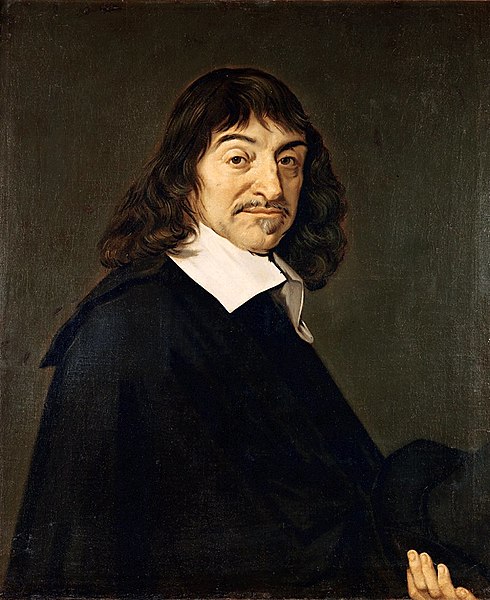
Descartes (1596-1650), the founder of modern philosophy, invented a method which may still be used with profit—the method of systematic doubt. He determined that he would believe nothing which he did not see quite clearly and distinctly to be true.
Whatever he could bring himself to doubt, he would doubt, until he saw reason for not doubting it. By applying this method he gradually became convinced that the only existence of which he could be quite certain was his own.
He imagined a deceitful demon, who presented unreal things to his senses in a perpetual phantasmagoria; it might be very improbable that such a demon existed, but still it was possible, and therefore doubt concerning things perceived by the senses was possible. (Bertrand Russell. Problems of Philosophy.)
There seems to be a natural tension between systematic doubt, or reductionism, invented by Rene Descartes and "reality distortion field" perfected by Thomas Edison and Steve Jobs. Both approaches require different kinds of creativity.
doubt <--------------------------------o------------------------------>faith
As a side note, I can see how Descartes personalizes an abstract problem, presenting it as a deceitful demon. Similarly, Maxwell personalized his theory of thermodynamics with another demon. Einstein came up with his theory of relativity by imagining somebody sitting on a particle moving with the speed of light. Schrodinger had his cat, Altshuller - tiny mighty men, Kahneman - Systems 1 and 2.
Among all of them, Kahneman, the psychologist, used this approach consciously and deliberately. In the talk I posted in this journal last month he explained that people intuitively understand agents and spaces, but have trouble relating to abstract distributed processes. Therefore, it is useful to invent a personalized agent to explain and understand a difficult concept.
Do you see his point? Paradoxically, we have to distort the reality in order to better understand it. But after that we need somebody like Descartes to apply systematic doubt and destroy this useful, but false understanding.
tags: creativity, invention, philosophy, tools, method
Wednesday, January 13, 2010
Australians catch on video an octopus using tools
A video of an octopus that uses coconut shell as a vehicle, hiding cover, protective gear, and lots more.
Abstract of the publication in Cell:
tags: biology, tools, youtube, science,
Abstract of the publication in Cell:
The use of tools has become a benchmark for cognitive sophistication. Originally regarded as a defining feature of our species, tool-use behaviours have subsequently been revealed in other primates and a growing spectrum of mammals and birds [1]. Among invertebrates, however, the acquisition of items that are deployed later has not previously been reported. We repeatedly observed soft-sediment dwelling octopuses carrying around coconut shell halves, assembling them as a shelter only when needed. Whilst being carried, the shells offer no protection and place a requirement on the carrier to use a novel and cumbersome form of locomotion — ‘stilt-walking’.
tags: biology, tools, youtube, science,
Saturday, February 28, 2009
Starting a Startup - Chris Penner, president and CEO of RemoTV ( Yale University Business and Management netcast):
The second point brings up the importance of flexibility, i.e. an ability to turn the base concept into a specific product that addresses a particular, here-and-now, market need. Having a [road]map of ideas is extremely helpful in figuring out the scope for your future flexibility. It's like having a bag of tricks at a kids party: if they don't like the trick you are showing them at the moment, you can always pull out a new one.
3. Don't borrow funds for your startup from your close relatives!
1. There's no such thing as a finished product.The first point indicates the need for a roadmap, both for invention and innovation. Any invention is a work in progress. The technology keeps going forward. Whatever epiphany you are having at the moment will be surpassed later, either by your own idea or by somebody else's. Therefore, it is very important to develop the skills and have the discipline necessary for pushing the initial concept as far as possible. Thus, the roadmap of invention, i.e. a sequence of ideas, a story of the evolution of your thought.
2. [when we were ready with the product] the market just wasn't there.
The second point brings up the importance of flexibility, i.e. an ability to turn the base concept into a specific product that addresses a particular, here-and-now, market need. Having a [road]map of ideas is extremely helpful in figuring out the scope for your future flexibility. It's like having a bag of tricks at a kids party: if they don't like the trick you are showing them at the moment, you can always pull out a new one.
3. Don't borrow funds for your startup from your close relatives!
Friday, May 16, 2008
The brain has to be set up in such a way that we can perceive and understand all of these aspects of the external world. Basic brain functions are called "cognitive operators" (d'Aquili 1978). A cognitive operator is a function of either a specific brain structure or a group of brain structures working in conjunction to help us order our reality. We have identified seven cognitive operators: Holistic Operator, Reductionistic Operator, Causal Operator, Abstractive Operator, Binary Operator, Quantitative Operator, and Emotional Value Operator.
The Holistic Operator takes all of the particulars that we might experience and creates a sense of the general or holistic nature of the particulars. There are many instances, both in the sciences as well as in other academic pursuits, when an investigator will examine how the parts make up the whole. The Holistic Operator also plays an important role in everyday life, particularly in relation to aesthetics, myth, and religious experience. The Reductionistic Operator has a function that is opposite that of the Holistic Operator, it takes the whole and breaks it down into its individual parts. Science is particularly dependent on the functioning of the Reductionistic Operator. The Causal Operator helps us to observe causality and to relate one event to another in a sequential ordering. The Abstractive Operator allows us to generate abstract concepts - for example, that objects such as an elm, spruce, and oak can be categorized as "trees". The Binary Operator helps us generate a sense of opposites such that we can compare the concepts good and evil or right and wrong. This operator has particular relevance to religious and aesthetic experiences and particularly to myth formation. Religious myths tend to involve opposites that are in some form of conflict, which is then resolved through the myth (d'Aquili 1978). Likewise, many aesthetic works make use of opposites, such as light and dark or wholeness and fragmentation, which are brought together to comprise the work. When we initially observe a pair of opposites, we encounter a sense of arousal because of the incongruity between the opposites. We desire a resolution and revised understanding because of the Holistic Operator. Thus, in art, in particular, the "tense and happy indecision" (Schaible 1998) may be directly related to the functioning of the Binary Operator. These tensions enhance activity in the arousal system initially, with quiescent activity being stimulated upon resolution of the opposites within either a myth or an aesthetic work. The Quantitative Operator is involved in the generation of numbers and quantity. Thus, whenever we observe objects in the external world, we have a tendency to try to determine how many there are. Finally, the Emotional Value Operator connects the limbic system to the other operators and provides an emotional response to all of the input and thoughts that we have. This Operator tells us how we feel about everything. In order to do this, the Emotional Value Operator must be able to connect to all the other operators. Clearly, this operator is crucial for the emotional response people have during aesthetic and religious experiences.
The Creative Brain / The Creative Mind
by Andrew B. Newberg and Eugene G. d'Aquili
Zygon, vol 35, no 1 (March 2000)
It would be very useful to develop/refine tools that exercise all these brain operators. We already have The Three Magicians and Five-Element Analysis methods to engage most of them. The Binary Operator probably relates to dilemma formulation, while The 10x Diagram taps into The Quantitative Operator. The only thing that is missing is The Emotional Value Operator. This is where the Red Hat from the Six Thinking Hats method might be very useful.
Subscribe to:
Posts (Atom)